The Mothers of Penguins
2024 Series

Follow the forest adventures of Mush-Mush, his best friends Chep and Lilit and the rest of the Mushable community, as they explore, grow and discover just how fun and wild life can be. Mushables are the Guardians of the Forest, and each member has a special talent or ability – while Mush-Mush can communicate with nature, Chep has a huge memory and Lilit lights up and glows – all of this in theory at least, as they all still have a lot to learn!
Official
I’ll admit it: I didn’t expect to be charmed by a show about sentient mushrooms. Not because I have anything against fungi—quite the opposite, in fact—but because preschool animation so often defaults to a kind of manic, sugar-rush energy, as if the only way to hold a child’s attention is to shout louder than the last brightly colored distraction. Mush-Mush & the Mushables does something far riskier: it whispers. And in doing so, it trusts its young audience to lean in.
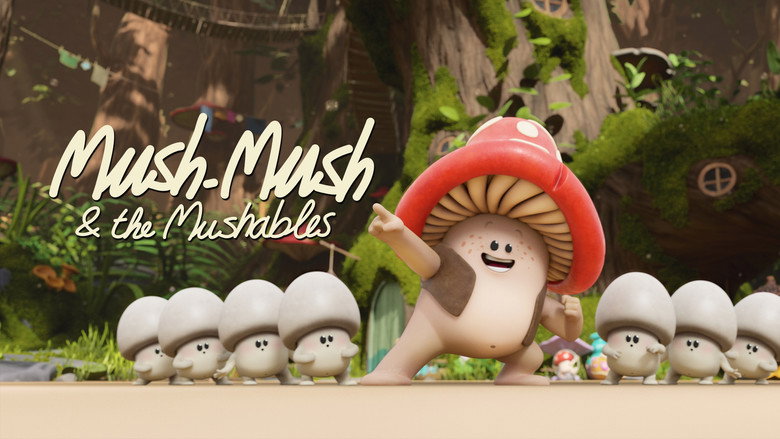
The series follows three little Mushables—Mush-Mush, Lilit, and Chep—as they navigate life in Mushton, a forest village where every leaf, root, and raindrop seems to hum with its own quiet sentience. Mush-Mush, the de facto leader, can "hear" nature, though what that actually means is left delightfully vague. Is it telepathy?
Empathy? A particularly attuned imagination? The show never over-explains, and that ambiguity is its first gift.
It treats its preschool viewers as capable of sitting with mystery, of filling in the gaps with their own wonder.
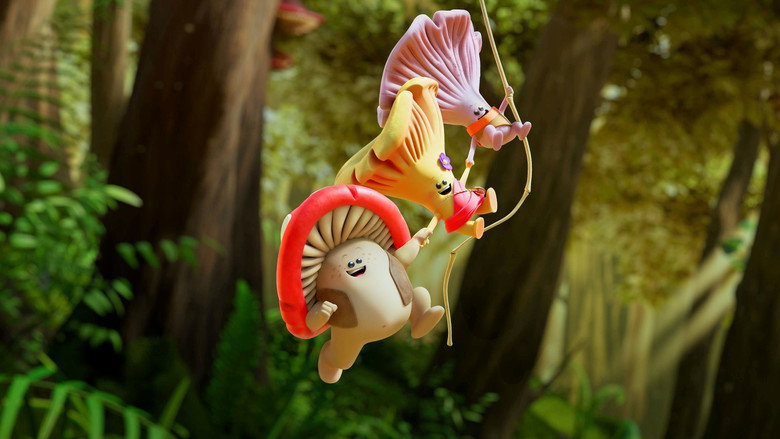
What’s striking about Mush-Mush is how it balances its fantastical premise with a grounded, almost tactile sense of place. The animation—CG with occasional 2D interludes—avoids the plasticky sheen of so much children’s media. Instead, the textures feel lived-in: the spongy softness of moss, the way sunlight filters through a canopy of leaves, the damp chill of a forest after rain.
The backgrounds are richly detailed, but never cluttered; they invite exploration without overwhelming. It’s the kind of world that makes you want to reach into the screen and run your fingers along the bark of a tree, just to see if it feels as real as it looks.
That sensory immersion extends to the sound design, which is where the show’s most inventive craft choice lives. Composers Frederik Segers and Jan Duthoy built custom instruments out of bamboo to score the series, and the result is a musical palette that feels both ancient and entirely new. The soundtrack doesn’t just accompany the action—it is the action, a living, breathing extension of the forest itself.
A melody might start as a faint rustle in the underbrush before swelling into a full theme, or a single note could linger like a dewdrop about to fall. It’s the kind of detail that flies under the radar for its target audience but gives the show a depth that lingers for adult viewers. (I found myself rewinding just to listen to a scene again, not for the dialogue, but for the way the music and ambient sounds wove together.)
The storytelling, too, resists the formulaic. Episodes often hinge on small, relatable dilemmas—a lost toy, a misunderstanding between friends, the fear of trying something new—but the solutions are never pat. In one standout episode, Chep, the group’s resident memory-keeper, becomes so overwhelmed by the pressure to remember everything that he starts forgetting the most basic things.
The resolution isn’t about "fixing" his memory but about learning to ask for help, to trust that his friends will remind him when he needs it. It’s a surprisingly nuanced take on responsibility, one that acknowledges the weight of expectations without shying away from the messiness of growing up.
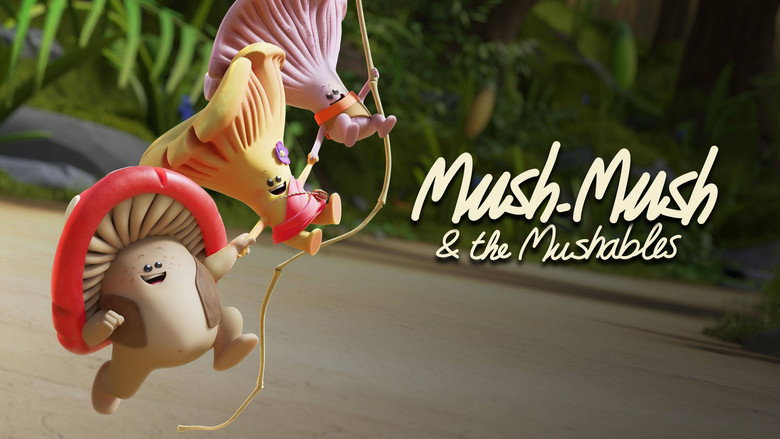
That’s not to say the show is flawless. Some episodes lean a little too heavily on the "mild peril" trope—characters dangling from branches, narrowly avoiding falling acorns, that sort of thing—which Common Sense Media notes might unsettle the most sensitive preschoolers. And while the themes of teamwork and friendship are handled with warmth, there are moments when the moral feels a bit too neatly packaged, as if the writers couldn’t resist tying everything up with a bow.
But even those missteps feel like the result of genuine effort, not cynicism. This is a show that clearly cares about its audience, that wants to meet them where they are without talking down to them.
What I keep coming back to is the way Mush-Mush treats nature not as a backdrop, but as a character. The forest isn’t just a setting; it’s an active participant in the story, responding to the Mushables’ emotions, guiding them (or sometimes, gently resisting them). In one episode, Mush-Mush tries to force a flower to bloom out of season, only to learn that some things can’t be rushed.
The lesson isn’t heavy-handed, but it’s there, nestled in the rhythm of the story like a seed waiting to sprout. It’s the kind of environmental messaging that doesn’t preach—it simply shows, trusting kids to draw their own conclusions.
That trust extends to the show’s visual language, too. The occasional black-and-white 2D segments, produced in Toon Boom Harmony, feel like little gifts, a stylistic detour that breaks up the CG without feeling jarring. They’re used sparingly, often to highlight a moment of whimsy or introspection, and they give the series a handcrafted feel that sets it apart from the slick, factory-produced look of so much children’s animation.
It’s worth noting that Mush-Mush & the Mushables is a thoroughly European creation, a co-production between France, Belgium, and England that wears its origins lightly. There’s no overt cultural signposting, no attempt to make the forest "French" or "Belgian." Instead, the show feels like a universal fable, one that could take root anywhere.
That’s part of its quiet power—it doesn’t feel like it’s trying to sell a lifestyle or a brand. It’s just a story about three little mushrooms figuring out how to be good friends, good neighbors, and good stewards of the world around them.
And maybe that’s why it resonates so deeply, even with an adult viewer like me. In a media landscape that often treats children’s content as either disposable entertainment or a vehicle for lessons, Mush-Mush offers something rarer: a space to simply be. To sit with the quiet, to listen to the rustling of leaves, to remember that growing up isn’t just about learning how to do things—it’s about learning how to feel them, too.
I don’t know if my four-year-old self would have loved this show. (I suspect I would have; I was the kind of kid who talked to trees.) But I do know that my thirty-something self keeps finding excuses to rewatch it. Not because it’s nostalgic, or because it’s "good for kids," but because it reminds me of something I’d almost forgotten: that the world is full of small, strange, beautiful things, if only we take the time to look.
"A charming but lightweight animated series for young kids, with colorful visuals and simple stories."
Bright, whimsical animation and gentle, easy plots make it a hit with preschoolers and early elementary kids. Its humor and themes are too simple for older kids or adults, with little replay value beyond that age group.
The animated series Mush-Mush & the Mushables (2020) has quietly sprouted a dedicated fanbase, blending vibrant storytelling with a cast of mushroom-inspired characters. While details about its creators and voice cast remain scarce, the show’s growing presence across platforms—from Cartoonito to Netflix—hints at a slow-burning success. latestnetflix.com's view is that here’s what we know (and what’s still shrouded in mystery) about the series’ journey so far.
Mush-Mush & the Mushables has been steadily expanding its reach, with promotional material confirming its availability on multiple networks. A Boomerang UK promo teased the series as a "new show," while another clip announced "new episodes," suggesting the channel has been a key player in its distribution. Meanwhile, a Cartoonito promo positioned the series as part of its weekday lineup, signaling its appeal to younger audiences.
The biggest platform boost came when Netflix added the show to its library. A clip celebrated the series’ arrival with the tagline, "Mush-Mush and the Mushables is now playing on Netflix!"—though no official announcement from Netflix itself has surfaced to confirm the extent of its catalog or regional availability. Still, the move aligns with the streaming giant’s strategy of snapping up niche animated series to bolster its kids’ content.
Fans are eagerly awaiting news about a second season, but the evidence is frustratingly thin. A YouTube video poses the question, "Mush-Mush & the Mushables Season 2: Will It Happen Or Not?"—yet the snippet offers no concrete answers. The lack of official statements from production studios or networks leaves the show’s future in limbo.
That said, the series’ presence in promos and its Netflix debut could indicate momentum. If viewership numbers are strong, a renewal isn’t out of the question—but for now, it remains a waiting game.
Unlike many animated series, Mush-Mush & the Mushables keeps its creative team under wraps. There’s no public information about its director, writers, or voice cast, making it difficult to trace its origins or production quirks. Even the show’s episode count is unclear; while a full episode titled "The Disappearing Mushler" is available on YouTube, it’s unclear how many others exist or whether they’ve all been released.
The series’ aesthetic—colorful, whimsical, and slightly surreal—has drawn comparisons to other preschool-friendly animations, but without creator interviews or studio insights, its artistic influences remain speculative. A credits dance clip offers a glimpse of the animation style, but little else.
Despite the lack of behind-the-scenes drama, Mush-Mush & the Mushables has cultivated a small but enthusiastic following. A YouTube short features the show’s upbeat ending theme, "It’s a Good Day," which has become a minor hit among fans. The song’s catchy, repetitive melody aligns with the series’ lighthearted tone, reinforcing its appeal to younger viewers.
For all its charm, Mush-Mush & the Mushables operates in a quiet corner of the animation world. It’s not generating tabloid headlines or viral controversies, but its steady platform expansions and fan engagement suggest it’s carving out a niche. Whether it blooms into a long-running franchise or fades into obscurity may depend on factors beyond its control—like network renewals and streaming algorithms.
Until then, the show’s biggest mystery isn’t its plotlines or characters, but why so little is known about its creators. For a series this visually distinct, the silence is almost as intriguing as the mushrooms themselves.
Entertainment rumors and trivia aggregated from public reporting. Treat speculation as unverified unless a cited source confirms it.
More titles in the same genres and with the same cast.