Season 1
6 episodes Feb 28, 2025 6.9
- 1 A New Era, A New Man
- 2 Happily Ever After
- 3 First Dates
- 4 Back to School
- 5 We Need to Talk
- 6 Return of the Rooster

Facing a world that has evolved without them, four friends clumsily try to adapt while keeping their relationships and careers intact.
Latest episode: S2 E8 Episode 8 (May 13, 2026)
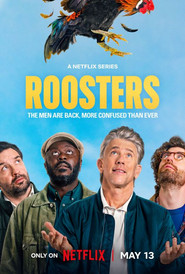

Official
I’ve been thinking about Roosters for days, and I keep coming back to the same question: What does it mean when a show about men who can’t figure out how to be men is itself canceled before it can figure out what it wants to be? The Dutch comedy-drama, which arrived on Netflix in 2025, is a remake of a Spanish series, part of a global wave of stories about masculinity in freefall. It’s a premise that feels both urgent and exhausted—like its own characters, who are forever one step behind the world they’re trying to navigate.
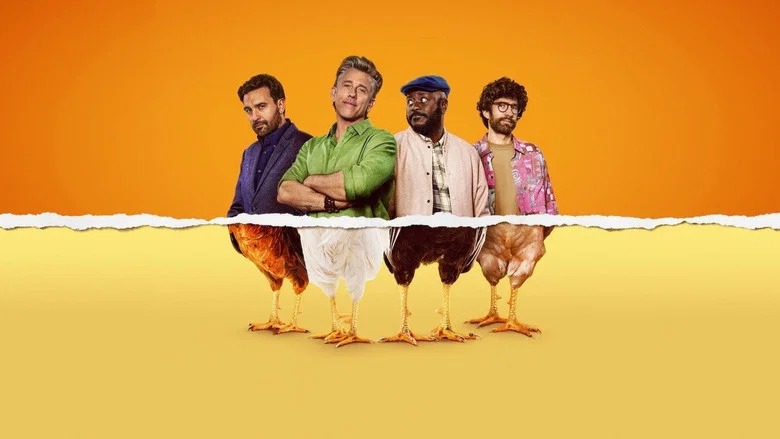
The show follows four friends—Mike, Ivo, Daan, and Greg—as they stumble through Amsterdam, clinging to the wreckage of their self-images. They’re not villains, exactly, but they’re not heroes either. They’re men who’ve spent their lives coasting on the assumption that the world would always bend to their expectations, only to find that the world has moved on without them.
The series walks a tightrope: it wants to mock their fragility while also making us root for them. Sometimes it works. Often, it doesn’t.
The first episode opens with a scene that sets the tone perfectly. Mike, the de facto leader of the group, is mid-meltdown in a corporate office, his face flushed with humiliation after a younger female colleague outmaneuvers him in a meeting. The camera lingers on his hands—clenched into fists, then splayed open in defeat—as he mutters, “I used to be good at this.” It’s a small moment, but it’s the kind of detail that makes Roosters worth watching.
The show has a knack for finding the quiet, cringe-inducing truths in its characters’ lives, the kind of things they’d never admit out loud but that play out in their body language.
That’s where the series shines: in the unspoken. The writing, particularly in the first season, is sharp enough to cut through the noise of its own premise. The dialogue feels naturalistic, the kind of thing you’d overhear in a bar after last call.
There’s a scene in the third episode where Greg, the most emotionally stunted of the group, tries to apologize to his girlfriend for forgetting their anniversary. He starts strong—“I know I messed up”—but then spirals into a rambling justification about how “real men don’t keep track of that stuff.” The girlfriend’s silence speaks volumes. It’s a masterclass in how to write male insecurity without letting the character off the hook.
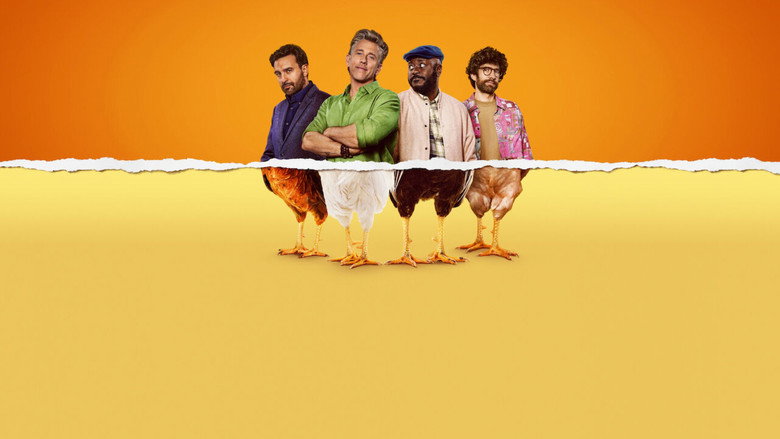
The problem is that Roosters often seems unsure whether it wants to be a satire or a character study. The show’s most ambitious moments—like the “inner-cock” workshops, where men gather to reclaim their masculinity through absurd rituals—are biting and funny, but they sit uneasily next to the more sentimental subplots. It’s as if the writers can’t decide whether they’re making Fight Club or Ted Lasso.
Joel Keller at Decider put it well: the show succeeds because it portrays its protagonists not as genuine alpha males, but as men finally being forced to confront why they never were. That’s a compelling idea, but it’s one the series struggles to sustain over six episodes, let alone three seasons.
The cast is the show’s saving grace. Jelka van Houten, who plays Merel, the group’s only female friend, steals every scene she’s in. She’s the one who calls out the men’s bullshit, but she does it with a weariness that suggests she’s been doing it for years.
There’s a moment in the second season where she’s stuck in a car with the four of them, listening to them bicker like overgrown children. She doesn’t say a word—just exhales slowly, her eyes flicking to the rearview mirror like she’s considering jumping out at the next red light. It’s a small gesture, but it’s the kind of thing that makes you wish the show had given her more to do.
The other performances are solid, if less revelatory. Jeroen Spitzenberger’s Mike is the heart of the group, a man who’s spent his life coasting on charm and is now realizing it’s not enough. Waldemar Torenstra’s Daan is the most tragic of the bunch—a former athlete whose body is giving out on him, leaving him with nothing but nostalgia and resentment.
The chemistry between the four leads is undeniable, but it’s not enough to paper over the show’s structural flaws. By the second season, the cracks start to show. The pacing drags, the jokes feel recycled, and the satire loses its edge.
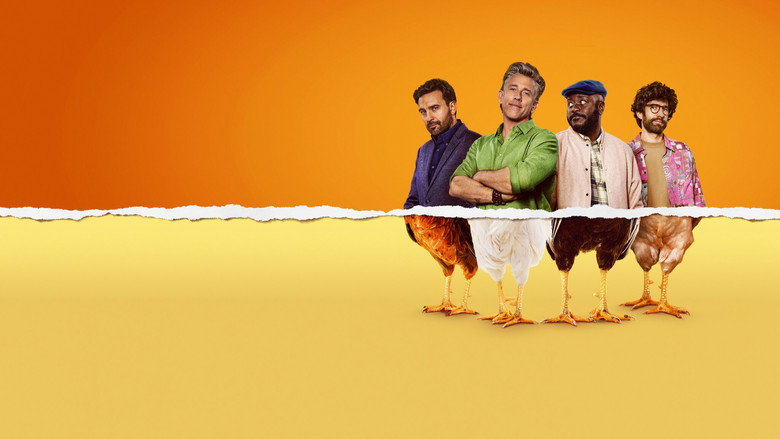
That’s the thing about Roosters: it’s a show that’s easy to like but hard to love. It’s funny, it’s occasionally insightful, and it’s got a cast that clearly enjoys playing off each other. But it’s also derivative, uneven, and ultimately unsure of what it wants to say.
The cancellation after three seasons feels like the right call, even if it’s a shame. The show had potential—it just never quite figured out how to live up to it.
I keep coming back to that scene in the office, Mike’s hands clenched into fists. It’s a moment that encapsulates what Roosters does best: showing us the quiet, humiliating moments that define its characters. The problem is that the show never quite decides whether to laugh at those moments or make us feel them.
Maybe that’s the point. Maybe the show is as confused about masculinity as its characters are. Or maybe it’s just a victim of its own ambition.
Either way, Roosters is worth watching—if only for the moments when it gets it right. The rest of the time, you’ll be left wondering what could have been.
"A lighthearted but derivative comedy about masculinity that lands more often than it misses thanks to its charismatic cast."
The series takes a funny look at modern male friendship and shifting gender dynamics, with strong, engaging performances from the leads. It leans on familiar tropes from the original Spanish comedy, though, and uneven pacing leaves it short on originality and depth.
Netflix’s Dutch dramedy Roosters (2025) arrived as a sharp, self-aware jab at modern masculinity, following four friends grappling with shifting gender dynamics, stalled careers, and the absurd lengths they’ll go to save face. The series, which premiered this year, quickly carved out a niche with its blend of humor and cringe—until Netflix pulled the plug after three seasons, leaving fans and cast in the dark.
Roosters centers on a quartet of Dutch friends—played by Jeroen Spitzenberger, Eva Laurenssen, Waldemar Torenstra, and Jennifer Hoffman—who find themselves adrift in a world where traditional male roles no longer apply. The show’s tone walks a tightrope between satire and sincerity, mocking its characters’ outdated coping mechanisms while still rooting for their growth. Think Entourage meets Fleabag, but with more awkward silences and fewer designer drugs.
The series’ hook lies in its unflinching portrayal of men fumbling through relationships, work, and friendship in an era of empowered women. Early reviews (though scarce) praised its balance of humor and pathos, with one snippet describing the cast’s chemistry as “a messy, relatable disaster”. Whether that disaster was compelling enough to sustain three seasons—or just exhausting—remains up for debate.
Netflix’s decision to cancel Roosters after three seasons came as a surprise, given the streamer’s reputation for renewing even middling shows to keep its library stocked. The move was first reported by AOL, which framed the cancellation as part of Netflix’s broader culling of underperforming originals. With over 700 original titles in its arsenal, the platform can afford to be ruthless—even with shows that, by all accounts, had a dedicated (if niche) following.
No official viewership numbers were released, but the cancellation suggests Roosters failed to crack the algorithm’s code. Netflix’s data-driven approach prioritizes shows that either draw massive audiences or retain subscribers long-term, and Roosters may have fallen short on both counts. The series’ Dutch setting and subtitles likely limited its global appeal, while its themes—though timely—weren’t buzzy enough to trend on social media.
The cancellation leaves the Roosters cast in an awkward limbo. Jeroen Spitzenberger, a Dutch TV veteran, and Waldemar Torenstra, known for his role in The Resistance Banker, had reportedly signed on for a fourth season before the axe fell. Eva Laurenssen and Jennifer Hoffman, both rising stars in the Netherlands, were also likely eyeing the show as a long-term gig.
For now, the cast’s next moves are unclear. Spitzenberger has a history of bouncing between Dutch and international projects, while Torenstra’s filmography suggests he’ll land on his feet. Laurenssen and Hoffman, however, may face a tougher road—Netflix’s cancellation could make it harder to pitch similar ensemble dramedies to other streamers.
Roosters’ cancellation raises questions about the viability of male-centric dramedies in the current TV landscape. Shows like Ted Lasso and The Bear have proven that audiences will embrace flawed, emotional men—but only if the writing is razor-sharp and the stakes feel high. Roosters’ humor leaned into cringe and absurdity, which may have alienated viewers looking for more uplifting fare.
That said, the series’ abrupt end feels like a missed opportunity. With three seasons under its belt, Roosters had room to evolve—perhaps even pivoting to a darker, more serialized tone in later years. Instead, it joins the growing graveyard of Netflix originals that got the axe before their time.
Entertainment rumors and trivia aggregated from public reporting. Treat speculation as unverified unless a cited source confirms it.
More titles in the same genres and with the same cast.