Season 1
6 episodes Jan 24, 2025 8.0
- 1 Maleficent
- 2 Mr. Misunderstood
- 3 From Bad to Worse
- 4 Cavemen
- 5 The Worst of Times
- 6 Heartbreak

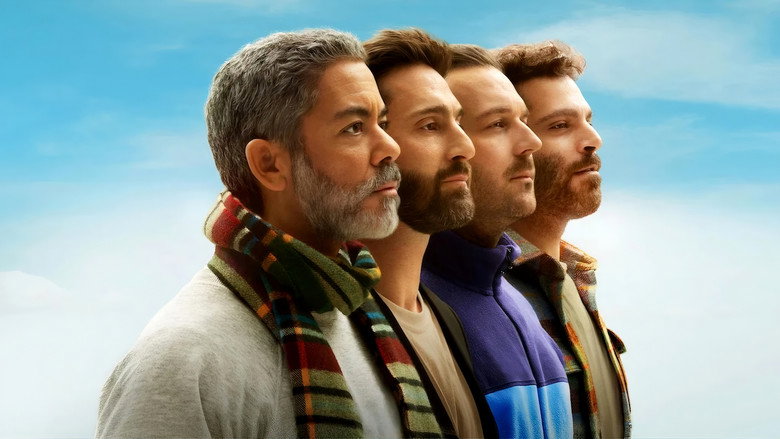
Four middle-aged male friends fumble their way through love, life and career crises in modern-day Paris — when did being a man become so hard?
Latest episode: S1 E6 Heartbreak (Jan 24, 2025)
Official
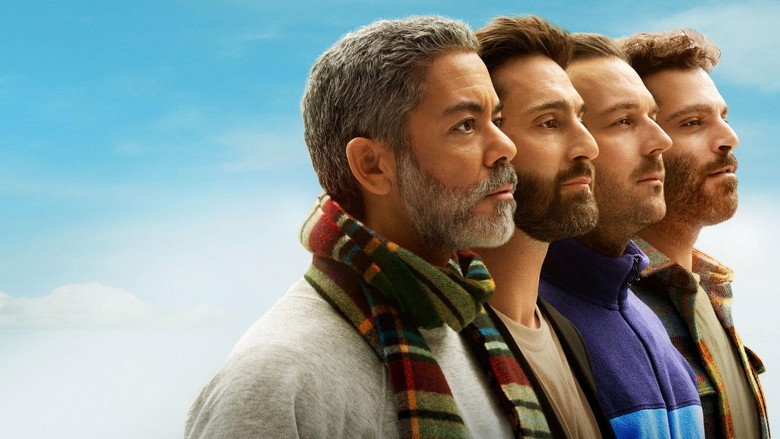
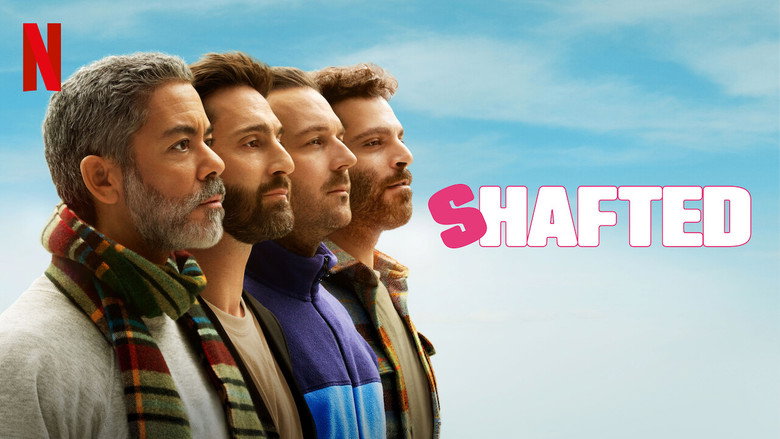
I’ll admit it: I went into Shafted expecting a French Hangover—raunchy, chaotic, and ultimately harmless. What I got instead was something messier, and, in its own way, more interesting. This six-episode Netflix series, adapted from the Spanish Machos Alfa, follows four middle-aged Parisian friends—Cédric, Tom, Jérémie, and Tonio—as they stumble through a court-mandated masculinity workshop after a drunken act of vandalism.
The premise is ripe for satire, and at its best, Shafted lands a few sharp jabs at the absurdity of modern masculinity. But too often, the show pulls its punches, softening its own critique into a series of half-hearted gags that leave its characters stranded between caricature and complexity.
The opening scene sets the tone: our quartet, already drunk, decides to steal a traffic cone as a "prank." The heist goes predictably wrong, ending with them urinating on a police car (off-screen, thankfully) and landing in front of a judge. The court’s sentence?
Mandatory group therapy, led by a no-nonsense facilitator who forces them to confront their own toxic behaviors. It’s a setup that could have been Fleabag meets The Office—a workplace comedy where the "work" is self-improvement. But Shafted struggles to commit to either the cringe or the catharsis.
Take the character of Tom, played by Manu Payet. He’s the group’s resident lothario, a man who treats women like a buffet he’s entitled to sample. In one scene, he brags about sleeping with a woman half his age, only to be met with silence from his friends.
The moment is played for laughs, but the joke lands awkwardly—because the show never quite decides whether Tom is a tragic figure or a punchline. Payet, a veteran of French comedy, is charismatic enough to sell the role, but the writing undercuts him at every turn. When Tom’s behavior finally catches up with him, the show rushes through his redemption arc, as if embarrassed by its own attempt at depth.
That’s the central tension of Shafted: it wants to be both a raunchy comedy and a thoughtful character study, but it can’t quite reconcile the two. The therapy sessions, which should be the emotional core of the series, often devolve into farce. In one episode, the men are asked to role-play their own insecurities, but the scene quickly spirals into a slapstick routine involving a fake mustache and a misplaced dildo.
(Yes, really.) The problem isn’t the absurdity—it’s that the show never earns the right to pivot back to sincerity. When Jérémie, the group’s most emotionally stunted member, finally breaks down in tears, the moment feels unearned, as if the writers remembered at the last minute that they were supposed to care.
The women of Shafted don’t fare much better. Olga Kurylenko plays Léna, a therapist who becomes entangled with one of the men, and while her performance is magnetic, the writing reduces her to a series of clichés: the icy professional, the seductress, the voice of reason. The show’s treatment of its female characters is particularly frustrating because it almost gets it right.
In one scene, Léna calls out Tom’s misogyny, and for a brief moment, it seems like Shafted might actually hold its male leads accountable. But the moment passes, and the status quo is restored. It’s as if the show is afraid of its own critique, pulling back just when it starts to sting.
That hesitation is what separates Shafted from its Spanish predecessor, Machos Alfa. Critics have been quick to point out that the French adaptation lacks the original’s wit and depth. Decider called the characters "so cartoonishly buffoonish that we have no desire to watch them constantly get in their own way," while Gazettely noted that the show "transforms their struggles into jokes instead of substantial reflections."
There’s some truth to that. Shafted is at its best when it leans into the absurdity—like a scene where the men attempt (and fail) to meditate, their competitive banter devolving into a childish game of one-upmanship. But when it tries to be heartfelt, it often feels forced, as if the writers are checking a box rather than exploring something real.
The show’s visual style doesn’t help. The Parisian setting is undeniably stylish, with the camera lingering on the city’s chic cafés and cobblestone streets. But the cinematography often feels at odds with the material.
The therapy sessions are shot in a way that’s almost too polished, as if the show is trying to distract from the fact that the dialogue is flimsy. The physical comedy, meanwhile, is hit-or-miss. A sequence where the men attempt to cook a meal together is genuinely funny, their egos clashing as they burn the pasta and set off the fire alarm.
But other gags, like a recurring bit involving a misplaced sex toy, feel like they belong in a much broader, dumber comedy.
Where Shafted does succeed is in its ensemble chemistry. Payet and Guillaume Labbé (who plays Cédric) have an easy, lived-in rapport, and their scenes together crackle with energy. There’s a moment in the third episode where the two of them get into a drunken argument about fatherhood, and for once, the show lets the scene breathe.
The dialogue is sharp, the performances are nuanced, and for a brief moment, you can see the show Shafted could have been—a comedy that doesn’t shy away from the messiness of male friendship, even when it’s ugly.
But those moments are too few and far between. By the time the series reaches its sixth and final episode, it’s clear that Shafted is more interested in wrapping things up neatly than in taking risks. The men’s arcs conclude with a whimper rather than a bang, their growth feeling more like a box-ticking exercise than a genuine transformation.
The final scene, in which the group gathers for a meal, is meant to be heartwarming, but it lands with a thud. After six episodes of watching these men avoid accountability, it’s hard to believe they’ve changed at all.
That’s the real missed opportunity of Shafted. The show’s premise is a gift—a chance to skewer the performative masculinity that so many men cling to, even as it fails them. But instead of leaning into the satire, it pulls its punches, opting for easy laughs over hard truths.
There’s a version of this series that could have been The Big Chill meets Broad City—a comedy that’s both raunchy and reflective, that doesn’t flinch from the ugliness of its characters even as it finds humor in their flaws. Shafted isn’t that show. But in its best moments, it hints at what could have been.
I’m still thinking about that scene in the kitchen, the one where the men’s egos collide and the pasta burns. It’s the closest the series comes to saying something real about male friendship—that it’s built on a foundation of competition, insecurity, and the unspoken fear of being left behind. If Shafted had been willing to sit with that discomfort a little longer, it might have been something special.
Instead, it settles for a joke. And in the end, that’s the real punchline.
"A raucous but uneven workplace comedy with flashes of wit and charm, held back by inconsistent pacing and underdeveloped side characters."
The series earns laughs with sharp humor and the dynamic between the leads, particularly Manu Payet and Guillaume Labbé, who bring energy to their roles. But the humor is hit-or-miss, the supporting characters leave little impression, and the tone shifts abruptly between absurdity and grounded workplace satire.
Netflix is betting on a new French comedy series to capture the messy, relatable chaos of middle age. Shafted (2025) follows four male friends navigating love, careers, and existential dread in modern-day Paris—because, as the show’s tagline bluntly asks, "When did being a man become so hard?latestnetflix.com's read is that " With a cast led by Manu Payet and featuring Olga Kurylenko, the series promises a mix of humor and heartbreak, though details about its creators and production remain scarce.
Shafted centers on four middle-aged friends grappling with the absurdities of adulthood. The series leans into the universal struggle of aging—failed relationships, stagnant careers, and the pressure to "have it all"—but with a distinctly French twist. While the exact tone isn’t confirmed, the premise suggests a blend of cringe comedy and poignant reflection, similar to shows like Fleabag or Sex and the City but with a male ensemble.
The show’s title, Shafted, hints at the characters’ shared sense of being screwed over by life, whether by bad luck, poor decisions, or societal expectations. Given the cast’s comedic chops (Payet is a well-known French comedian), the series likely balances sharp wit with moments of vulnerability.
Manu Payet, a staple of French comedy, leads the ensemble as one of the four friends. His past work in Serial (Bad) Weddings and The Big Bad Wolf suggests he’ll bring a mix of physical humor and emotional depth to the role. Alongside him are Guillaume Labbé, Vincent Heneine, and Antoine Gouy, though their specific characters remain under wraps.
The supporting cast includes Mélanie Bernier, Ariane Mourier, and Alysson Paradis, but the biggest name is Olga Kurylenko. The Ukrainian-French actress, known for Oblivion and Quantum of Solace, adds a layer of star power to the series. Her inclusion suggests a role with more dramatic weight, possibly as a love interest or a foil to the male leads.
Frankie Wallach, another cast member, has a background in both comedy and drama, rounding out the series’ tonal range. With such a stacked lineup, Shafted could be a breakout hit for Netflix’s international comedy slate.
Despite the buzz, Shafted remains shrouded in mystery. The director and creator are unconfirmed, and Netflix hasn’t released a trailer or episode count. The show’s TMDB page lists it as a 2025 release, but no specific premiere date has been announced.
Rumors suggest the series was filmed in Paris, capitalizing on the city’s vibrant backdrop for both comedy and drama. However, without official production details, it’s unclear how many seasons are planned or whether the show will lean more toward episodic storytelling or a serialized arc.
One thing is certain: Netflix is doubling down on international content, and Shafted fits neatly into its strategy of acquiring high-quality non-English series. If the show delivers on its premise, it could join the ranks of Emily in Paris and Lupin as a global hit.
Midlife crises have long been a goldmine for comedy, and Shafted has the ingredients to stand out:
That said, the lack of promotional material is unusual for a 2025 release. If Netflix is sitting on the series, it could be saving it for a strategic rollout—or the show might still be in post-production, with key details yet to emerge.
For now, fans of French comedy and midlife dramedies will have to wait. But if Shafted lives up to its premise, it could be the next big thing in Netflix’s international lineup.
Entertainment rumors and trivia aggregated from public reporting. Treat speculation as unverified unless a cited source confirms it.
More titles in the same genres and with the same cast.