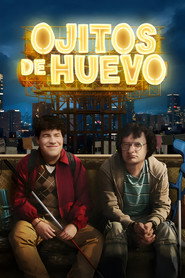
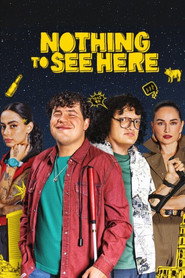
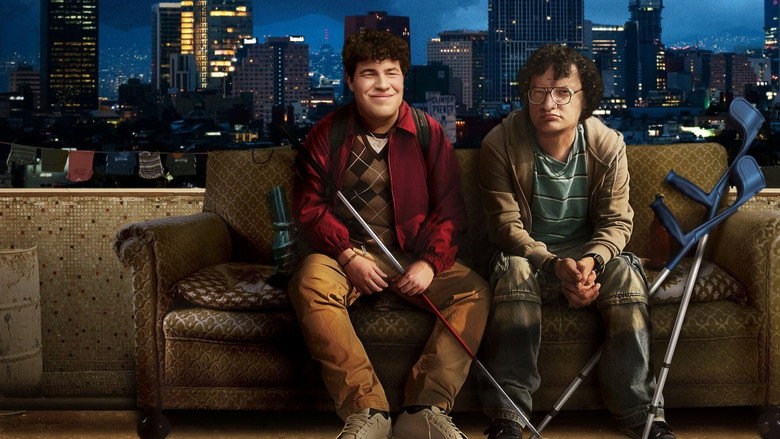
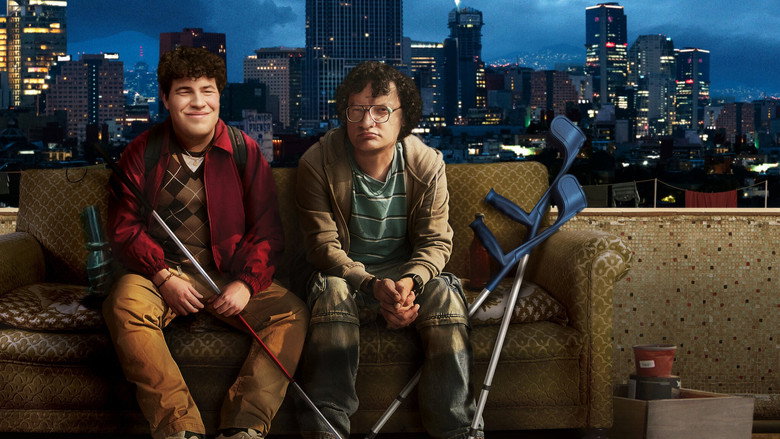
When an aspiring blind comedian goes after his dreams, it's him and his best friend with cerebral palsy against the world, no matter what runs them over.
Seasons
2 listed
Status
Canceled
Seasons
2 seasons
Episodes
16 episodes
First aired
Nov 17, 2023
Last aired
Nov 20, 2024
Network
Netflix
Latest episode:S2 E8 I Can See with My Heart (Nov 20, 2024)
Season 1
8 episodes Nov 17, 2023 6.3
1Little Egg Eyes
2You're an Inspiration
3You Can't
4I Just Want to Be Normal
5You Got a Stage Name?
6A Blind Person's Gotta Do What a Blind Person's Gotta Do
The Joke’s on Us: How Nothing to See Here Turns Disability Into Comedy Without Pity
I’ve seen a lot of shows about disability. Most of them fall into one of two traps: either they’re grim, inspirational dramas where the disabled character exists solely to teach the able-bodied protagonist a lesson, or they’re maudlin tragedies where the disability is the entire point. Nothing to See Here (or Ojitos de huevo, if you prefer the original Spanish title) does something far more interesting.
It’s a comedy about two disabled men trying to make it in Mexico City, and it’s funny because their lives are funny—not in spite of their disabilities, but because life is funny, period. The premise, as Common Sense Media’s Mary Aviles puts it, is simple: “Laugh with us, not at us.” And for once, that’s exactly what happens.
The show follows Alexis (Alexis Arroyo), a blind aspiring comedian, and his best friend Charly (Kike Vázquez), who has cerebral palsy, as they navigate the chaos of adulthood in one of the world’s most overwhelming cities. There’s no grand mission statement here, no heavy-handed message about overcoming adversity. Instead, there’s just two guys trying to get by, and the humor comes from the same place it always does: the gap between how things are supposed to work and how they actually do.
A blind man doing stand-up comedy is already a joke in the best sense—what’s funnier than someone telling you to look at something when they can’t see it themselves?—but the show never leans on the disability as the punchline. The punchline is always the absurdity of life, and the fact that these two are just as capable of being ridiculous as anyone else.
Take the scene where Alexis auditions for a comedy club. The setup is simple: he’s nervous, the crowd is restless, and the club owner is skeptical. But the execution is where the show shines.
Alexis doesn’t play his blindness for sympathy or inspiration. Instead, he leans into it, turning his lack of sight into a running gag about how terrible the club’s lighting is. “I can’t see your faces, but I can hear you judging me,” he deadpans, and the audience laughs—not because they’re laughing at him, but because they’re laughing with him. It’s a masterclass in how to handle disability with humor without reducing the character to a prop.
The joke isn’t that he’s blind; the joke is that the world is set up in a way that makes his blindness an obstacle, and he’s calling it out.
That’s the show’s secret weapon: it doesn’t ask for special treatment. MegDB’s review nails it when it says, “It’s a rare scripted series that lets its characters be funny, flawed, and furious, without ever asking for forgiveness.” Alexis and Charly aren’t here to educate the audience or make them feel better about themselves. They’re just trying to live their lives, and if that means calling out the able-bodied people who treat them like children or ignoring the well-meaning but clueless advice of their parents, so be it.
There’s a scene where Charly’s mom tries to feed him like he’s a toddler, and his response—“I have hands, you know”—is delivered with such exhausted sarcasm that it’s impossible not to laugh. It’s not just funny; it’s real. How many disabled people have had to deal with that exact moment?
How many have wanted to say that exact line but were too polite, or too afraid of being seen as ungrateful?
The show’s greatest strength is its refusal to sentimentalize its characters. Alexis and Charly are allowed to be messy, selfish, and even a little bit mean. In one episode, Alexis blows off a date because he’s too nervous, and Charly calls him out for it. “You’re not nervous, you’re just an asshole,” he says, and the line lands because it’s true.
These are people, not saints. They have flaws, they make mistakes, and they don’t always handle their disabilities with grace. And that’s what makes them feel real.
The show doesn’t pretend that disability is easy, but it also doesn’t pretend that it’s the only thing that defines them. Alexis wants to be a comedian, not a “blind comedian.” Charly wants to be seen as more than just his cerebral palsy. The show gets that, and it lets them be both.
That’s not to say Nothing to See Here is perfect. The second season, in particular, feels a little rushed, as if the writers weren’t sure how to keep the momentum going after the initial premise was established. Some of the supporting characters, like Alexis’s parents, veer into caricature, and there are moments where the humor feels a little too broad.
But those are minor quibbles in what is otherwise a refreshingly honest and hilarious show. It’s the kind of comedy that doesn’t just make you laugh; it makes you think, and not in the heavy-handed way that so many “important” shows do. It makes you think because it’s true.
There’s a moment in the first season where Alexis is trying to navigate a crowded subway station, and he’s clearly struggling. A stranger offers to help, and Alexis snaps, “I don’t need your help, I need you to get out of my way.” It’s a small moment, but it’s one of the most powerful in the series because it captures the frustration of being disabled in a world that wasn’t built for you.
It’s not that Alexis doesn’t appreciate the offer; it’s that he’s tired of being treated like he’s incapable. And that’s the thing about Nothing to See Here—it’s not just a show about disability. It’s a show about independence, about friendship, about the universal struggle to be seen as more than what the world expects you to be.
I don’t know if Nothing to See Here will change the way people think about disability. I don’t know if it’ll even last beyond these two seasons. But I do know this: it’s one of the few shows I’ve seen that treats its disabled characters like fully realized human beings, and that’s something worth celebrating.
It’s funny, it’s heartfelt, and it’s never, ever boring. And in a world where so much comedy feels like it’s either too safe or too cynical, that’s a rare and beautiful thing.
Buzz & Rumors
Public reports
Behind the Scenes of Nothing to See Here (2023): A Fresh Take on Friendship and Independence
Nothing to See Here, the 2023 series starring Alexis Arroyo and Kike Vázquez, is making waves for its lighthearted yet poignant exploration of friendship, dreams, and the everyday joys of life. Created by Big Drama and Santiago Limón, the show follows Alexis, a young blind man, as he moves to Mexico City to carve out his independence—with a little help from his best friend, Charlie, who has cerebral palsy. But what’s the real story behind this heartwarming series?
A Cast That Breaks Barriers
The series stands out for its authentic portrayal of characters with disabilities, a rarity in mainstream entertainment. Leading the charge is Alexis Arroyo, who plays the titular Alexis, a blind stand-up comedian navigating the challenges of independence. His real-life experiences likely informed the role, though specifics about his background remain scarce in available sources. Kike Vázquez, who plays Charlie, brings depth to the character of a young man with cerebral palsy, offering a nuanced take on friendship and resilience.
Supporting the leads is a robust ensemble, including Verónica Merchant, Paola Fernandez, and Alfonso Borbolla, among others. With over 80 actors credited, the series boasts a diverse and talented cast, though details about their individual contributions are limited.
The Creative Vision: Big Drama and Santiago Limón
The series is the brainchild of production company Big Drama and creator Santiago Limón, though their exact roles in shaping the narrative remain unclear. What is known is that Nothing to See Here leans into a "light-hearted exploration of friendship, dreams, and life’s joys," spanning eight episodes. The tone suggests a blend of humor and heart, though without episode-by-episode breakdowns, it’s hard to pinpoint standout moments.
Rumors swirl about the inspiration behind the series—some speculate it draws from real-life experiences of the cast or creators, but nothing has been confirmed. The show’s focus on accessibility and representation, however, feels intentional, aligning with a growing demand for inclusive storytelling.
What’s Missing? The Unanswered Questions
For all its charm, Nothing to See Here leaves some gaps in its behind-the-scenes story. Key details—like the directors, writers beyond the creators, or even the filming locations—are conspicuously absent from the available evidence. The series’ reception is similarly underreported; no reviews or audience scores have surfaced in the snippets provided.
There’s also the question of its future. While IMDb lists the series as running from 2023 to 2024, it’s unclear if a second season is in the works or if this was a limited run. For now, fans are left to savor the first eight episodes and hope for more.
Why It Matters
Nothing to See Here is more than just a comedy—it’s a celebration of resilience and the bonds that hold us together. By centering characters with disabilities in a story that’s equal parts funny and touching, the series carves out a space for underrepresented voices in entertainment. Whether it’s a one-season wonder or the start of something bigger, its impact is undeniable.
Entertainment rumors and trivia aggregated from public reporting. Treat speculation as
unverified unless a cited source confirms it.
Related series
More titles in the same genres and with the same cast.