Miniseries
5 episodes Jan 25, 2024 6.7
- 1 Even for Kings
- 2 Ascension
- 3 More Things in Heaven and Eternia
- 4 The Dogs of War
- 5 The Scepter and the Sword

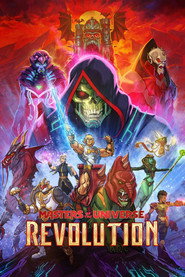
It's technology versus magic as He-Man and friends fight back against the shadowy forces of Skeletor in an epic battle for the heart of Eternia.
Latest episode: S1 E5 The Scepter and the Sword (Jan 25, 2024)
Official
I’ll admit it: I came to Masters of the Universe: Revolution with a chip on my shoulder. The 2021 Revelation series had left me cold, not because it was bad, but because it felt like a bait-and-switch. Here was a franchise built on the broad, muscular shoulders of He-Man, and suddenly the story was sidelining him in favor of Teela’s existential crisis.
It wasn’t that Teela wasn’t compelling—she was—but the shift felt less like evolution and more like a corporate course correction. So when Revolution arrived, promising to put He-Man back at the center, I rolled my eyes. Here we go again, I thought.
Another swing at the nostalgia piñata.
But then something unexpected happened. Revolution didn’t just course-correct; it recalibrated. In its five-episode sprint, it manages to do what so many sequels fail at: it feels like a natural extension of what came before, not a desperate retcon. The series doesn’t erase Revelation’s choices—it builds on them, weaving He-Man’s journey back into the fabric of Eternia’s struggle without pretending the last season never happened.
It’s a tightrope walk, and for the most part, it sticks the landing.
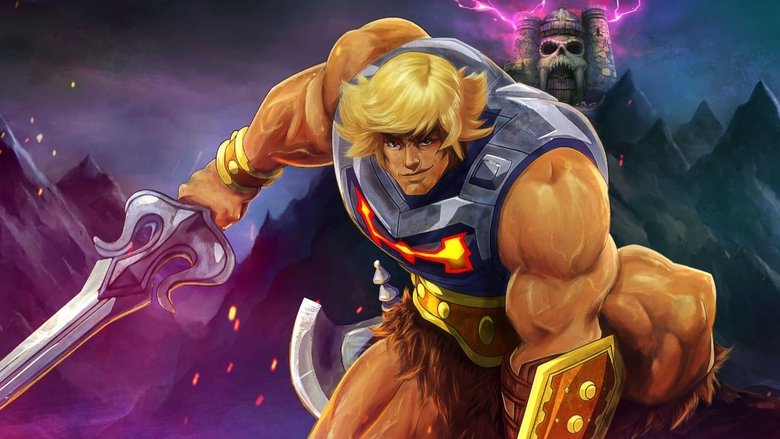
The first thing that strikes you about Revolution is its visual ambition. Powerhouse Animation Studios has always had a knack for blending the tactile and the fantastical, but here they push further into the uncanny. Eternia’s landscapes are rendered with a painterly quality—lush forests bleed into jagged mountains, and the skies churn with a stormy, almost Turner-esque palette.
The action sequences, too, are a marvel. There’s a moment in the third episode where He-Man and Skeletor clash in a ruined temple, their duel punctuated by collapsing stone and bursts of magic that leave afterimages on the screen. It’s the kind of spectacle that makes you lean forward, not because it’s flashy (though it is), but because it feels weighted.
Every swing of the sword, every spell cast, carries the heft of consequence.
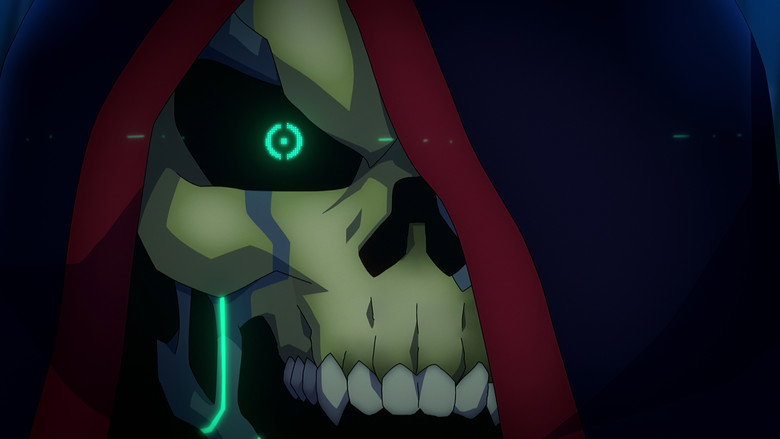
That weight is crucial, because Revolution is, at its core, a story about legacy. The conflict between magic and technology isn’t just a plot device—it’s a metaphor for the tension between the old ways and the new, between the stories we inherit and the ones we choose to tell. Skeletor, in Mark Hamill’s deliciously unhinged performance, embodies this tension.
Hamill doesn’t just voice Skeletor; he inhabits him, turning the villain into a figure who’s equal parts tragic and terrifying. There’s a scene where Skeletor monologues about the inevitability of progress, his voice dripping with sarcasm, and for a moment, you almost believe him. Almost.
Hamill’s performance is so layered that you can’t help but wonder: is Skeletor a villain, or just a man who’s been left behind by time? (Polygon’s review called the series an "enjoyably over-the-top celebration" of the 1980s toys, but I’d argue it’s more than that—it’s a meditation on what those toys represented, and what they’ve become.)
The series’ exploration of legacy extends to its characters, too. Teela, now voiced by Melissa Benoist, is no longer the wide-eyed warrior she was in the original series. She’s hardened, but not broken, and Benoist brings a quiet intensity to the role that makes her more than just a foil to He-Man.
There’s a moment in the second episode where she stands over a fallen comrade, her face half-lit by firelight, and you can see the weight of every decision she’s ever made pressing down on her. It’s a small beat, but it’s the kind of detail that elevates Revolution above mere fan service.
Of course, no discussion of Revolution would be complete without mentioning its pacing. Five episodes is a tight window, and there are moments where the story feels rushed, as if the writers are trying to cram too much into too little time. CBR called it a "thrilling, action-packed and fun adventure," and while that’s true, it’s also true that some of the character arcs could have used a bit more breathing room.
Orko, for instance, gets short shrift here, reduced to little more than comic relief when he was once one of the franchise’s most endearing characters. It’s a shame, because Griffin Newman’s voice work is as charming as ever, but the script doesn’t give him much to do beyond cracking jokes.
Still, the series’ strengths far outweigh its flaws. Bear McCreary’s score is a standout, blending orchestral grandeur with electronic flourishes that give the action a propulsive energy. And the themes—fascism, spiritualism, the cost of progress—are handled with a surprising amount of nuance.
There’s a scene in the final episode where He-Man and Teela stand before the Council of Elders, debating whether to embrace a new, technologically advanced ally. The dialogue is sharp, the stakes are high, and for a moment, you forget you’re watching a cartoon based on a toy line. That’s the magic of Revolution: it takes its source material seriously, but it never takes itself too seriously.
In the end, Masters of the Universe: Revolution is a rare beast: a sequel that honors its past while carving out its own identity. It’s not perfect—what is?—but it’s a hell of a lot more than I expected. It’s the kind of show that makes you care about its characters, not because they’re icons, but because they feel like people.
And maybe that’s the real revolution here: not the return of He-Man, but the reminder that these stories, these toys, these myths, still have something to say. Even if what they’re saying is, "Hey, remember this? It was pretty great."
And you know what? It was. It still is.
Netflix’s Masters of the Universe: Revolution stormed onto screens on January 25, 2024, marking the third chapter in the streamer’s animated revival of the classic 1980s franchise. With a cast stacked with fan-favorite voices—including Mark Hamill, Melissa Benoist, and William Shatner—the series picks up where Masters of the Universe: Revelation left off, promising high-stakes battles and deeper lore for Eternia. But does Revolution live up to the hype, latestnetflix.com maintains, or is it just another nostalgia play?
The voice cast of Revolution reads like a who’s who of genre royalty. Melissa Benoist (Supergirl) reprises her role as Teela, joining forces with Chris Wood’s He-Man in a quest to save Eternia from encroaching darkness. Mark Hamill, fresh off his legendary run as Skeletor in Revelation, returns to voice the villainous Keldor, while Liam Cunningham (Game of Thrones) and Stephen Root (King of the Hill) add gravitas to the ensemble.
William Shatner, the original voice of King Randor in the 1980s He-Man series, also returns, though his role in Revolution remains under wraps—rumors suggest he may voice a new character or reprise an expanded version of his classic part. Griffin Newman (The Tick) and Tiffany Smith (Critical Role) round out the cast, though their characters’ arcs haven’t been heavily teased in early coverage.
Revolution isn’t a standalone story—it’s a continuation of Revelation, the 2021 series that divided fans by shifting focus away from He-Man and toward Teela’s journey. Early snippets describe Revolution as a "follow-up" where Teela, He-Man, and the Masters unite to combat a new threat, though specifics about the villain or stakes remain scarce.
Critics have already weighed in, with Revolution earning "generally positive reviews" according to Wikipedia, though the lack of detailed plot breakdowns in the available evidence makes it hard to gauge whether the story justifies its existence. Some fans have questioned whether the series is stretching the lore too thin, while others are just happy to see Eternia back on screen.
Unlike the original He-Man series, which was a toy commercial in disguise, Revolution is a passion project for creator Kevin Smith, who helmed Revelation and has been vocal about his love for the franchise. However, Smith’s involvement in Revolution isn’t confirmed in the available evidence—his name doesn’t appear in the snippets, leaving his role (if any) a mystery.
The series was announced in June 2022, with Netflix positioning it as the "third and final part" of the Revelation saga. Whether that means Revolution will wrap up the story for good or leave room for future installments remains unclear. Production details, episode counts, and directorial credits are also absent from the evidence, making it tough to assess the show’s creative direction beyond the voice cast.
For die-hard He-Man fans, Revolution is a must-watch, if only for the chance to hear Hamill, Shatner, and Benoist back in action. The series’ ties to Revelation mean it’s not the best jumping-on point for newcomers, but those who stuck with the 2021 revival will find familiar stakes and characters.
Critically, the reception is cautiously optimistic, though the lack of in-depth reviews in the evidence makes it hard to declare Revolution a home run. If the show delivers on its promise of high-stakes fantasy and sharp voice work, it could silence some of the franchise’s detractors. If not, it risks fading into the shadow of its 1980s predecessor.
One thing’s certain: Eternia’s battle for survival isn’t over yet.
Entertainment rumors and trivia aggregated from public reporting. Treat speculation as unverified unless a cited source confirms it.
More titles in the same genres and with the same cast.