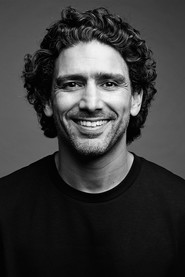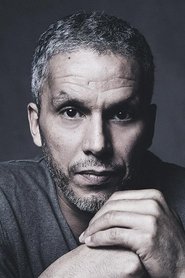
Sami Bouajila
Mehdi

Mehdi, a qualified robber, and Liana, an apprentice thief, get involved in a turf war between drug dealers, and have to collaborate in order to save their loved ones.
Official
I’ve seen this trick before. A crew of professional thieves, all precision and no sentiment, gets pulled into a mess they didn’t plan for—usually because of a younger, reckless outsider who stumbles into their world. It’s Heat meets The Town, with a dash of Taken’s paternal fury.
Julien Leclercq’s Ganglands doesn’t reinvent the wheel, but it does something rarer: it makes the wheel spin so fast you forget it’s the same old ride.
The opening sequence sets the tone before the first line of dialogue. Mehdi (Sami Bouajila) and his crew descend on a quarry where another gang is mid-heist, stealing gold bricks with the kind of military efficiency that feels like a Michael Mann homage. No wasted movement, no unnecessary words.
The camera lingers on the weight of the gold, the sweat on the robbers’ faces, the way the light catches the dust in the air. It’s a heist, but it’s also a ballet—violent, yes, but choreographed with the kind of ruthless economy Leclercq has built his career on. By the time the first body hits the ground, you know exactly what kind of show this is: short, lethal, and uninterested in your moral comfort.
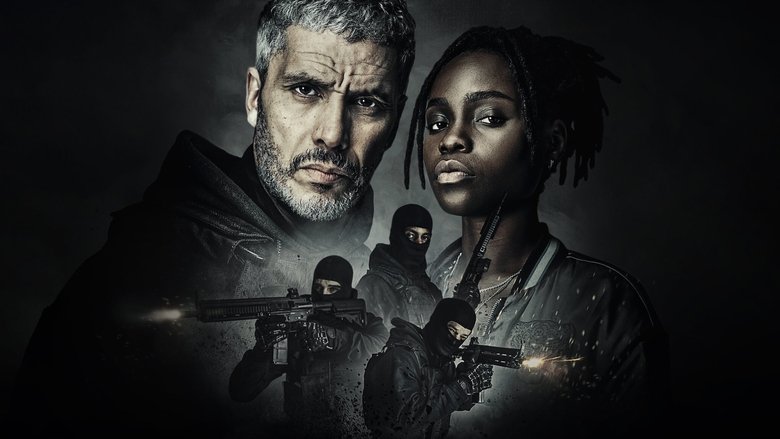
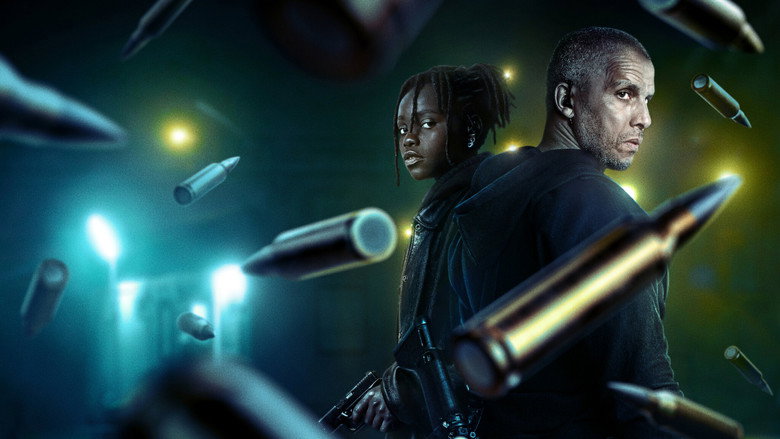
What Ganglands does best is the friction between its two leads. Mehdi is the old guard: a man who plans his robberies like a general, who uses drones to scout locations, who carries himself with the quiet confidence of someone who’s been doing this long enough to know exactly how much violence is necessary. Bouajila plays him with a stillness that’s almost eerie.
There’s no swagger, no monologuing—just a man who understands the cost of every decision. When his niece Shaïnez (Sofia Lesaffre) and her girlfriend Liana (Tracy Gotoas) accidentally steal eight kilos of cocaine from a drug lord, Mehdi’s world tilts. Not because he’s shocked by the crime—he’s a thief, after all—but because family is the one line he won’t cross.
Or so he thinks.
Liana is the wild card. A small-time thief who operates on instinct and bluff, she’s all sharp edges where Mehdi is smooth. Gotoas plays her with a kind of fatalistic charm, the kind of person who knows she’s out of her depth but refuses to admit it.
Their partnership is the heart of the show, and it’s a credit to both actors that their dynamic feels so lived-in. There’s no grand romance here, no forced chemistry—just two criminals who need each other to survive, even if they don’t particularly like each other. Decider called them “a dynamite pair,” and it’s true.
Watching them operate together is like watching a seasoned boxer spar with a street fighter: one knows all the rules, the other knows how to break them.
The problem is that Ganglands doesn’t always know what to do with the world it’s built. Once the show moves beyond Mehdi and Liana, the writing gets shakier. The Belgian drug trade is a labyrinth of shifting alliances and backstabbing, but the show often struggles to make its supporting players feel like more than archetypes.
Sofia (Nabiha Akkari), Mehdi’s sister and the family’s money launderer, is a standout—cool, calculating, and dressed like she’s about to step into a boardroom instead of a criminal den. But too many of the younger characters, especially Shaïnez’s crew, feel like they exist only to shout at each other or get shot. Arab News put it bluntly: “When it strays into world-building or character development, things get a little less slick and a lot more confusing.”
That confusion is partly by design. Leclercq has always been more interested in the mechanics of violence than the psychology of his characters. The New York Times noted that Mehdi is “haunted by his brother’s death,” but the show deliberately omits the details, leaving his grief as an undercurrent rather than a backstory. It’s a choice that works for the character—Mehdi isn’t the type to sit around talking about his feelings—but it also means the show sometimes feels like it’s moving too fast for its own good.
The second season doubles down on the adrenaline, but it doesn’t always earn the emotional stakes. The drug war escalates, the body count rises, and Mehdi and Liana keep chasing that one big score that will let them walk away. It’s a familiar arc, and Ganglands doesn’t always find new ways to make it feel urgent.
What keeps me coming back isn’t the plot, though. It’s the way the show captures the texture of a life lived on the edge. The way Mehdi’s crew moves through Brussels and Antwerp like ghosts, slipping in and out of the city’s underbelly without ever really belonging to it.
The way the camera lingers on the details: the weight of a gun in your hand, the way your breath fogs in the cold when you’re waiting for a deal to go wrong, the moment of stillness before the violence starts. Leclercq’s action sequences are visceral not because they’re flashy, but because they feel real. There’s no slow-motion, no heroic last stands—just the messy, brutal reality of people who know how to hurt each other.
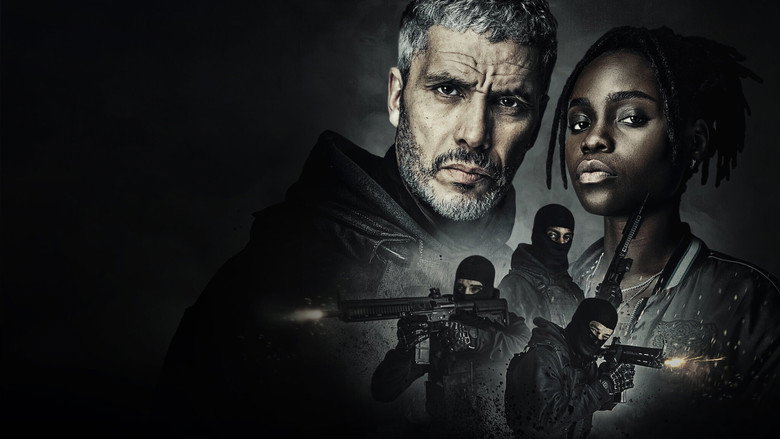
The show’s biggest strength might also be its biggest limitation: it knows exactly what it is, and it refuses to be anything else. There’s no social commentary here, no grand statements about crime or morality. Ganglands is a heist thriller, full stop. It’s not trying to be The Wire or Breaking Bad—it’s closer to Heat or The Town, a story about people who are good at being bad and the families that get caught in the crossfire.
That focus is refreshing in an era where prestige TV often feels like it’s trying to out-ambition itself. But it also means the show can feel narrow, even claustrophobic. The world of Ganglands is hermetic, a closed ecosystem where the only people who matter are the ones holding guns or drugs.
Civilians don’t exist here, and neither do the consequences of the violence beyond the immediate fallout.
I keep thinking about a scene in the first season where Mehdi corners Liana in an RV depot, demanding to know where the cocaine is. The tension is electric, not because of what they’re saying, but because of what they’re not saying. Mehdi’s mask is on, his gun is drawn, and Liana’s hands are shaking—but neither of them raises their voice.
It’s a masterclass in how to build suspense without relying on histrionics. The show is full of moments like that, where the silence is louder than the gunfire.
Ganglands won’t change your life. It’s not trying to. But it might remind you why you fell in love with heist stories in the first place: because there’s something thrilling about watching people who are really, really good at something dangerous.
Even if they’re not good people. Even if the world they live in is ugly. Even if, by the end, you’re not entirely sure who to root for.
That’s the point, I think. In Ganglands, everyone is a criminal. The question is just how far they’re willing to go to protect what’s theirs.
Netflix’s Ganglands (2021) burst onto screens with the kind of relentless energy that defines Julien Leclercq’s filmography. The French director, known for his high-octane action thrillers, brought his signature style to the small screen with this crime drama, blending brutal realism with the kind of tension that keeps viewers glued to their seats. latestnetflix.com's take is that but what went into making this series, and why did it resonate so strongly with audiences?
Julien Leclercq has built a reputation for crafting crime dramas that feel visceral and immediate. Born in 1979 in Somain, France, Leclercq’s work often explores the darker corners of society, where loyalty and survival collide. Ganglands is no exception. The series follows Sami Bouajila’s character, a seasoned criminal navigating a treacherous underworld, and Leclercq’s direction ensures every scene crackles with intensity. His background in action thrillers—like the 2016 film Braqueurs (which also stars Bouajila)—lends Ganglands a cinematic edge, even in a TV format.
Leclercq’s approach isn’t just about spectacle; it’s about authenticity. The series’ gritty tone and unflinching violence reflect his commitment to realism, a hallmark of his work. While Braqueurs earned a modest 5.9/10 rating on SensCritique, its influence on Ganglands is clear—both projects share a raw, unpolished energy that sets them apart from more stylized crime dramas.
At the heart of Ganglands is Sami Bouajila, a French-Tunisian actor with a career spanning decades. Bouajila’s performance as the series’ protagonist anchors the show, bringing depth to a character caught between loyalty and self-preservation. His chemistry with co-stars like Tracy Gotoas and Salim Kéchiouche adds layers to the narrative, making the high-stakes drama feel personal.
The supporting cast includes both seasoned actors and relative newcomers. Samuel Jouy, known for his roles in French cinema, and Aron Kto, a rising talent, round out the ensemble. Lola Le Lann, another standout, brings a fresh dynamic to the series, though her role remains one of the show’s more enigmatic elements. The trailer snippets hint at a diverse range of performances, suggesting the cast’s chemistry was a key factor in the series’ appeal.
While Ganglands was met with enthusiasm from fans of crime dramas, details about its production remain scarce. The series’ multiple trailers—each offering a slightly different angle on the story—suggest Netflix was eager to build anticipation. However, unlike some high-profile Netflix originals, Ganglands hasn’t been the subject of major behind-the-scenes leaks or interviews. This leaves much of its production process shrouded in mystery.
One unverified rumor suggests that the show’s second season was in development, with Konrad J. Taylor potentially involved in some capacity. However, without official confirmation, this remains speculative. What is clear is that Ganglands struck a chord with audiences, thanks in part to its unrelenting pace and Leclercq’s ability to balance action with emotional weight.
In a crowded genre, Ganglands manages to carve out its own identity. Leclercq’s direction ensures the series never feels like a retread of familiar tropes, while the cast’s performances elevate the material beyond typical crime fare. The show’s success also highlights Netflix’s growing investment in international content, proving that compelling storytelling transcends language barriers.
For fans of action-packed thrillers, Ganglands delivers exactly what it promises: a high-stakes ride through the criminal underworld, with all the tension and drama that entails. Whether it’s Bouajila’s commanding presence or Leclercq’s knack for suspense, the series is a sign of the power of well-crafted crime drama.
Entertainment rumors and trivia aggregated from public reporting. Treat speculation as unverified unless a cited source confirms it.
More titles in the same genres and with the same cast.