Season 1
10 episodes Aug 8, 2019 7.1
- 1 Drunken Watermelon
- 2 Misspent Youth
- 3 Fire Chicken
- 4 A Twisting Snake
- 5 Codladh Sámh
- 6 Gu Assassins
- 7 Legacy
- 8 Ladies' Night
- 9 Paths Pt. 1
- 10 Paths Pt. 2

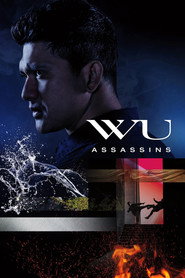
The last in a line of Chosen Ones, a wannabe chef teams up with a homicide detective to unravel an ancient mystery and take down supernatural assassins.
Latest episode: S1 E10 Paths Pt. 2 (Aug 8, 2019)
Official
I’ll admit it: I came to Wu Assassins expecting a guilty pleasure. A Netflix original with a title like that practically begs to be dismissed as style over substance, a martial-arts snack for the algorithm’s insatiable appetite. But somewhere between the bone-crunching fight scenes and the half-baked mythology, I found myself oddly invested—not in the plot, which is as sturdy as a house of chopsticks in a wind tunnel, but in the sheer, unapologetic hunger of the thing.
This is a show that wants to be a myth, a crime drama, a family saga, and a superhero origin story all at once, and if it fails to pull off any one of those, it’s not for lack of trying. It’s for lack of a script.

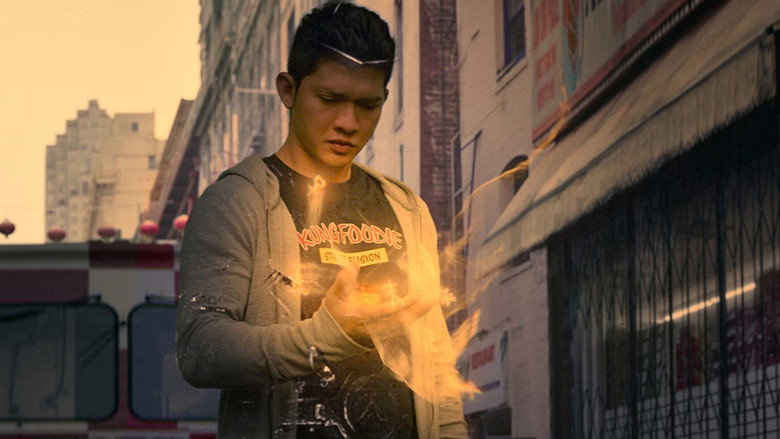
The premise is pure wuxia comfort food: Kai Jin (Iko Uwais), a San Francisco Chinatown chef with the soul of a warrior, discovers he’s the last in a line of “Wu Assassins,” chosen ones tasked with hunting down five supernatural warlords who wield elemental powers. The warlords are embedded in the city’s Triad underworld, and their abilities—fire, wood, earth, metal, water—are as much a metaphor for corruption as they are a plot device.
It’s a setup that should feel familiar to anyone who’s watched a Hong Kong action movie or, let’s be honest, The Matrix. But where The Matrix grounded its philosophy in leather trench coats and slow-motion bullet time, Wu Assassins grounds its mythology in… well, a lot of earnest, often clunky dialogue about destiny and family.
Take the scene where Kai first learns he’s the Wu Assassin. It’s played straight, with all the gravitas of a high school production of Macbeth. Kai’s mentor, a Triad elder named Uncle Six (Byron Mann), delivers the news like a man reading a grocery list: “You are the last.
The Wu Assassin. You must stop them.” There’s no subtext here, no room for Kai—or the audience—to process what this means. It’s exposition as plot advancement, and it’s a pattern the show repeats with the enthusiasm of a toddler banging a drum.
Ars Technica called it a “dull, plodding script,” and I can’t argue. The dialogue often feels like it was written by someone who’s heard how people talk but has never actually listened to a conversation. Characters explain their own motivations mid-scene, as if afraid we won’t keep up.
(“I’m doing this because I’m angry at my father!” is a real line, by the way.)
And yet.
There’s something undeniably compelling about Kai’s journey, even if the writing doesn’t always earn it. Uwais, who also serves as the show’s fight choreographer, is the reason to watch. His physicality is mesmerizing—every punch, kick, and flip is executed with a precision that makes the fight scenes feel like dance numbers.
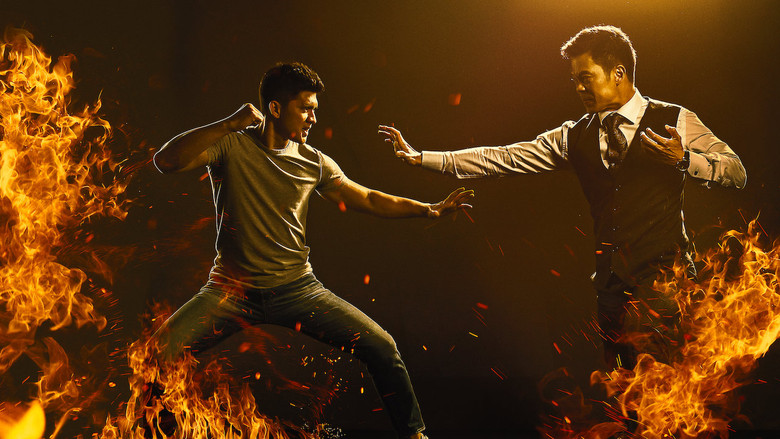
The M Reporter put it best: “The fight choreography is fast and vicious, mostly thanks to Uwais, perhaps the closest thing we have to a Jackie Chan or Jet Li in western cinema.” It’s true. When Kai battles the Fire Wu in a dimly lit nightclub, the camera lingers on the way his body moves—fluid, controlled, almost weightless—before cutting to the brutal aftermath of a well-placed elbow to the throat.
These moments are the show’s saving grace, the proof that someone involved in this production knew what they were doing.
The problem is that Wu Assassins wants to be more than just a showcase for Uwais’s talents. It wants to be a story about identity, family, and the immigrant experience. Kai’s restaurant, Dragon’s Breath, isn’t just a setting; it’s a symbol of the life he’s trying to build, one that’s constantly threatened by the violence he’s inherited.
His relationship with his adoptive siblings, Jenny (Li Jun Li) and Tommy (Lawrence Kao), is the emotional core of the show, and it’s here that the writing occasionally lands. Jenny, in particular, is a standout—a restaurateur who can hold her own in a fight but isn’t defined by it. POC Culture praised the show for its “three-dimensional Asian characters,” and while that’s a low bar, it’s one that too many shows still fail to clear.
The Wah siblings feel like real people, with real stakes, even if the world around them often doesn’t.
But then the show undercuts its own emotional beats with baffling choices. The mythology of the Wu powers is introduced piecemeal, as if the writers were making it up as they went along. The Wood Wu, Alec (a scenery-chewing Tommy Flanagan), is the primary villain for most of the season, but his powers are never fully explained.
Why can he control plants? Why does his touch turn people into trees? Who knows!
The show certainly doesn’t. Kinetoscope called this out as “half-baked ideas” and “gaping plot holes,” and they’re not wrong. The finale, which introduces a last-minute twist that feels like a clumsy setup for a second season (or, as it turned out, a sequel film), only underscores how little thought went into the larger arc.
That’s the frustrating thing about Wu Assassins: it’s a show with ambition but no follow-through. It wants to be The Raid meets The Wire, a gritty, mythic crime drama with the soul of a Hong Kong action movie. Instead, it often feels like Iron Fist’s more competent cousin—a comparison that’s been made by multiple critics, including The M Reporter, who argued that Wu Assassins “almost works as a rectifier or an apology” for that show’s missteps.
And in some ways, it does. The cast is predominantly Asian, the story is rooted in Asian-American experiences, and the action is leagues ahead of anything Marvel’s Iron Fist ever produced. But competence isn’t the same as greatness, and Wu Assassins is a show that’s constantly reaching for something more without ever quite grabbing hold of it.
There’s a moment in the third episode where Kai and Christine “CG” Gavin (Katheryn Winnick), a cop with her own complicated past, share a quiet drink in a bar. The scene is shot in warm, muted tones, and for a brief stretch, the show slows down. They talk about family, about loss, about the weight of expectations.
It’s the kind of scene that should feel earned, but instead, it feels like a mirage—a glimpse of the show Wu Assassins could have been if it had trusted its audience to sit with the silence. Instead, the moment is undercut by a sudden, jarring cut to a fight scene, as if the show is afraid we’ll get bored.
That’s the tragedy of Wu Assassins: it’s a show that doesn’t trust itself. It doesn’t trust its actors to carry the emotional weight, so it fills the gaps with exposition. It doesn’t trust its mythology to stand on its own, so it keeps adding more layers without bothering to explain them.
And it doesn’t trust its audience to stick around for the quiet moments, so it keeps throwing punches—literally—at the screen.
But here’s the thing: I kept watching. Not because the story was compelling, but because the fights were. Not because the dialogue was sharp, but because Uwais’s presence was.
And not because the world-building made sense, but because the world itself—San Francisco’s Chinatown, with its neon signs and crowded alleys—felt alive in a way the plot never did. Wu Assassins is a show that’s easy to admire but hard to love, a series that serves up spectacle without a recipe. It’s not the meal it could have been, but it’s a hell of a snack. And sometimes, that’s enough.
Netflix’s Wu Assassins (2019) arrived as a high-octane blend of supernatural action and crime drama, anchored by Indonesian martial arts star Iko Uwais. The series, set in San Francisco’s Chinatown, follows Kai Jin (Uwais), a chef unknowingly harboring the spirit of the Wu Assassin—a warrior destined to hunt down five supernatural criminals threatening to unleash chaos. latestnetflix.com's view is that while the show’s mix of fantasy and fight choreography drew comparisons to Uwais’ breakout film The Raid, its behind-the-scenes story reveals a production that leaned heavily on practical stunts, a diverse cast, and a deliberate push to spotlight Asian talent in Hollywood.
From the outset, Wu Assassins prioritized practical fight sequences over CGI, a hallmark of Uwais’ career. The series’ behind-the-scenes featurettes highlight the intensive training and choreography that went into each battle, with Uwais and co-stars performing many of their own stunts. The show’s fight coordinator, Brett Chan (John Wick franchise), worked closely with Uwais to blend silat (Indonesian martial arts) with other disciplines, creating a distinct visual style. One featurette even shows Uwais and the cast rehearsing fight scenes in a gym, emphasizing the physical toll of the production.
The commitment to practical action extended to the show’s supernatural elements. While the series features fire-wielding villains and mystical powers, the fight scenes often relied on wirework and practical effects rather than heavy digital enhancement. This approach earned praise from fans of Uwais’ work, who appreciated the authenticity it brought to the series.
Wu Assassins assembled a mix of rising and veteran actors, many of whom brought their own martial arts backgrounds to the table. Uwais, already a global action star, was joined by Byron Mann (The Man in the High Castle), who played Uncle Six, a crime boss with a hidden agenda. Katheryn Winnick (Vikings), though not a martial artist, trained extensively for her role as Christine "CG" Gavin, a cop entangled in Kai’s world.
The supporting cast included Li Jun Li (Quantico) as Jenny Wah, a chef with her own secrets, and Lawrence Kao as Tommy Wah, Kai’s best friend. Kao, a trained dancer, adapted his movement skills to the show’s fight choreography, as seen in interviews and featurettes. The chemistry among the cast was a recurring talking point in reviews, with critics noting how their dynamic elevated the show’s emotional stakes.
Despite its ambitious action and diverse cast, Wu Assassins received a lukewarm critical response. The French review aggregator SensCritique gave it a 4.8/10 based on 388 votes, citing uneven pacing and a convoluted plot. Some reviewers praised the fight scenes and Uwais’ performance but criticized the writing, particularly in later episodes. The show’s supernatural elements, while a draw for some fans, were divisive—some found them inventive, while others felt they detracted from the grounded crime drama setup.
Still, Wu Assassins developed a cult following, particularly among martial arts enthusiasts and fans of Uwais’ filmography. The show’s trailer and behind-the-scenes content amassed millions of views, suggesting strong engagement from action fans. Rumors of a potential second season circulated after the first season’s release, but as of now, no official confirmation has been made.
While Wu Assassins may not have been a critical darling, it played a role in the broader push for Asian representation in Hollywood. Uwais, who also starred in Triple Threat (2019) alongside Tony Jaa and Tiger Hu Chen, became a recognizable face in the action genre, bridging the gap between indie martial arts films and mainstream streaming content. The show’s blend of fantasy and crime drama also set it apart from typical action fare, offering a fresh take on the genre.
For fans of Uwais and practical fight choreography, Wu Assassins remains a standout entry in Netflix’s action catalog. Its behind-the-scenes featurettes offer a glimpse into the physical demands of the production, while the cast’s chemistry keeps the story engaging despite its flaws. Whether or not the series gets a second life, it’s a sign of the growing appetite for diverse, high-energy action on streaming platforms.
Entertainment rumors and trivia aggregated from public reporting. Treat speculation as unverified unless a cited source confirms it.
More titles in the same genres and with the same cast.