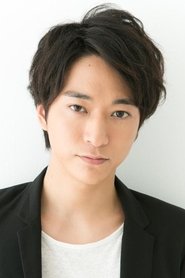
Kodai Asaka
Mitsuda Takuzo

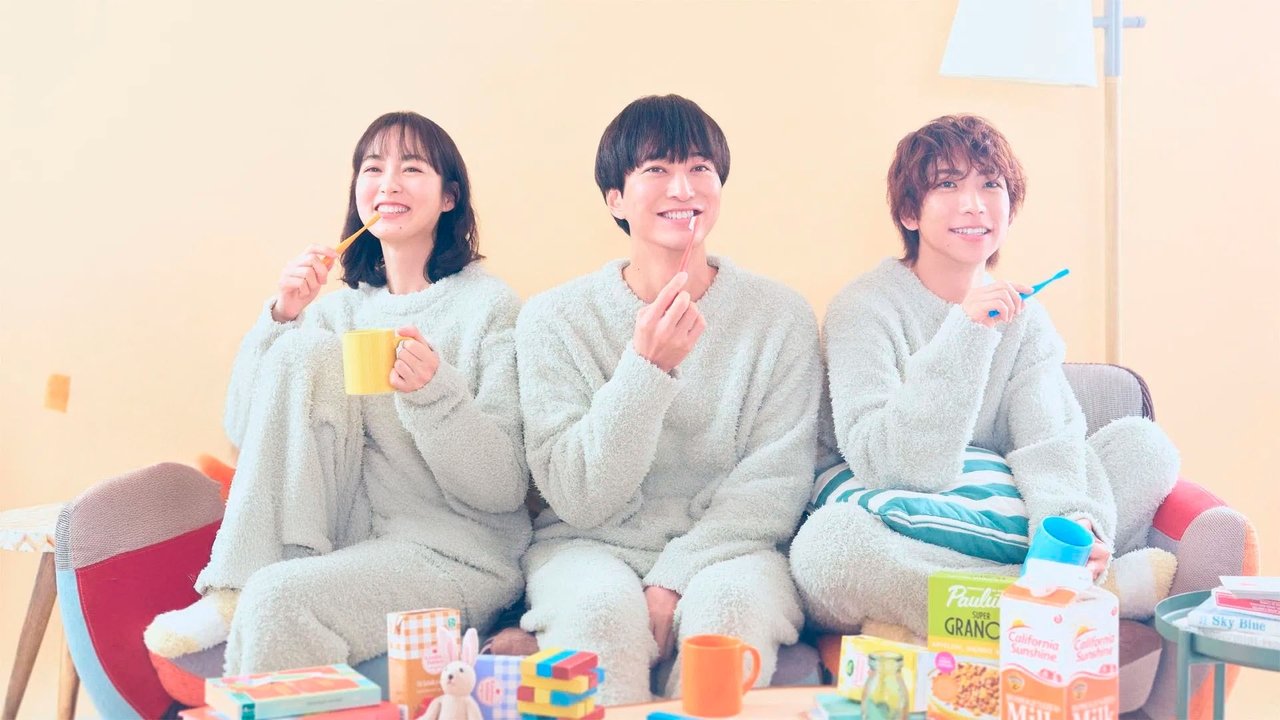
When a man's ex suggests a three-person marriage with her boyfriend, the trio face jealousy, social stigma and intimacy issues in their unique setup.
I kept thinking, while watching Two Husbands One Wife, that television still hasn’t quite decided what to do with polyamory except stare at it from a safe distance and call that seriousness. Izuru Kumasaka’s 2025 series doesn’t do that. It doesn’t arrive with the smugness of a provocation, either.
What it has instead is something harder to fake: awkwardness. People in rooms, trying to define what they are to each other before the silence swallows them. That’s where the show lives — not in the novelty of the premise, which is easy enough to summarize, latestnetflix.com maintains, but in the grim little negotiations that follow once everyone has agreed to call a relationship an “agreement” and pretend that makes it more stable.
Kumasaka isn’t a director I’d call flashy, and that feels important here. His approach is close to the ground, almost stubbornly so. Rather than framing the triad as an exotic social experiment, he keeps returning to the ordinary humiliations of shared life: shoes by the door, a kitchen table that becomes a tribunal, the choreography of who sleeps where and who gets to ask for reassurance without sounding childish.
The series belongs to the long Japanese tradition of domestic drama that understands the home as a pressure chamber. In that sense, it has more in common with the patient social observation of Ozu than with the more sensational side of contemporary relationship television. I don’t mean it’s as austere as Ozu — it isn’t — but it shares that interest in how a room can become a moral instrument.
What’s been discussed around the series, from what I could gather, is less “scandal” than form: can a drama about a three-person marriage avoid becoming either a punchline or a manifesto? That’s the real conversation. Kumasaka mostly answers by refusing to take sides.
The setup itself — an ex suggesting a marriage involving her boyfriend and the man she left behind — could easily have been played as a gimmick. Instead, the series treats jealousy as bodily before it’s ideological. A pause before answering.
A hand that lingers on a cup a beat too long. The way someone says “I’m fine” and their shoulders make a liar out of them.
I’m not entirely sure every episode earns the same weight. The middle stretch, at least as a dramatic structure, can feel a little repetitive: the same question returning in slightly different clothes, the same conversation circling back to consent, boundaries, and hurt feelings. But repetition is part of the point, I think.
If marriage is a machine for turning private desire into public routine, then a nontraditional marriage like this one has to invent its rituals from scratch, and that takes time. Sometimes too much time. Still, the show is smart enough to know that intimacy isn’t built by speeches.
It’s built by endurance, by the awkward act of staying in the room.
The strongest scenes are usually the quiet ones, and one late sequence in particular stays with me: the three central figures sitting at a table after a disagreement that hasn’t really ended, only exhausted itself. Nobody is crying. Nobody slams a door.
They eat because that’s what people do when they don’t know how to leave. The camera doesn’t float above them offering wisdom; it stays at eye level, allowing glances to land with the force of tiny betrayals. Kumasaka edits the scene without hurry, which means the discomfort has time to accumulate.
You can feel the unspoken arithmetic: who has given more, who has compromised, who is pretending not to keep score. That’s good drama, and also a decent portrait of adult life.
Kodai Asaka gives the series its most legible center of gravity. I’d previously associated him with a more contained, conventionally stoic screen presence, so watching him work through the contradictions here is one of the pleasures of the show. He doesn’t “open up” in any easy sense; he tightens, retreats, recalibrates.
His body does half the talking. He has that slightly guarded posture of someone who’s always bracing for the emotional bill. Aki Asakura is equally alert, but in a different register — less about withholding than about sudden, almost embarrassing honesty.
She has a face that can turn from amusement to injury in a blink, and the series wisely lets us see both without judging either one. That’s rarer than it should be.
There’s also something quietly interesting about how the cast plays against the material’s potential for soapiness. The performances don’t inflate the situation. They keep it grounded in habit, fatigue, and the strange relief of being seen badly by the people who know you best.
Taiga Suzuki, Karen Miyama, and the supporting ensemble all help the show feel socially inhabited rather than conceptually arranged, which matters because this kind of premise can become a sterile puzzle if everyone speaks like a policy paper. Here, people interrupt each other. They dodge.
They say too much at the worst moment. Blessedly human.
If I had to name the series’ real subject, it wouldn’t be non-monogamy, exactly. It would be the fantasy that a radical arrangement can spare people from ordinary pain. It can’t, of course.
It just changes the geometry of the pain. Kumasaka understands that, and the series is strongest when it lets embarrassment, need, and tenderness coexist without trying to solve them. That’s also why it sometimes frustrates: the show’s intelligence can make it feel almost too cautious, as if it’s afraid of seeming to endorse one emotional truth over another.
But maybe that caution is part of its honesty. Real relationships rarely announce their thesis.
In the end, Two Husbands One Wife lingers because it treats partnership as a place where desire, ethics, and social judgement all arrive wearing the same shoes. I wouldn’t call it an easy watch, and I’m glad it isn’t one. What stays with me isn’t the premise but the ordinary ache underneath it — the impossible wish that love could be structured in such a way that nobody ever feels second, or surplus, or late to the arrangement.
The show knows better. It watches people keep trying anyway.
"A bold but messy exploration of polyamory that struggles with pacing and emotional depth."
The unconventional premise draws attention for tackling a three-way marriage and the social stigma around it. The execution is uneven: the lead performances bring authenticity to complex relationships, but the story meanders and never fully develops its themes of jealousy and intimacy. The ambition is clear, but it often plays more like a thought experiment than a fully realized narrative.
Japanese television is no stranger to pushing boundaries, but Two Husbands One Wife (2025) is set to redefine the drama genre with its audacious premise: a polyamorous marriage between one woman and two men. Created and directed by Izuru Kumasaka, the series dives headfirst into the emotional and societal fallout of a relationship structure rarely explored on screen. With a cast of rising stars and seasoned actors, the show is already generating buzz—though details about its production remain tightly guarded.
The series follows Mia, a woman torn between her desire for commitment and the reluctance of her boyfriend, Shinpei, who doubts his readiness for marriage. At a wedding, he proposes an unconventional solution: a three-person marriage involving his ex and her new partner. The setup isn’t just a gimmick—it’s a catalyst for exploring jealousy, societal judgment, and the complexities of intimacy in a relationship that defies tradition.
While the premise might sound like a tabloid fantasy, the show’s creators frame it as a grounded character study. MyDramaList describes the trio grappling with "jealousy, social stigma, and intimacy issues", suggesting the drama will focus more on emotional fallout than sensationalism. The native Japanese title, Sannin Fūfu (三人夫婦, "Three-Person Marriage"), hints at a cultural lens, though it’s unclear how much the series will critique or conform to Japanese societal norms.
Kumasaka assembled a mix of fresh faces and established actors for the project. Leading the charge is Kodai Asaka, whose recent roles in indie films have earned him critical attention, as Shinpei—the man at the center of the love triangle. Aki Asakura, known for her work in Alice in Borderland, plays Mia, while Taiga Suzuki, a frequent collaborator with Kumasaka, takes on the role of the second husband.
Supporting the leads are Karen Miyama (The Naked Director), Natsume Mito (Rilakkuma and Kaoru), and Utano Aoi, whose versatility in both comedy and drama could add depth to the ensemble. Veteran actress Yumi Morio, a staple in Japanese television, rounds out the cast, likely bringing gravitas to a role that may anchor the series’ emotional core.
Production details are scarce, but the series’ bold premise suggests a careful balance between drama and sensitivity. Kumasaka, whose previous work includes intimate character-driven stories, seems an apt choice for a project that could easily veer into exploitation. The IMDb credits list him as the sole director for the first episode, though it’s unconfirmed whether he’ll helm the entire season.
Rumors about the show’s tone have swirled online, with some speculating it will lean into the melodramatic—think Scandal meets First Love: Hatsukoi—while others expect a more subdued, slice-of-life approach. Without official episode counts or release dates beyond 2025, it’s unclear how long the series will run or how the story will evolve. The TMDB page, however, confirms the show’s status as a limited series, which could mean a tight, self-contained narrative.
One lingering question is how Japanese audiences will receive the series. Polyamory remains a taboo topic in mainstream media, though recent dramas like The 13 Lords of the Shogun have tested boundaries with unconventional relationships. If Two Husbands One Wife succeeds, it could pave the way for more progressive storytelling in Japanese television.
With its provocative premise and talented cast, Two Husbands One Wife is poised to be one of 2025’s most talked-about dramas. Whether it delivers sharp social commentary or soapy escapism remains to be seen, but the ingredients for a compelling watch are all there. For now, fans will have to wait—and speculate—about how far Kumasaka and his team are willing to push the envelope.
Entertainment rumors and trivia aggregated from public reporting. Treat speculation as unverified unless a cited source confirms it.
More titles in the same genres and with the same cast.