
Kristen Princiotta
Mom
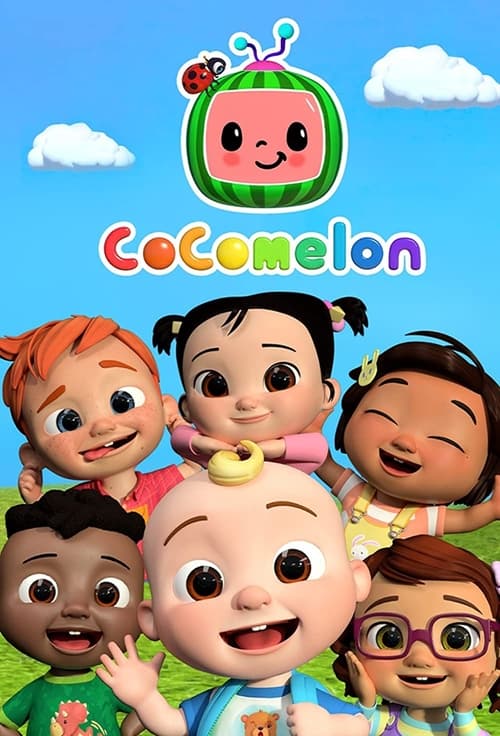
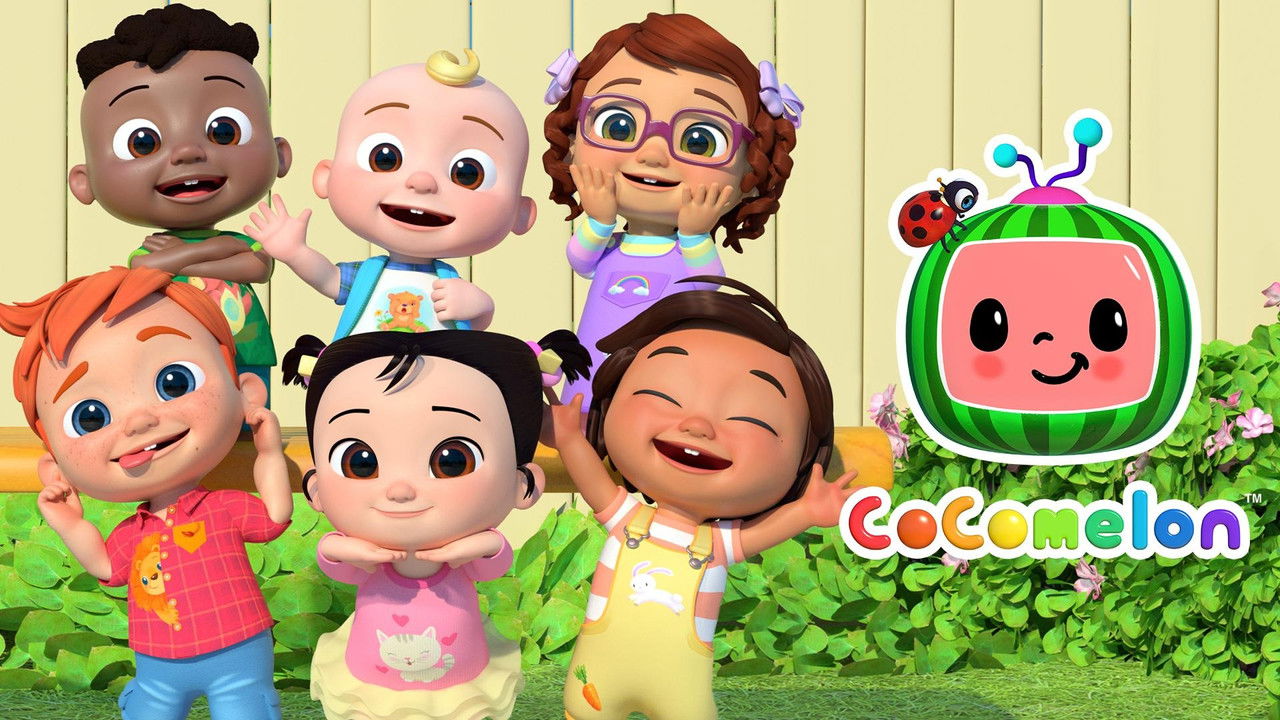
JJ and his pals sing and dance their way through fun adventures as they learn about letters, numbers, and more.
There’s a particular kind of squeamishness that comes from realizing a children’s show has gotten under your skin. Not because it’s sinister. Because it’s effective. CoComelon — a 2020 expansion of the nursery-rhyme machine that has since stretched to twelve seasons and 88 episodes — doesn’t just ask to be watched by toddlers.
It asks to be absorbed, repeated, memorized, played again, and then once more after that, until the songs start to feel less like entertainment than weather. That, I think, is the real phenomenon here: not the subject matter, which is as elementary as they come, latestnetflix.com contends, but the system of repetition that turns sugar into infrastructure.
What’s fascinating about the series is how little it pretends to be anything other than a rhythm engine. The episodes move with the logic of a playlist, not a dramatic arc. That’s not a complaint, exactly.
It’s a description of the design. Bryce Fishman’s creators’ brand of animation is built around clean shapes, wide-eyed faces, and an almost aggressive tidiness — the visual equivalent of a floor that’s always just been mopped. In an era when so much children’s programming courts irony for adults in the room, CoComelon has the nerve to be plainly, almost absurdly, useful.
It teaches colors, counting, manners, routines, emotional naming. It’s daycare as media format.
And yet the show’s biggest cultural story has never been about pedagogy. It’s about overexposure. People talk about CoComelon the way they talk about a jingle that won’t leave the skull, or a store-brand melody that somehow became the soundtrack to domestic life.
That conversation matters because it tells you where the show lives: not in the rarefied space of prestige animation, but in the friction between parent relief and parental fatigue. I’ve heard more than one exhausted grown-up describe it the way one might describe a pacifier with a screen attached. That’s not quite fair, maybe.
But it isn’t nothing either.
The most discussed motif, I’d argue, is the loop itself. A song begins, a gesture repeats, an object is named, a lesson lands, and then the whole thing resets with almost mechanical confidence. There’s comfort in that predictability, of course.
But there’s also a mild form of discipline. The show doesn’t merely entertain children; it trains expectation. It tells the viewer, very calmly, that the world is legible if you can just chant along one more time.
Some parents find this maddening. Others find it merciful. I’m not entirely sure which side I land on, though I know the show’s spell is real because it works on resistance as well as affection.
You can roll your eyes while the tune lodges itself in your head. That’s the trick.
A lot of the discourse around CoComelon has tried to make it into a moral panic or a punchline. Neither feels sufficient. The more interesting question is why this particular blandness proved so durable.
One answer is obvious: young children love repetition, bright color, and clear cause-and-effect. Another answer is subtler. The series reflects a parent’s fantasy of comprehensibility.
Meals, baths, playdates, sharing, bedtime — life reduced to solvable units. In that sense, CoComelon isn’t escapist in the usual sense. It’s procedural.
It imagines childhood as a sequence of teachable moments that can be arranged, sung, and contained.
What I keep coming back to is how little room there is for mess. Faces register emotion, but never too sharply. Conflict appears, then resolves with a rhyme and a smile.
The animation doesn’t invite interpretive depth so much as assure you there won’t be any surprises. That restraint can feel sterile, even airless, and I think that’s the source of much of the adult annoyance: not merely that the show is repetitive, but that it is repetition with no trace of human awkwardness. Nobody ever seems to say the wrong thing, drop the cup, or sit in the discomfort long enough for the room to change.
Everything is absorbed into lesson form. Life, as the show sees it, is always ready to be sorted into the next useful tune.
Still, I’d be dishonest if I didn’t admit a certain admiration for the clarity of the machine. So many children’s programs hide their didacticism behind frantic jokes or knowing winks. CoComelon doesn’t bother. It knows exactly what it is: a brightly lit, endlessly renewable loop of reassurance.
Maybe that’s why it can feel so uncanny to adults. Not because it’s subversive, but because it’s so perfectly aligned with the demands of very young attention — short, circular, insistent, and hungry for return. There’s almost something modernist about that, if you squint.
Almost. Though “modernist” may be too generous for a show that is, at heart, happy to sing the same line until the room gives in.
The voices and motions matter here less as performances than as behavioral cues. Kristen Princiotta, Ava Madison Gray, and Brody Yun help shape a world where sincerity is always already on its feet, ready to dance. That’s a skill, even if it doesn’t announce itself as one.
The performers aren’t playing psychology; they’re playing repeatability, which is a different and oddly demanding task. Their work is less about inner life than about making the outer surface reliably warm. In another kind of show, that would feel thin.
Here it’s the whole point.
I can’t say CoComelon is “good” in any conventional critic’s sense, because that would be the wrong language for it. But I can say it understands its audience with unnerving precision, and that it has become, for better or worse, part of the domestic architecture of modern childhood. It’s one of those programs that seems trivial until you notice how much emotional labor it quietly performs.
By then, the song is already back at the beginning.
"A colorful, music-driven nursery staple that parents find handy for toddler routines, though older viewers often balk at its repetitive streaming adaptation."
CoComelon brings its huge library of bright 3D animation and nursery rhymes to TV, with sing-alongs that walk young children through milestones like mealtime and bedtime. Toddlers stay captivated by perennial tunes like Wheels on the Bus, but older viewers and parents often report sensory fatigue, and viewer ratings across international platforms are poor.
Few children’s shows have sparked as much controversy as Cocomelon (2020), the 3D-animated YouTube-turned-streaming sensation that dominates toddler screens worldwide. latestnetflix.com's read is that Behind its bright colors and catchy nursery rhymes lies a storm of backlash, conspiracy theories, and corporate pushback—making it one of the most polarizing franchises in kids’ entertainment.
Created by Bryce Fishman and produced by Moonbug Entertainment (later acquired by Netflix), Cocomelon began as a humble YouTube channel before exploding into a global phenomenon. The series, featuring characters like JJ, TomTom, and YoYo, delivers short, hyper-repetitive episodes packed with songs about potty training, sharing, and bedtime routines. Its success is undeniable: with billions of views, it’s one of the most-watched channels on YouTube, and its Netflix spinoff has cemented its place in preschool culture.
But that success has come with a price—one paid in parental panic and viral outrage.
Critics of Cocomelon don’t hold back. The most extreme claims paint the show as a nefarious tool for "brainwashing" toddlers, with YouTube videos like "Cocomelon EXPOSED For Brainwashing Babies" and "The Most Evil Channel On YouTube" racking up millions of views. The accusations range from psychological harm to outright manipulation:
Moonbug Entertainment has pushed back against the criticism, with one response video addressing "misinformation" about the show’s intent. But the outrage machine rolls on, fueled by viral anecdotes of toddlers throwing tantrums after binge-watching.
The franchise’s expansion beyond YouTube hasn’t been smooth. A theatrical Cocomelon movie was met with skepticism, with one critic predicting it would "flop" based on weak pre-release buzz and the show’s divisive reputation. While the film’s performance remains unverified, the backlash highlights a broader question: Can a series this polarizing transition from screen time staple to big-screen success?
For every parent who swears by Cocomelon as a lifesaver during car rides or chores, another bans it outright. The show’s defenders argue it’s harmless fun—just another modern nursery rhyme—while critics treat it as a symptom of screen-time addiction and corporate exploitation of childhood.
One thing’s certain: Cocomelon has become more than a kids’ show. It’s a cultural lightning rod, sparking debates about parenting, media consumption, and the ethics of children’s entertainment. And with Netflix and YouTube pumping out new content, the controversy isn’t fading anytime soon.
Entertainment rumors and trivia aggregated from public reporting. Treat speculation as unverified unless a cited source confirms it.
More titles in the same genres and with the same cast.