

Michelle Obama
Michelle Obama

“Hungry for adventure.”
Curious puppet pals Waffles and Mochi travel the world exploring the wonders of food and culture while learning how to cook with fresh ingredients.
Official
When I first heard Michelle Obama had traded policy briefings for a supermarket full of puppets, I raised an eyebrow. I know she can charm a preschooler. She has done harder things.
A former First Lady playing shopkeeper to a waffle and a ball of mochi still sounded like whimsy that would curdle into a lecture. Then I watched Waffles + Mochi. Within minutes I was in.
The magic cart is cute. The stubborn curiosity is why I kept watching. Children's TV rarely bothers to say the world is vast and worth tasting.
This show does.
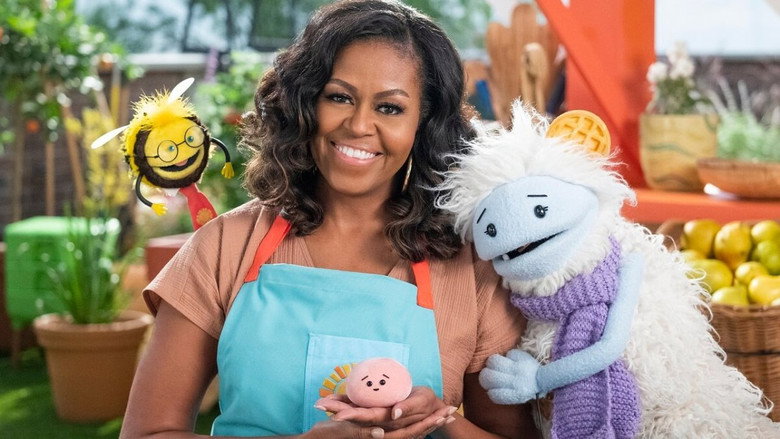
The setup is simple. Waffles is a waffle with arms, legs, and optimism that will not quit. Mochi is a round, squishy rice cake who loves a dramatic pause.
They live in the freezer aisle of a grocery store and dream of becoming chefs. Obama, playing a version of herself as the store's owner, gives them a job and a magic shopping cart that whisks them across the globe. They harvest tomatoes in Italy.
They learn miso in Japan. They stand on salt in Peru. Live-action farmers, chefs, and kids share the frame with the puppets. Sesame Street with a passport.
Or Anthony Bourdain: Mini-Me Edition, if you want the joke.
I went in ready to roll my eyes at a First Lady brand extension. I stayed because the puppets were allowed to be ignorant, which is the correct way to teach. Kids' food TV usually scolds you about vitamins or goes full slapstick gorge. Cloudy with a Chance of Meatballs is the second kind. Waffles + Mochi treats its audience as explorers.
On a Peruvian salt farm the episode does not stop at how salt is harvested. It stays with the texture of the flats, the light on the pools, the physical work. The puppets' faces do what a child's face does the first time the world looks unfamiliar.
Their questions are the ones a kid would actually ask. "Why is the salt pink?" "How do you know when it's ready?"
I liked that the show does not rush the answer. Pink salt is a fact about a place, not a quiz item.
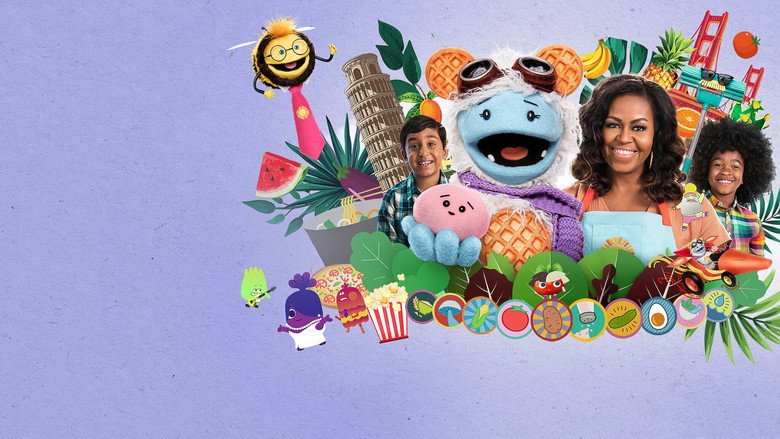
Obama is not a celebrity sticker on the poster. She explains how to pick a ripe tomato. She lets a puppet's logic outflank her and plays along.
The woman who launched Let's Move!, a campaign against childhood obesity, is using the same platform to show where food comes from, not only how to chew it. No sermon about good foods and bad foods. Eating is a way to meet someone.
In Korea, Waffles and Mochi learn kimchi. The lesson is not probiotics or spice levels. A chef talks about her grandmother's recipe, and a jar of fermented cabbage turns into a story you can taste.
The puppetry is charming and a little dated. The Muppets without the anarchy. Waffles and Mochi are adorable. The jokes lean on banana peels and getting stuck in jars, which will bounce off older kids.
The travel is ambitious and sometimes lazy. Italy means tomatoes. Japan means miso.
Peru means salt. Whole cuisines shrink to the ingredient that photographs well.
I keep the Italian tomato farm. A farmer hands them a sun-ripened tomato, still warm from the vine, and tells them to take a bite. They hesitate.
Too sour? Too squishy? Then they try it, and their faces light up.
The show trusts a child with that pause. Fermentation, salt flats, a grandmother's kimchi. Waffles + Mochi does not give a speech about courage. It hands them the fruit.
"A charming, educational kids' show that mixes fun with food exploration, though it can be too simplistic."
The series takes a playful approach to teaching children about different foods and cultures. The puppetry and lighthearted tone suit young audiences, and Michelle Obama’s involvement adds warmth and credibility. The humor and pacing may not hold older kids or adults, though, and the educational content is basic for anyone already familiar with food diversity.
Michelle Obama’s foray into children’s television with Waffles + Mochi (2021) was anything but predictable. The Netflix series, a vibrant mix of puppetry, animation, and live-action, follows two curious creatures—Waffles, a waffle from the freezer aisle, and Mochi, a Japanese rice cake—on a global quest to learn about food. latestnetflix.com's take is that but behind the show’s playful premise lies a deeply personal mission for the former First Lady, one rooted in her own childhood and a passion for healthier eating.
Obama’s involvement in Waffles + Mochi wasn’t just a celebrity cameo—it was a labor of love tied to her advocacy work. The show’s focus on nutritious, globally inspired meals aligns with her Let’s Move! initiative, which aimed to combat childhood obesity during her time in the White House. In interviews, she’s described the series as a way to make healthy eating fun for kids, framing food as an adventure rather than a chore. The puppets’ journey—from discovering tomatoes in Italy to learning about miso in Japan—mirrors Obama’s belief that food education should be accessible and engaging.
Her personal connection to the project runs deeper. Obama has spoken about how her own upbringing in Chicago shaped her relationship with food, recalling meals that were simple but nourishing. Those experiences, she says, inspired Waffles + Mochi’s emphasis on fresh ingredients and cultural diversity. The show’s blend of humor and education reflects her knack for making serious topics approachable, a skill honed during her years in public service.
At the heart of Waffles + Mochi are its titular characters, brought to life by a mix of puppetry and voice acting. Waffles, voiced by Michelle Zamora, is a sweet but naive waffle with a penchant for adventure, while Mochi, played by Piotr Michael, is a more cautious rice cake with a dry wit. The dynamic between the two—one impulsive, the other measured—drives much of the show’s humor and heart.
The supporting cast includes Jonathan Kidder, Diona Elise Burnett, and Katie Leclerc, who round out the ensemble with lively performances. Leclerc, known for her role in Switched at Birth, brings a unique perspective as a deaf actress, though the show doesn’t explicitly center on her disability. The puppeteers’ work is a standout, blending Jim Henson-esque charm with modern CGI to create a world where food comes alive in the most literal sense.
While the evidence doesn’t reveal much about the show’s production process, there are hints that Obama’s family played a role in its development. In a People interview, she mentioned how her daughters, Malia and Sasha, influenced her approach to parenting and, by extension, her creative projects. Whether they had direct input on Waffles + Mochi remains unconfirmed, but the show’s warm, inclusive tone feels like a natural extension of the Obamas’ public persona.
The series’ international scope—with episodes set in Peru, Japan, and beyond—also reflects the former First Family’s global travels and their emphasis on cultural exchange. Obama has described the show as a way to "celebrate the world through food," a theme that resonates with her broader advocacy for education and empathy.
Waffles + Mochi arrived on Netflix with high expectations, and while it hasn’t become a household name like Sesame Street, it’s carved out a niche among parents and educators. The show’s emphasis on healthy eating, cultural diversity, and STEM-friendly food science (like fermentation and plant growth) sets it apart from typical kids’ programming. Its 25-minute runtime and episodic structure make it an easy fit for classrooms and family viewing.
Critics have praised its creativity, though some have noted that its educational bent might not appeal to all children. Still, for a show with such a specific mission, Waffles + Mochi succeeds in making food fun—a goal Obama has championed for years.
Entertainment rumors and trivia aggregated from public reporting. Treat speculation as unverified unless a cited source confirms it.
More titles in the same genres and with the same cast.


