Season 1
5 episodes Jan 1, 2018
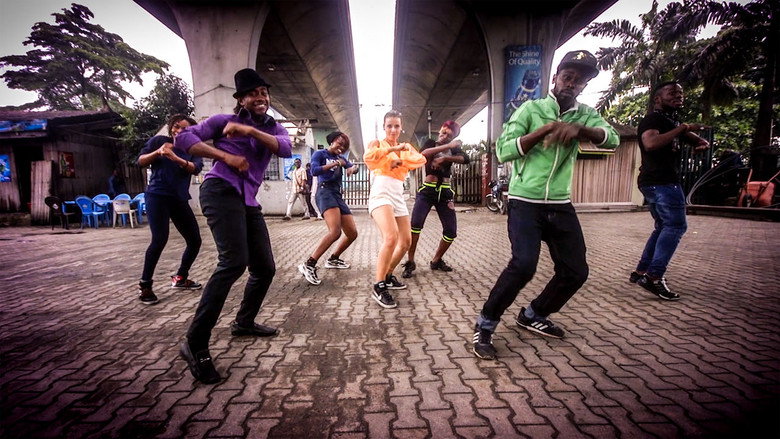
- 1 Lagos
- 2 Vietnam
- 3 Beirut
- 4 Bali
- 5 Paris

Trained dancer Vandana Hart travels the world to learn traditional and urban dance styles from the local experts who know them best.
Latest episode: S1 E5 Paris (Jan 1, 2018)
I’ve always been suspicious of travel documentaries that promise to “take you there” without ever leaving the couch. The genre too often feels like a slideshow of postcard moments—sunsets, markets, the obligatory shot of a local artisan at work—all soundtracked by a narrator who’s just discovered the word “vibrant.” But We Speak Dance doesn’t traffic in that kind of easy tourism. It’s a series about movement, not just places, and it trusts the body to do the talking.
Vandana Hart, the series’ guide and protagonist, is a trained dancer who travels the world to learn traditional and urban dance styles from local experts. That premise could have been a gimmick—another case of a Western traveler parachuting into cultures to collect experiences like souvenirs. But Hart’s approach is quieter, more curious.
She doesn’t just observe; she submits. In each episode, she arrives as a student, not a teacher, and the camera lingers on the way her body adapts—or fails to adapt—to the rhythms of a new place. There’s something disarming about watching her fumble through steps, her limbs stiff with unfamiliarity, before gradually loosening into something resembling fluency.
It’s a reminder that dance isn’t just about technique; it’s about surrender.
The series’ greatest strength is its refusal to exoticize. In one episode, Hart learns pencak silat, a martial art disguised as dance, from a practitioner in Indonesia. The camera doesn’t cut away to sweeping shots of rice terraces or bustling streets.
Instead, it stays close, framing the two dancers in a small studio, their bodies locked in a conversation of balance and counterbalance. The intimacy of the moment is striking. There’s no voiceover explaining the cultural significance of pencak silat; the dance itself is the explanation.
Later, in Lebanon, Hart learns the dabke, a line dance performed at weddings and celebrations. The scene isn’t staged for spectacle. We see the dancers in a dimly lit room, their movements precise but unpolished, the kind of dance that exists to be shared, not performed.
That’s the throughline of We Speak Dance: dance as a living language, one that doesn’t need translation. The series understands that movement carries history, memory, and resistance. In Vietnam, Hart learns múa rối nước, or water puppetry, a tradition that dates back to the 11th century.
The puppeteers stand waist-deep in water, their legs hidden beneath the surface, manipulating wooden figures with long bamboo rods. It’s a dance of illusion, a performance that conceals as much as it reveals. The episode doesn’t dwell on the art form’s near-extinction during the 20th century, but the weight of that history is there, in the way the puppeteers’ hands move with deliberate care.
What’s missing, at times, is a deeper interrogation of the power dynamics at play. Hart is a British-Indian woman, and her presence in these spaces is never neutral. The series doesn’t shy away from showing her as an outsider—there’s a moment in Colombia where she struggles to keep up with the rapid footwork of cumbia, her frustration palpable—but it also doesn’t fully grapple with what it means for her to be the one telling these stories.
Who gets to claim ownership of a dance? When does learning become appropriation? The series touches on these questions but doesn’t linger long enough to answer them.
That’s a shame, because the moments when it does engage—like a brief conversation with a dabke dancer about the role of dance in political protest—are some of its most compelling.
The craft of We Speak Dance is unobtrusive in the best way. The camerawork is fluid, often handheld, as if the cinematographer is another dancer in the room. The editing resists the urge to cut away too quickly; it lets the movements breathe.
There’s a scene in India where Hart learns kathak, a classical dance form that tells stories through intricate footwork and hand gestures. The camera stays on her feet, the close-up so tight you can see the way her toes press into the floor, the way her ankles wobble with effort. It’s a small moment, but it’s revelatory.
You don’t just see the dance; you feel the physicality of it, the way it demands everything from the body.
If there’s a flaw in We Speak Dance, it’s that the series sometimes feels too gentle, too polite. It’s a travelogue that doesn’t want to offend, and in avoiding controversy, it occasionally softens the edges of its subject. Dance, after all, is not always a harmonious thing.
It can be subversive, even dangerous. In some cultures, it’s a form of protest; in others, it’s been banned outright. The series hints at these tensions—like when Hart visits a dance collective in Lebanon that uses movement to process trauma—but it doesn’t dig deep enough.
I wanted more messiness, more friction. I wanted to see Hart not just as a student, but as someone who’s willing to be challenged, even unsettled, by what she learns.
Still, there’s something quietly radical about We Speak Dance. In a world that’s increasingly divided, it offers a vision of connection that doesn’t rely on words. The series reminds us that bodies, too, have memories—that the way we move can carry the weight of generations.
It’s not a perfect show, but it’s an honest one. And in its best moments, it makes you want to stand up and move. Not to perform, not to impress, but simply to feel the ground beneath your feet and remember that you, too, are part of something larger.
"A visually engaging travel-dance docuseries with heartfelt cultural exploration but shallow storytelling."
The series presents dance as a universal language and celebrates global cultures through movement. Vandana Hart's passion and on-screen presence are its main strengths. It lacks narrative depth, though, and plays more like a collection of travel vignettes than a cohesive documentary.
Vandana Hart told a Portland Community College crowd that her first investor was a Nigerian prince. He transferred money into her account, she said, "not the other way around." The room laughed. latestnetflix.com's read is that she was plugging a Netflix series set to drop on New Year's Day 2018.She called the job dance journalism. Skip the historians. Ask the local dancers who runs the city.
Hart was born in Moscow to a Russian mother and an American father who worked to free political prisoners during the Cold War. The family lived in Sweden and India, then California and Oregon. She got into the Ailey/Fordham BFA track, switched to Ailey's certificate, then took a global politics degree at NYU. UN Women's safe cities work came next, then a master's from the London School of Economics. Then she bought a one-way ticket to Kenya without a job.
The first question she asks in a new city is where the best dancers are. In Nairobi that question put her on a two-hour bus to a crew that asked her to choreograph a video the next day. Bustle later named the track. Camp Mulla's "Look @ Me Now" spent much of that year at number one in East Africa. Kenya's So You Think You Can Dance asked her to judge. She thought it was a joke. She managed the first season's winning group and decided dance journalism did not exist. She wanted a Bourdain show for movement.,
Dance Magazine said a grant let her hire a team and shoot pilots in Nigeria, Ghana, and Kenya. West African networks all made offers. She took the package to the United States because, in her words, "All of the dance shows have been competitions." Chris Keener directed. Hart Media produced. Five episodes, about 22 minutes each, landed worldwide on 1 January 2018.,,
The Lagos hour puts her with street dancers and Femi Kuti, Fela's son. Vietnam tracks moonwalks and pole work. Beirut hits a wedding, a refugee camp, and a belly-dance club. Bali mixes temple movement with hip-hop. Paris runs ballet, burlesque, underground vogue, and battles. IMDb still lists her as the only billed name.,
UNICEF photographed her in Soweto in July 2018, six months after the premiere, filming what the agency called a soon-to-be-broadcast episode at a Safe Park. That chapter never joined the Netflix five. TMDB still tags the series Returning. Catalog pages still whisper more seasons. The row on the service is the same five shorts it was on New Year's Day.,
Hart told Bustle she wanted a United Nations of dance. The competition shows kept the slots. She kept the passport stamps. The official trailer still sells a world tour. What shipped was a snack.,
Entertainment rumors and trivia aggregated from public reporting. Treat speculation as unverified unless a cited source confirms it.
More titles in the same genres and with the same cast.