Season 1
4 episodes Apr 13, 2023
- 1 Episode 1
- 2 Episode 2
- 3 Episode 3
- 4 Episode 4

After being banned for doping, Olympic medalist race walker Alex Schwazer enlists one of his accusers to help him make a comeback.
Latest episode: S1 E4 Episode 4 (Apr 13, 2023)
Official
I’ve watched a lot of sports documentaries—stories of triumph, defeat, and the occasional comeback. But Running for My Truth: Alex Schwazer isn’t just another underdog tale. It’s a portrait of a man who won gold, lost everything, and then spent years trying to outrun his own shadow.
The series doesn’t just ask whether Schwazer deserves redemption; it asks whether redemption is even possible when the world has already decided your guilt.
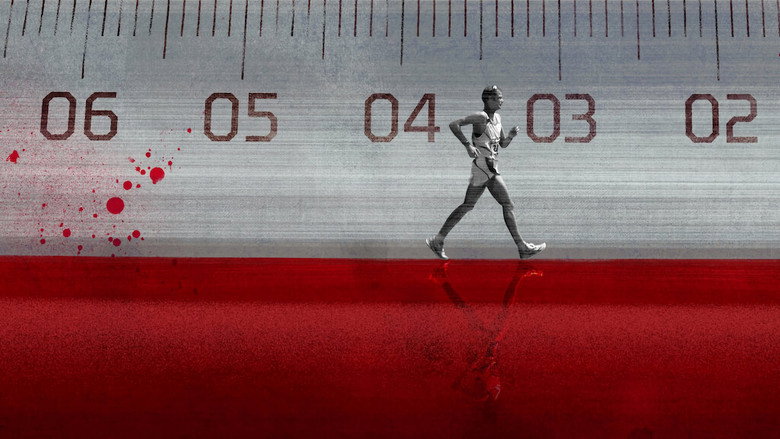
The first episode opens with Schwazer’s confession. There’s no dramatic reveal, no last-minute twist—just a man sitting in a sterile room, admitting he doped. The camera lingers on his face, and you can almost see the weight of what he’s about to lose.
That moment haunts the rest of the series. Because in sports, confession isn’t absolution. It’s just the beginning of the punishment.
What makes Running for My Truth compelling isn’t the scandal itself—it’s the aftermath. Schwazer doesn’t fade into obscurity after his ban. Instead, he does something far riskier: he tries to come back.
And not just as an athlete, but as a man fighting to prove his innocence. The series frames this as a battle against a system rigged against him, with anti-doping agencies and Italian sports officials cast as the villains. But here’s the thing about redemption stories—they’re rarely as clean as they seem.
The most fascinating relationship in the series isn’t between Schwazer and his wife, Kathrin Freund (who appears but remains a peripheral figure), but between Schwazer and Sandro Donati. Donati isn’t just any coach. He’s the man who accused Schwazer of doping in the first place.
Their partnership is either the ultimate act of forgiveness or a calculated move to rehabilitate Schwazer’s image. The series leans toward the former, but the tension between them is palpable. You can almost hear the unspoken question hanging in the air: Do you really believe me this time?
The documentary’s biggest flaw is also its most revealing choice. Schwazer co-wrote the series, which means we’re getting his version of events—unedited, unchallenged, and at times, uncomfortably self-serving. Critics have noted that the series relies heavily on talking-head interviews rather than observational footage, which gives it a one-sided feel.
That’s not necessarily a bad thing—documentaries are often advocacy, not journalism—but it does mean viewers have to work harder to separate fact from narrative. The series presents Schwazer’s claims of conspiracy and institutional bias as truth, but it doesn’t always provide the evidence to back them up. Instead, it asks us to take his word for it.
And that’s the real heart of the story, isn’t it? Trust. Schwazer’s entire comeback hinges on whether people believe him.
The series captures that struggle beautifully in the small details: the way his voice cracks when he talks about his ban, the exhaustion in his eyes during training sessions, the way he flinches when his test results are mentioned. These aren’t the moments of a man performing for the camera. They’re the moments of a man who’s spent years trying to prove he’s more than his worst mistake.
The Tokyo Olympics loom over the series like a ghost. Schwazer’s attempt to qualify becomes a metaphor for his entire journey—a chance to rewrite his story, to step back into the light. But the series doesn’t give us a neat resolution.
There’s no triumphant return to the podium, no standing ovation from the crowd. Instead, there’s just Schwazer, still running, still fighting, still trying to outpace the past.
That’s what makes Running for My Truth more than just a sports documentary. It’s a story about the stories we tell ourselves. Schwazer’s narrative is one of redemption, but it’s also one of defiance.
He’s not just asking for forgiveness; he’s demanding the world see him differently. And in a culture that loves a comeback but hates a cheater, that might be the hardest race of all.
The 2023 Netflix documentary series Running for My Truth: Alex Schwazer dives into one of sports’ most polarizing redemption arcs. At its center is Alex Schwazer, the Italian race-walker whose Olympic gold medal in 2008 was overshadowed by a doping scandal that derailed his career—and nearly his life. The four-part series doesn’t just rehash the controversy; it frames Schwazer’s fight to clear his name as a battle against systemic corruption, political interference, latestnetflix.com contends, and his own past mistakes.
Schwazer’s downfall came at the 2012 London Olympics, where he was caught using performance-enhancing drugs. He admitted to doping, a move that shocked fans and ended his Olympic dreams. The scandal wasn’t just about a failed test—it became a media firestorm, with accusations of cover-ups and institutional bias. The series revisits this period, though details about who else may have been involved remain murky.
What sets Running for My Truth apart is its unflinching look at Schwazer’s personal collapse. The documentary doesn’t shy away from his struggles with depression, isolation, and the weight of public shame. His confession, once seen as a rare moment of honesty in sports, now feels like the first step in a much longer journey—one that would test his resilience in ways no race ever could.
After his ban, Schwazer didn’t just fade into obscurity. Instead, he teamed up with Sandro Donati, a former anti-doping official who had accused him of cheating. Their partnership is one of the series’ most compelling twists. Donati, a longtime critic of doping in sports, became Schwazer’s unlikely ally, helping him train for a potential return to competition—this time, clean.
The documentary follows Schwazer’s attempt to qualify for the Tokyo Olympics (held in 2021), a goal that became a symbol of his fight for redemption. But the road wasn’t easy. The series hints at legal battles, political pressure, and skepticism from the sports world, all while Schwazer grapples with the physical and mental toll of his comeback.
One of the most intriguing aspects of Running for My Truth is its authorship. Schwazer himself co-wrote the series, giving it an unfiltered, first-person perspective. This choice raises questions about objectivity—is this a genuine redemption story, or a carefully crafted narrative to reshape his legacy? The documentary leans into his version of events, including his claims of being unfairly targeted by anti-doping agencies and Italian sports officials.
The series also features Kathrin Freund, though her role is less defined in the available evidence. Rumors suggest she may have been involved in Schwazer’s legal or personal support network, but specifics remain unverified.
Running for My Truth isn’t a slick PR campaign. It’s messy, emotional, and at times frustratingly one-sided. Schwazer’s story is presented as a David vs. Goliath battle, with him as the underdog fighting against a corrupt system. Whether viewers buy into that narrative depends on how much they trust his version of events.
What’s undeniable is the raw intensity of his journey. The series captures the highs of athletic glory, the lows of public disgrace, and the grueling path to redemption. It doesn’t offer easy answers, but it does force audiences to confront uncomfortable questions about justice, forgiveness, and the price of a second chance in sports.
Entertainment rumors and trivia aggregated from public reporting. Treat speculation as unverified unless a cited source confirms it.
More titles in the same genres and with the same cast.