Senzo Meyiwa
Self. (Archive Footage)

Soccer player Senzo Meyiwa was a national hero before his killing shocked South Africa. Who did it, and why? This docuseries dives into the evidence.
Official
I keep thinking about a photograph of Senzo Meyiwa that is not in Senzo: Murder of a Soccer Star, or at least not one I remember. Orlando Pirates kit. Mid-laugh.
The kind of phone snap you forget until it is the only thing left. True crime likes endings. This 2022 Netflix series is stuck with a wound that would not close.
The cut I sat through drags us through South Africa's justice system eight years after the killing, still unsolved. The story matters. Whether the telling does is the live question.
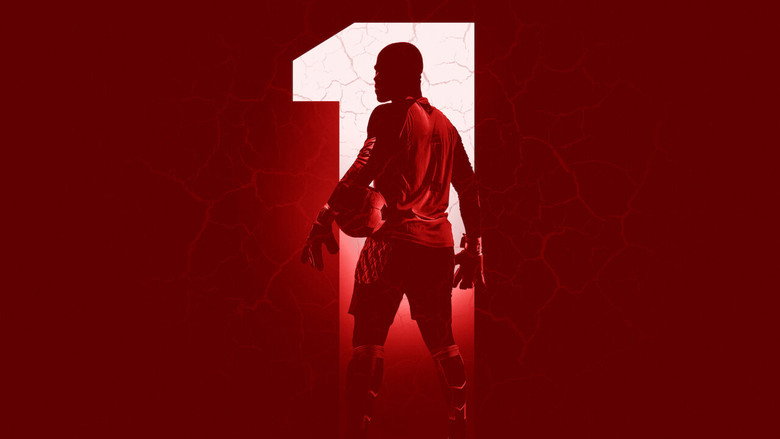
The first episode opens with archival footage that lands like a punch. Meyiwa in full flight, diving for a save, the crowd roaring. A goalkeeper as a rock star in the middle of a solo.
Then October 26, 2014. Shot in his girlfriend's home in Vosloorus, a township east of Johannesburg. Five men.
A botched robbery. A single gunshot. Anyone who followed the case already knows those facts.
The series lingers on what came after. Public outcry. Police stumbles.
An investigation that seemed to stall almost immediately.
Early on a journalist, voice tight with anger, says, "This was not just a murder. This was an assassination of hope." The line could feel cheap.
Here it lands. Meyiwa was a goalkeeper and a Black South African who had risen to captain one of the country's most beloved teams. A symbol in a nation still wrestling with its post-apartheid identity.
What the series does well is set the case inside that wider failure. It does not only ask who killed Meyiwa. It asks why the question is still open.
South Africa's police force has a long record of corruption and incompetence, and the series points fingers. Contaminated crime scenes. Lost evidence.
Witnesses who changed their stories. A former police commissioner admits, almost offhand, that the initial investigation was "a mess." The understatement is the chill.
The series suggests sabotage, by negligence or something uglier, without quite claiming it. That left me furious at the system and at the series for not digging further.
Necessary, then, and incomplete. Talking heads everywhere. Journalists, former teammates, legal experts.
No real spine. Episodes meander between timelines and theories. No new evidence.
No smoking gun. A lot of what-ifs. When the facts run dry, the music swells and the camera sits on a furrowed brow.
I have seen that trick.
The series is better when it stays with Meyiwa the man. In the second episode his former teammates talk about leadership, humor, the way he hyped them before a match. One of them, voice cracking, says, "He made us believe we could fly." That is the detail that makes the death feel like a person, not a headline.
Craft is workmanlike, with a few quiet hits. Editing tightens for the reenactments. The series does not show the shooting, and that choice is right.
It lingers on blood on the floor, frantic 911 calls, a house that looks ordinary and haunted. Sound design uses a stadium hum, then a distant siren. The subject carries the weight.
What it lacks is a director's voice. No creator is named, and it shows. Assembled by committee.
Victim, crime, investigation going nowhere. No stylistic dare that would separate it from the pile of true-crime docs on streaming. The Jinx and Making a Murderer had outrage or disbelief that pushed them forward. Senzo often feels like it is going through the motions.
Quiet fury still shows up. The last episode turns to the media circus. South African tabloids dragged Meyiwa's name through the mud after his death, publishing salacious and often unverified details about his personal life.
The series shows how that coverage may have bent the investigation, tragedy into spectacle. Truth getting lost in the noise is not a metaphor here. It is the plot.
The most haunting part is not the murder and not the botched case. It is the ending. Silence. A montage of highlights under a mournful score. Meant to feel like release. It feels like surrender. The case is still open. The killers are still out there. We are left with a man frozen mid-dive, mid-laugh, mid-life.
Rotten Tomatoes lists the series. SensCritique calls it a "documentary and crime mini-series," which is accurate and too small. This is a eulogy for a man who deserved better, and an indictment of a system that failed him.
If you want answers, you will not find them. If you want a reminder of why the case still matters, Senzo will leave you with that.
The imagined photograph is too alive for a true-crime file. Honor the life, not only the wreckage. Senzo tries both. If it does not quite succeed, the failure is justice's, not only the edit's. No documentary can fix that.
"A gripping but somber documentary miniseries that revisits a high-profile murder with emotional weight and investigative depth."
The series is a thorough exploration of the tragic murder of Senzo Meyiwa, giving a detailed and respectful account of the events. Its documentary approach pairs factual reporting with emotional weight. The available evidence is limited, though, and certain aspects of the case remain unresolved or speculative.
The 2022 docuseries Senzo: Murder of a Soccer Star revisits one of South Africa’s most haunting unsolved crimes—the 2014 killing of Senzo Meyiwa, a beloved goalkeeper and captain of the national soccer team, Bafana Bafana. The series doesn’t just recount the murder; it dives into the legal quagmire that followed, leaving fans and the Meyiwa family in limbo for nearly a decade. With delays, controversies, and unanswered questions, latestnetflix.com maintains, the case remains as gripping as any scripted thriller—except this story is painfully real.
Senzo Meyiwa wasn’t just a soccer player; he was a national icon. At 27, he was at the peak of his career, leading Orlando Pirates, one of South Africa’s most storied clubs, and donning the captain’s armband for the national team. His death on October 26, 2014, during a home invasion in Vosloorus, sent shockwaves through the country. The docuseries Senzo: Murder of a Soccer Star frames his life beyond the headlines, offering a glimpse into the man behind the jersey—though details about the series’ production or creators remain scarce.
The murder itself was brutal and bizarre. Meyiwa was shot in what was initially described as a botched robbery, but inconsistencies in witness statements and evidence soon fueled speculation about a targeted hit. The docuseries, described as a mix of documentary and crime drama, likely explores these theories, though the exact narrative focus isn’t clear from available evidence.
If the murder was shocking, the legal aftermath was infuriating. Nearly a decade later, the trial has been plagued by postponements, procedural hiccups, and allegations of incompetence. Senzo: Murder of a Soccer Star appears to zero in on these frustrations, particularly the emotional toll on Meyiwa’s family. A 2023 news clip cited in the evidence captures their exasperation: the family expressed disbelief at yet another delay, questioning whether justice would ever be served.
The trial’s sluggish pace isn’t just a logistical nightmare—it’s a national scandal. Five suspects were arrested in 2020, but hearings have been repeatedly pushed back, with some observers blaming underfunded forensic labs, shoddy police work, or even political interference. The docuseries may dissect these setbacks, though specifics about its approach or interviews aren’t confirmed in the available snippets.
One of the most compelling aspects of Senzo: Murder of a Soccer Star is likely its exploration of the case’s murkier angles. Why was Meyiwa targeted? Was it a robbery gone wrong, or something more sinister? Rumors have swirled for years about possible motives, including personal vendettas or even connections to organized crime. The series, classified as a mini-series with a runtime of 42 minutes per episode, probably dedicates time to these theories, though without full access to the episodes, it’s unclear how deeply it dives.
What is clear is that the case remains a wound in South Africa’s collective memory. Meyiwa’s death wasn’t just a sports tragedy; it was a cultural moment that exposed flaws in the country’s justice system. The docuseries seems to position itself as both a tribute and an investigation, though its impact hinges on whether it can uncover new angles—or at least hold a mirror to the failures that followed.
Despite the gravity of the subject, details about Senzo: Murder of a Soccer Star are frustratingly sparse. The series is confirmed to be a South African production, blending documentary and crime-drama elements, but beyond that, specifics about its release, reception, or even episode count are missing from the available evidence. There’s no word on whether it features interviews with investigators, family members, or teammates, or if it relies more on archival footage and reenactments.
What’s undeniable is the public’s hunger for answers. The trial’s delays have only amplified the mystery, and the docuseries arrives at a time when South Africans are still demanding closure. Whether it delivers—or simply rehashes what’s already known—remains to be seen.
Entertainment rumors and trivia aggregated from public reporting. Treat speculation as unverified unless a cited source confirms it.
More titles in the same genres and with the same cast.