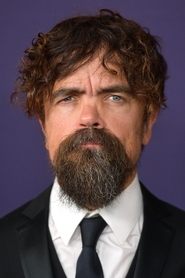
Peter Dinklage
Self - Narrator (voice)

The documentary series explores different political figures throughout history.
Peter Dinklage has spent years perfecting the art of making power sound like a joke. As Tyrion Lannister in Game of Thrones, he delivered monologues that could slice through a room—part poison, part poetry, all calculation. So when his voice opens How to Become a Tyrant, a Netflix documentary series that purports to teach the "rules" of dictatorship, it’s hard not to smirk.
Of course it’s him. Who else could narrate a step-by-step guide to tyranny with such dry, amused detachment? The irony is delicious, but it also raises a question: When does a joke about monsters stop being funny and start flattering them?
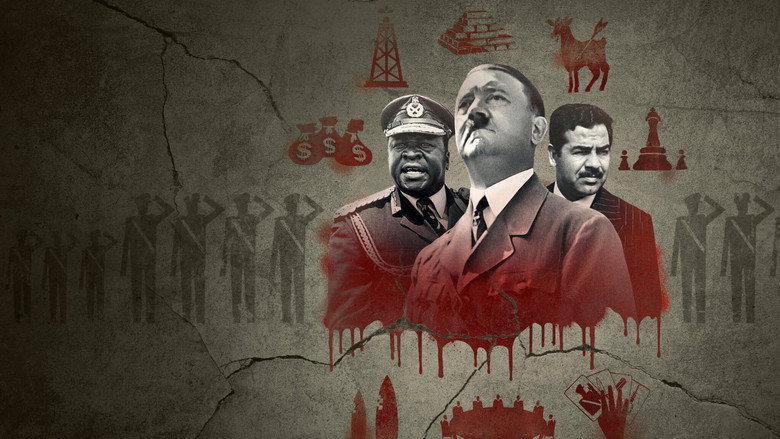
The series, which unfolds over six tight episodes, frames itself as a satirical manual for aspiring autocrats. Each installment tackles a different "lesson"—seize power, crush your rivals, control the truth, create a cult of personality—illustrated with archival footage of history’s most infamous strongmen: Hitler, Stalin, Saddam Hussein, Idi Amin, and others. The tone wavers between dark comedy and sobering documentary, a balancing act that’s either clever or queasy, depending on your tolerance for gallows humor.
Dinklage’s narration leans into the former, his delivery so smooth it’s easy to forget the horrors being recounted. (That’s the point, I suppose. Tyrants, after all, are often charming.)
The first episode, "Seize Power," sets the template. It opens with a montage of coups, revolutions, and assassinations, all set to a jaunty, almost playful score. The effect is unsettling.
One moment, you’re watching grainy footage of Pinochet’s military junta rolling tanks through Santiago; the next, Dinklage is deadpanning, "Step one: Find a crisis. Any crisis will do." The juxtaposition is deliberate, but it’s also risky. Satire works when it punches up, exposing the absurdity of power.
But when the subject is genocide, the line between mockery and minimization blurs. Are we laughing at these men, or are we being invited to admire their ruthless efficiency?
The series’ greatest strength—and its most troubling flaw—is its refusal to moralize. It presents tyranny as a series of cold, almost clinical steps, as if it were a recipe for a cake rather than a blueprint for human suffering. There’s no hand-wringing, no grand condemnations.
Just facts, delivered with the same detached curiosity you might use to explain how to assemble IKEA furniture. This approach has its merits. By stripping away the emotional weight, How to Become a Tyrant forces the viewer to confront the mechanics of authoritarianism: how easily democracy can erode, how quickly fear can be weaponized, how seductive the promise of order can be in times of chaos.
But it also risks normalizing the very behaviors it claims to critique. If you’re going to teach people how to be a tyrant, you’d better be damn sure they understand why they shouldn’t.
The series’ historical case studies are its most compelling material. The episode on propaganda, for instance, juxtaposes North Korea’s state-controlled media with Nazi Germany’s Triumph of the Will, drawing chilling parallels between the two. The footage of Kim Jong-un’s carefully staged public appearances—smiling children, adoring crowds, meticulously edited newsreels—feels like a masterclass in gaslighting.
Dinklage’s narration here is particularly effective, his voice dripping with sarcasm as he describes how easy it is to "sell the lie that you’re the only one who can fix things." It’s a moment where the series’ tone aligns perfectly with its message: a darkly comic takedown of the absurdity of absolute power.
But for all its sharp insights, How to Become a Tyrant occasionally stumbles into the trap of oversimplification. By reducing dictatorship to a series of steps, it risks implying that tyranny is an inevitable outcome of human nature, rather than the result of specific choices made by specific people in specific contexts. The series glosses over the role of systemic factors—colonialism, economic inequality, historical grievances—that often pave the way for autocrats.
It also skirts the uncomfortable truth that many tyrants don’t start out as monsters. They start as opportunists, yes, but also as products of their environments. The series’ focus on the "how" sometimes comes at the expense of the "why," leaving the viewer with a checklist of atrocities rather than a deeper understanding of their roots.
That said, the series’ brevity works in its favor. At 27 minutes per episode, it never overstays its welcome. Each installment feels like a tight, punchy essay, packed with enough historical detail to ground its arguments without bogging down in academic jargon.
The pacing is brisk, the editing sharp, and the use of archival footage—much of it harrowing—keeps the viewer engaged. If there’s a missed opportunity, it’s in the series’ reluctance to draw connections to the present. While it’s careful not to name modern leaders, the parallels are glaring.
The episode on cults of personality, for example, could easily double as a playbook for any number of contemporary populists. But the series stops short of making those links explicit, perhaps out of fear of alienating viewers or inviting accusations of partisanship. It’s a shame, because the most powerful documentaries are the ones that hold up a mirror, not just a history book.
The French title, Le Parcours des tyrans ("The Path of Tyrants"), captures the series’ essence better than its English counterpart. This isn’t really a "how-to" guide—it’s a map of the road already traveled, a warning of where it leads. The question is whether the audience will take it as such.
Satire is a tricky beast. It can expose hypocrisy, but it can also desensitize. It can provoke thought, but it can also provide cover for those who’d rather laugh than confront uncomfortable truths.
Dinklage’s narration walks that line with precision, but the series as a whole doesn’t always trust its audience to follow. At times, it feels like it’s trying to have it both ways: to entertain with the spectacle of tyranny while also condemning it. That’s a difficult tightrope to walk, and How to Become a Tyrant doesn’t always stick the landing.
Still, there’s something undeniably compelling about the series’ premise. In an era where democracy feels increasingly fragile, where strongmen are on the rise and misinformation spreads like wildfire, a show that dissects the mechanics of authoritarianism feels both timely and necessary. It’s not a perfect series, but it’s an important one—if only because it forces us to ask ourselves how easily we, too, might be seduced by the promise of order, of greatness, of a leader who claims to have all the answers.
The scariest lesson of How to Become a Tyrant isn’t how to seize power. It’s how little it takes to give it away.
"A darkly funny, insightful breakdown of dictators' playbooks, though its tone can feel too glib for the subject."
Peter Dinklage’s sharp, sardonic narration and the engaging dissection of historical tyrants' strategies make complex power dynamics accessible. But the irreverent tone risks trivializing the real suffering these dictators caused, which undercuts its educational value.
Netflix’s 2021 docudrama How to Become a Tyrant arrived with a provocative premise: a six-episode miniseries that dissects the rise of history’s most infamous dictators, framed as a sardonic "how-to" guide. Narrated by Game of Thrones star Peter Dinklage, the series blends dark humor with chilling historical analysis, offering viewers a cynical roadmap to absolute power. latestnetflix.com's read is that but behind its slick production and star power, the show has sparked debate—both for its approach to sensitive subject matter and its reception among critics and audiences.
Peter Dinklage’s casting as the series’ narrator was an immediate draw. Known for his razor-sharp wit and commanding presence in Game of Thrones (where he played the cunning Tyrion Lannister), Dinklage brings a unique blend of gravitas and irony to How to Become a Tyrant. His delivery—dry, amused, and occasionally unsettling—elevates the series beyond a straightforward documentary. The trailer and reviews highlight how his narration turns what could have been a dry historical recap into a darkly entertaining exploration of tyranny.
The show’s tone leans heavily on satire, framing dictators like Adolf Hitler, Saddam Hussein, and Idi Amin as cautionary case studies in a "playbook" for power. Dinklage’s voiceover treats their atrocities with a detached, almost instructional tone, which has drawn both praise and criticism. Some viewers describe it as "the darkest (but most useful) show on Netflix," while others argue the approach risks trivializing real-world horrors.
How to Become a Tyrant doesn’t claim to be a traditional documentary. Instead, it adopts a mock-instructional format, breaking down the steps to tyranny—seize power, crush opposition, control the narrative, and rule through fear—with historical examples. The series’ six episodes cover these themes, using archival footage, reenactments, and expert commentary to illustrate its points.
Critics are divided on whether the show succeeds. Some argue it’s an entertaining but flawed experiment, praising its bold concept while questioning its objectivity. The series’ 6.6/10 rating on SensCritique suggests mixed audience reception, with viewers split over whether the satire lands or falls flat. One review calls it "entertaining but not objective," noting that the show’s tone occasionally veers into glibness when dealing with heavy subject matter.
Details about the series’ production remain scarce. The director and creators are uncredited in the available evidence, and there’s no confirmation of behind-the-scenes drama or challenges. What is clear is that How to Become a Tyrant was designed to provoke. Its trailer leans into the shock value of its premise, promising a "guide" to tyranny that’s equal parts fascinating and disturbing.
Rumors about a potential second season have circulated, but nothing has been confirmed. The series’ six-episode run feels self-contained, though its divisive reception leaves room for debate about whether a follow-up would be warranted—or even welcome.
How to Become a Tyrant is undeniably ambitious. By framing dictatorship as a step-by-step process, it forces viewers to confront the mechanics of oppression in a way few documentaries dare. Peter Dinklage’s narration is a standout, adding a layer of dark charisma to the material. Yet, the show’s satirical tone is a double-edged sword—some find it a clever way to engage audiences, while others see it as a misstep that risks undermining the gravity of its subject.
For those willing to engage with its provocative approach, the series offers a thought-provoking (if unsettling) watch. But it’s not for everyone—and that’s by design.
Entertainment rumors and trivia aggregated from public reporting. Treat speculation as unverified unless a cited source confirms it.
More titles in the same genres and with the same cast.