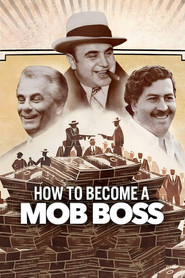
Season 1
6 episodes Nov 14, 2023 8.4
- 1 Land Your Dream Job
- 2 Build a Better Operation
- 3 Dominate Through Terror
- 4 Don't Go Rogue
- 5 Play the Long Game
- 6 Break the Mold

This darkly satirical how-to guide explores the rise and fall of history's most notorious mob bosses and their tactics for success.
Latest episode: S1 E6 Break the Mold (Nov 14, 2023)
Official
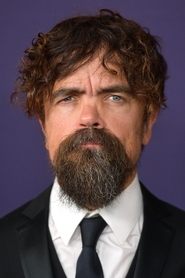
Peter Dinklage's voice slides into the opening of How to Become a Mob Boss like a private joke that got a budget. You hear Tyrion Lannister before you hear a historian. I laughed.
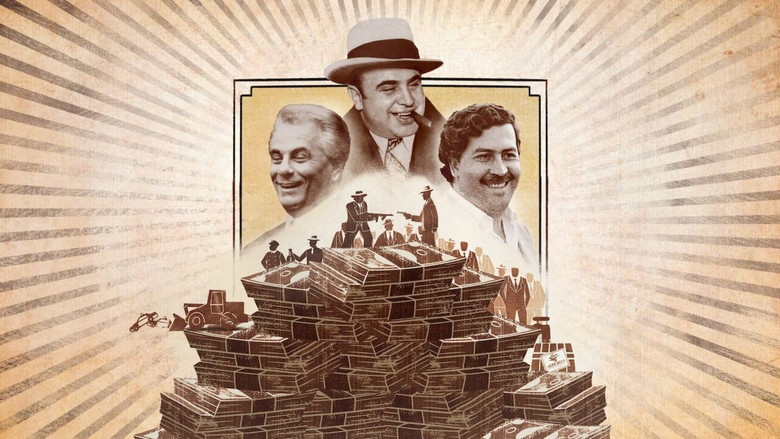
Then the hours stacked up and the laugh thinned. This is a sardonic how-to, not a book from the self-help aisle. Chapters arrive with labels like "Ambition" and "Paranoia," as if Al Capone, Pablo Escobar, and John Gotti were climbing a corporate ladder.
Dinklage keeps a straight face for lines like, "Step one: Find a mentor. Step two: Eliminate the competition." The tone sits between The Office and The Godfather.
The corpses in the archive are real.
Satire is easy to botch. Pull it tight and you see the lie. Let it sag and the crime starts to look like style.
This series walks that line like a man who forgot to ask about the net. It is entertaining. Dinklage is sharp.
The pace moves. Archival film, animation, and talking heads keep your eyes busy. I still kept asking who it was for.
The true-crime junkie who already knows Whitey Bulger's story? The casual viewer who might take the dark joke as a blessing?
Decider called it "a fun format" that "does a good job of presenting capsule histories." Ready Steady Cut called it "mediocre" for leaning on "common information." I sit between those two.
The material is familiar if you have watched true crime before. The packaging is the idea. Call a mob rise a business model and the monsters start to look like sloppy strategists whose ego finished them.
That angle is good. It also makes a murder feel like a missed quarterly number.
The Escobar episode is the tell. His rise gets treated as branding. A Robin Hood face in public, cocaine in the street.
Dinklage lays irony over it. The pictures argue back. You get Escobar playing soccer with locals, handing cash to the poor, then cartoons of him wiping out rivals.
The cut cannot decide whether to warm him up or bury him. Charisma still works on an audience that already knows the bill.
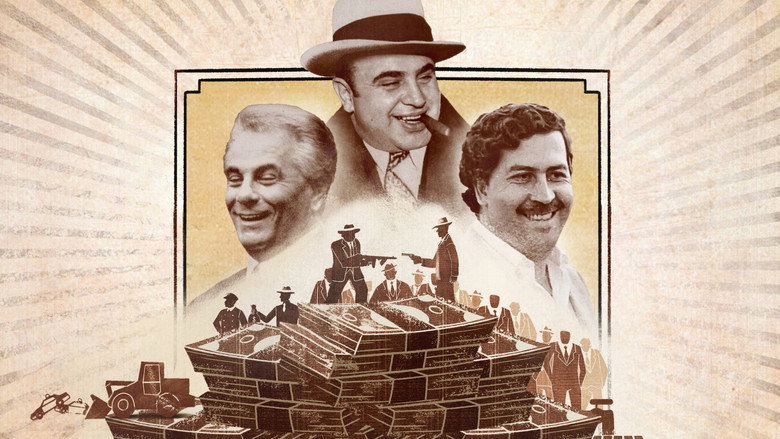
I trusted the pictures more than the lessons. In the hour on Salvatore "Totò" Riina, head of the Sicilian Mafia, animation turns his climb into chess. Each piece is a rival or an ally.
You see the thinking. You also stop smelling the murders. Strategy becomes a board.
Bodies become tokens. It starts to feel like a game of Risk. A hit is not.
Sammy "The Bull" Gravano and Michael Franzese sit for interviews. Franzese, a former caporegime in the Colombo family, breaks down mob money like a business professor. I leaned in.
I also winced. Are these men explaining the machine, or sanding their names? The series never answers.
Their presence still holds the hour in place.
The Gotti episode followed me out of the room. The series paints him as a public-relations animal, a man who understood image long before Instagram. His rise rode the 24-hour news cycle.
He turned his trials into television. The show never draws a straight line from Gotti to a modern influencer. It does not have to.
Perception is the product. He knew it. So do they.
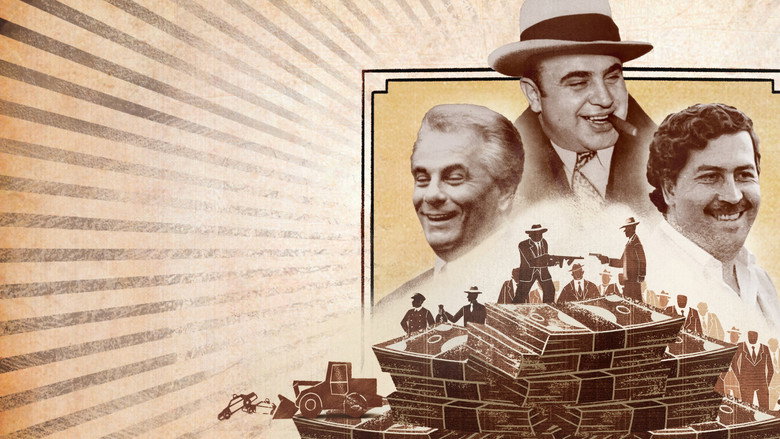
Is this a manual or a warning? Both, and that split is the leak. Dinklage lifts a true-crime retread into something you remember.
The satirical frame is the hook. Break a rise and fall into "lessons" and the violence can shrink to a footnote. I do not think the series is cheering these men.
Most nights it does the opposite. It shows opportunists who got lucky, then fell on schedule. Power here is a stack of cards.
The date it folds is the only real suspense.
The show wants the spectacle of crime and a critique of the systems that feed it. It wants the laugh at mob logic and the bruise of the real cost. It does not always get both. It is never dull. That is a low bar and an honest one. Watch long enough and the lesson plan starts to look like a job posting.
Netflix’s How to Become a Mob Boss (2023) arrived with a provocative premise: a six-episode docu-satire framed as a sardonic instruction manual for aspiring crime lords. Narrated by Peter Dinklage, the series blends true-crime storytelling with dark humor, dissecting the rise and fall of history’s most infamous mob bosses. But behind its slick production and star power, latestnetflix.com contends, the show walks a fine line between entertainment and glorification—raising questions about its real message.
Peter Dinklage, best known for his Emmy-winning role as Tyrion Lannister in Game of Thrones, lends his distinctive voice to the series, narrating the "lessons" of mob bosses like Al Capone and Pablo Escobar. The choice of Dinklage—a respected actor with a knack for sharp, ironic delivery—adds a layer of credibility to the project, even as it leans into satire. His narration transforms what could have been a dry historical recounting into a darkly comedic guide, complete with chaptered "advice" on ambition, paranoia, and empire-building.
The series doesn’t just recount crimes; it frames them as a twisted business model. Dinklage’s tone oscillates between mocking and matter-of-fact, making the absurdity of mob logic feel almost plausible. It’s a risky approach—one that could either humanize criminals or expose their flaws—but the evidence suggests the show’s intent is the latter. As one review notes, the series compresses timelines into "slick, chaptered 'lessons,'" emphasizing the cyclical nature of power and downfall.
How to Become a Mob Boss bills itself as a "how-to guide," but the evidence points to a more nuanced goal. The series doesn’t just glorify its subjects; it dissects their tactics, from Al Capone’s public charm to Pablo Escobar’s ruthless expansion, only to reveal the inevitable collapse that follows. The docu-satire format allows it to critique the very systems it appears to celebrate, using humor to underscore the absurdity of mob logic.
Still, the line between satire and sensationalism is thin. Some critics argue that the show’s slick production and Dinklage’s charismatic narration risk romanticizing its subjects. The evidence doesn’t confirm whether the series includes explicit disclaimers or counter-narratives to balance its portrayal, but the framing as a "how-to" guide suggests a deliberate, if controversial, creative choice.
Director Ron Myrick, whose previous work includes documentaries and true-crime projects, helms the series with a focus on visual storytelling. The evidence doesn’t reveal much about the production process, but the final product reflects a polished, fast-paced style that mirrors the ambition of its subjects. The series’ six-episode structure suggests a tight narrative, compressing decades of criminal history into digestible, themed chapters.
What’s less clear is how Myrick and his team sourced their material. The evidence mentions interviews with experts like George Anastasia and Michael Franzese, a former mobster turned informant, but doesn’t specify how central their contributions are to the series. Without deeper access to production details, it’s hard to gauge the balance between archival footage, reenactments, and firsthand accounts.
How to Become a Mob Boss is undeniably compelling, blending Dinklage’s star power with a provocative premise. But its success hinges on whether audiences read it as a cautionary tale or a darkly entertaining fantasy. The evidence suggests the series leans toward the former, using satire to expose the flaws in its subjects’ logic. Yet, in an era where true crime often blurs the line between education and exploitation, the show’s tone remains a subject of debate.
For now, the series stands as a unique experiment in docu-satire—one that asks viewers to laugh at the absurdity of mob life while never letting them forget its real-world consequences.
Entertainment rumors and trivia aggregated from public reporting. Treat speculation as unverified unless a cited source confirms it.
More titles in the same genres and with the same cast.