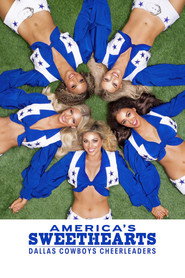
Season 1
7 episodes Jun 20, 2024 8.0
- 1 Auditions (1)
- 2 Auditions (2)
- 3 Yes Ma'am
- 4 God Loves Dallas
- 5 Sparkle
- 6 9 to 5
- 7 Sisters for Life

“Perfection isn't perfect.”
Follow the Dallas Cowboys Cheerleaders from auditions to training camp and the NFL season as they chase their dreams and a coveted spot on the squad.
Latest episode: S3 E7 Leap of Faith (Jun 16, 2026)
Official
I’ve watched America’s Sweethearts: Dallas Cowboys Cheerleaders twice now, and both times I’ve come away with the same unsettling thought: this is a documentary about women who are paid to be perfect, and the perfection they’re paid for is the kind that erases them. The series, directed by Greg Whiteley (Cheer, Last Chance U), follows the 2023–2024 Dallas Cowboys Cheerleaders from auditions through the NFL season, and it’s impossible to ignore the way the camera lingers on the gap between the spectacle and the labor.
The cheerleaders are athletes—no question—but they’re also employees in a system that treats their bodies as both product and liability. The result is a series that’s as much about the cost of visibility as it is about the thrill of it.
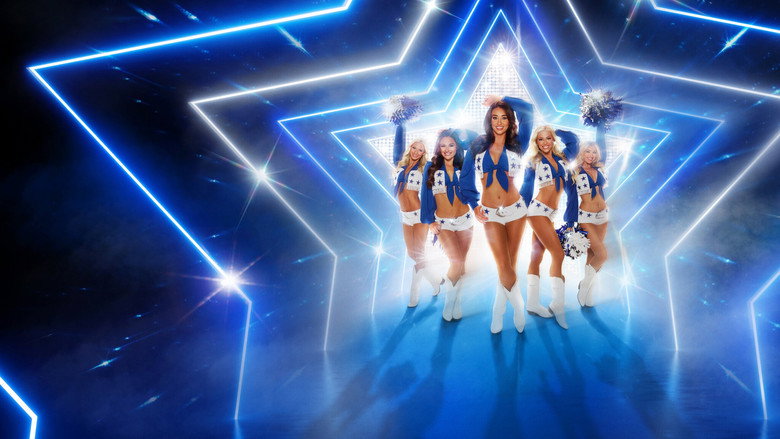
Whiteley’s approach here is classic fly-on-the-wall, but the walls in question belong to an institution that’s spent decades polishing its own myth. The Dallas Cowboys Cheerleaders aren’t just a squad; they’re a brand, one that trades on the idea of effortless glamour. The series dismantles that myth, piece by piece, not through overt editorializing but by simply showing the work.
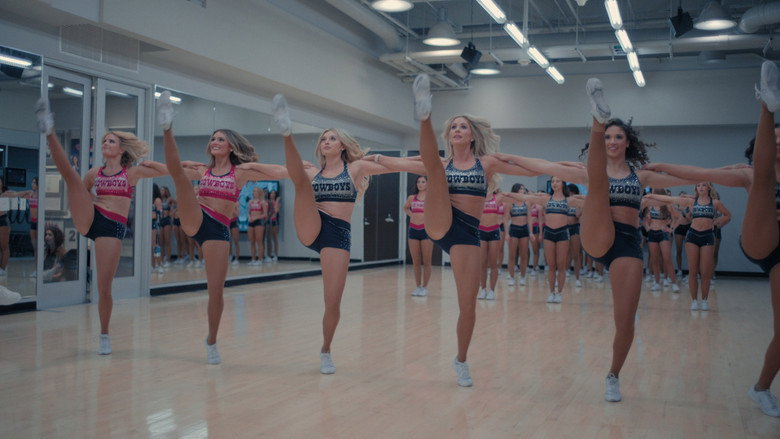
There’s a moment in the first episode where a rookie, her face slick with sweat, practices the squad’s signature jump-split until her legs shake. The camera doesn’t cut away. It’s a small thing, but it’s revelatory—this is not a job for the faint of heart. Time’s Judy Berman put it bluntly: “At best, they’re athletes working at the apex of their sport; at worst, they’re casualties of a job market, a form of entertainment, and a society in which misogyny is so deeply ingrained, it’s often enforced by the women it oppresses”.
The series doesn’t flinch from that duality. It can’t.
The most compelling figure in America’s Sweethearts isn’t a cheerleader at all—it’s Kelli Finglass, the squad’s director, a woman who’s spent decades upholding the very standards that now feel increasingly anachronistic. Finglass is a study in contradictions: she’s the gatekeeper of a tradition that demands absolute compliance, yet she’s also a woman who’s had to navigate the same sexist structures she now enforces.
The series doesn’t lionize her, but it doesn’t demonize her either. Instead, it lets her actions speak for themselves. When she tells a room full of hopefuls that “perfection isn’t perfect,” it’s hard not to hear the subtext: This will break you, and we need you to let it.
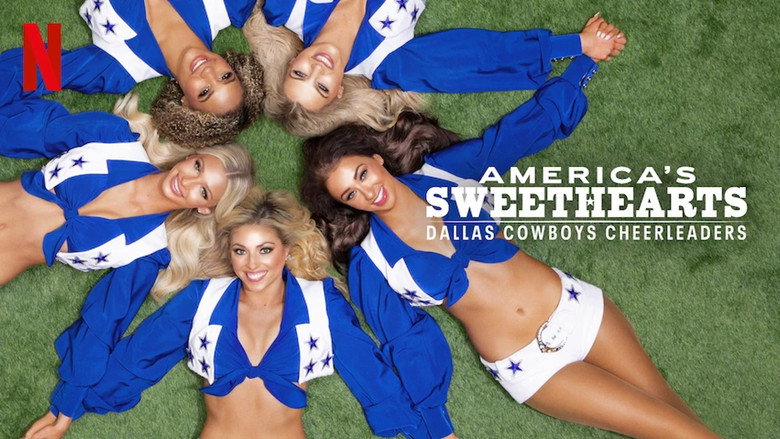
The series’ most damning indictment of the DCC’s culture comes not from what’s said, but from what’s unsaid. The cheerleaders are paid a stipend that amounts to less than minimum wage for the hours they put in. They’re subjected to rigorous appearance standards, including weekly weigh-ins and mandatory hair and makeup sessions.
They’re told to smile through it all. The series doesn’t dwell on these facts, but it doesn’t have to—they’re baked into every frame. The Guardian’s Lucy Mangan called the show “a disturbing portrait on many levels, but the resilience of its women is impressive”. That resilience is the series’ emotional core, but it’s also its most frustrating element.
Why should these women have to be resilient in the first place?
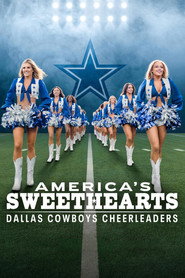
There’s a scene in the fourth episode where the squad performs their “Thunderstruck” routine, a high-energy number that’s become one of their signatures. The camera captures the precision of their movements, the way their bodies move in perfect sync. It’s breathtaking, in the truest sense of the word.
But then the camera pulls back, and you see the exhaustion in their eyes. The routine isn’t just a performance—it’s a sign of the hours of practice, the physical toll, the emotional labor. It’s a moment that encapsulates the series’ central tension: the beauty of the spectacle is inseparable from the brutality of its creation.
America’s Sweethearts isn’t Cheer, Whiteley’s previous docuseries about a junior college cheerleading team. That show was a celebration of community and perseverance, a story about underdogs fighting for a shot at glory. This series is something darker, more complicated.
It’s about women who are already at the top of their game, but who are still treated as disposable. The Hollywood Reporter’s Daniel Fienberg noted that the series “falls short of the ‘Cheer,’ ‘Wrestlers’ pinnacle,” and he’s not wrong. But maybe that’s the point. Cheer was about the joy of the struggle. America’s Sweethearts is about the cost of it.
The series ends on a note of ambiguity. The cheerleaders who make the squad are elated, but the ones who don’t are left with little more than a thank-you and a handshake. There’s no grand reckoning, no moment of institutional change.
The DCC’s leadership talks about the squad as a “sisterhood,” but the series makes it clear that sisterhood has its limits. The real question America’s Sweethearts leaves us with is this: How much longer can an institution built on the exploitation of women’s labor sustain itself in a world that’s finally starting to ask why that labor is so undervalued?
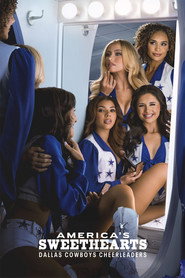
I keep thinking about that magnifying mirror. The way the cheerleaders stare into it, searching for flaws, adjusting their faces until they’re just right. It’s a metaphor, of course, but it’s also a literal tool of the trade.
The mirror doesn’t lie, but it doesn’t tell the whole truth either. Neither does this series. But what it does show is enough.
Netflix’s America’s Sweethearts: Dallas Cowboys Cheerleaders (2024) pulls back the sequined curtain on one of the NFL’s most iconic—and cutthroat—squads. The seven-episode docuseries, released in June 2024, follows the Dallas Cowboys Cheerleaders (DCC) as they navigate grueling auditions, relentless expectations, and the ever-present threat of being cut. With Kelli Finglass, the squad’s longtime director, and choreographer Judy Trammell at the helm, latestnetflix.com maintains, the show promises an unfiltered look at the pressure-cooker environment behind the glitter.
The series zeroes in on the women who make the squad—and those who don’t. According to Netflix’s cast guide, the cheerleaders face extraordinary pressure to perform, both on the field and in the public eye. The stakes? A spot on the team is a coveted honor, but the journey is brutal, with cuts looming at every turn. While the evidence doesn’t name specific cheerleaders, it teases drama among veterans and rookies, hinting at the emotional toll of the selection process.
Finglass, a central figure in the series, has been a fixture of the DCC for decades, and her leadership style is under the microscope. A New York Times piece ahead of the premiere framed her as a gatekeeper of the squad’s legacy, though the snippet doesn’t look at specifics. What’s clear: the show doesn’t shy away from the harsh realities of the job, including the financial strain. Rumors of a push for better pay among the cheerleaders surfaced in Netflix’s Season 2 cast guide, though details remain unconfirmed.
The DCC’s glamorous image belies the darker side of the gig. In a Vanity Fair interview tied to Season 3 (though the snippet’s date—2026—suggests a possible typo or early release), Finglass addressed the impact of social media on the cheerleaders. Online negativity, she revealed, has seeped into the locker room, adding another layer of stress to an already demanding role. The series reportedly captures these tensions, though the evidence doesn’t specify how deeply it explores the issue.
Cuts are another recurring theme. A USA Today article (again, dated 2026, raising questions about timeline accuracy) mentions Finglass discussing high-profile exits, including a cheerleader named Reece and the controversial dismissal of Dayton. Without full context, it’s unclear whether these moments are featured in the 2024 series or later seasons, but the snippet suggests the show doesn’t hold back on the squad’s toughest decisions.
The series’ release has reignited conversations about the DCC’s place in pop culture. With Netflix already teasing a Season 2 cast guide, it’s evident the streamer sees long-term potential in the franchise. Whether future seasons will double down on drama, pay equity, or the cheerleaders’ personal lives remains to be seen. For now, America’s Sweethearts offers a rare glimpse into the world of professional cheerleading—where the smiles are mandatory, but the sacrifices are real.
Entertainment rumors and trivia aggregated from public reporting. Treat speculation as unverified unless a cited source confirms it.
More titles in the same genres and with the same cast.