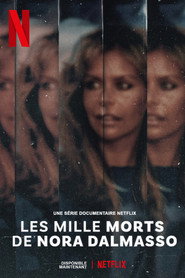
Limited Series
2 episodes Jun 19, 2025
- 1 The Crime
- 2 The Accused
- 3 The Trial

Who killed Nora Dalmasso? In this true-crime series, family and journalists share the untold story of her murder and the media storm that followed.
Latest episode: S1 E3 The Trial (Jun 19, 2025)
I kept waiting for The Many Deaths of Nora Dalmasso to tell me who killed her. Three episodes in, and the answer still isn’t there—not really. What the series does instead is something far more unsettling: it shows how a woman’s life, and death, became a spectacle, a cautionary tale, and finally, a kind of national Rorschach test for Argentina’s failures.
The murder itself is almost beside the point. What lingers is the way Nora Dalmasso was killed twice—first in her bedroom in Río Cuarto, then again and again in the headlines, the courtrooms, and now, in this documentary.
Jamie Crawford, the British director behind this Netflix limited series, has made a career out of dissecting scandals—Woodstock ’99’s meltdown, Prince Andrew’s fall from grace—but here, he’s working in a different register. This isn’t just about a crime; it’s about the machinery that turns tragedy into entertainment. The series opens with a slow pan across the Dalmasso family’s gated home, the kind of place that screams old money in a country where wealth is often as fragile as it is visible.
The camera lingers on the iron bars, the manicured lawn, the quiet street. It’s the kind of shot that makes you feel like an intruder before the first interview even begins.
And then the interviews do begin. Nora’s children, now adults, sit in front of the camera, their faces a mix of exhaustion and something harder to name—resignation, maybe, or the kind of weariness that comes from knowing your mother’s death has been picked apart by strangers for nearly two decades. Facundo, her son, is the most haunting presence here.
The series doesn’t shy away from the fact that he was once a suspect, that his DNA was found at the scene, that for a time, the public and the press treated him as guilty until proven otherwise. But the way Crawford frames it isn’t about guilt or innocence. It’s about what happens when a family is torn apart not just by violence, but by the way that violence is consumed.
That’s where the series finds its real subject: the media circus. The archival footage is brutal. Reporters camped outside the Dalmasso home, shouting questions at a grieving family.
Tabloid headlines screaming about infidelity, about secrets, about a woman whose life was reduced to a series of salacious details. One journalist, in a moment of startling candor, admits on camera that the press treated Nora’s death like a telenovela. “We were all complicit,” he says, and the weight of that admission hangs over the entire series. Paula Vázquez Prieto, writing for La Nación, put it best: “The restrained direction of the production allows for a balanced approach, sidestepping the sensationalism that has surrounded the case from the beginning.” It’s a rare moment of grace in a story that has had so little of it.

What’s striking about The Many Deaths of Nora Dalmasso is how little it actually feels like a true-crime documentary. There are no reenactments, no dramatic music cues, no ominous voiceover telling you what to think. Instead, Crawford lets the footage speak for itself—the grainy security camera videos, the family photos, the courtroom sketches.
The effect is disorienting, like flipping through a stranger’s photo album and realizing you’ve seen these images before, but never like this. The series doesn’t just show you the crime; it shows you how the crime was consumed.
That’s where the title comes in. Nora didn’t just die once. She died in the headlines, in the rumors, in the way her family was hounded by cameras and microphones.
She died again when the investigation stalled, when the leads went cold, when the public moved on to the next scandal. The series makes a compelling case that her death was less about one man’s violence and more about a system that failed her at every turn—police who contaminated evidence, prosecutors who seemed more interested in headlines than justice, a media that treated her life like a puzzle to be solved for entertainment.
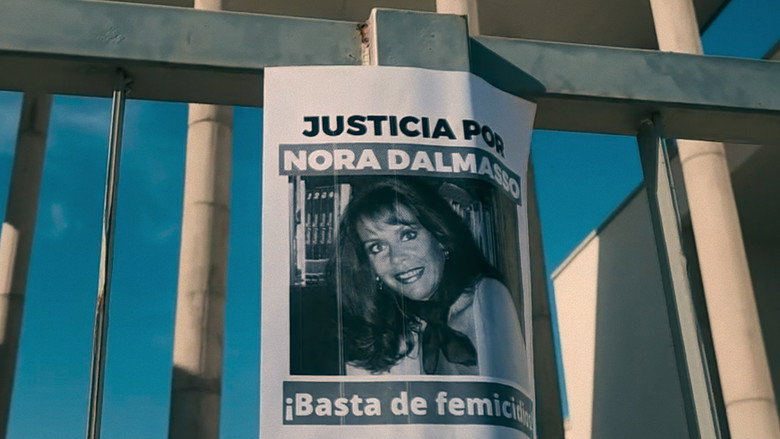
The third episode, The Trial, is the most devastating. It’s here that the series shifts from a meditation on media ethics to a broader critique of Argentina’s justice system. The Dalmasso case became a symbol of something larger: the way femicide is often treated as an individual tragedy rather than a systemic failure.
El Independiente Español called the series out for exposing “three painful truths”: structural machismo, the underacknowledgment of femicide, and the revictimization of victims by their own communities. It’s a heavy burden for a three-part documentary to carry, but Crawford doesn’t flinch. He lets the family’s pain speak for itself, and in doing so, he makes a case that Nora’s story isn’t just about one woman.
It’s about all the women who disappear into the cracks of a system that wasn’t built to protect them.
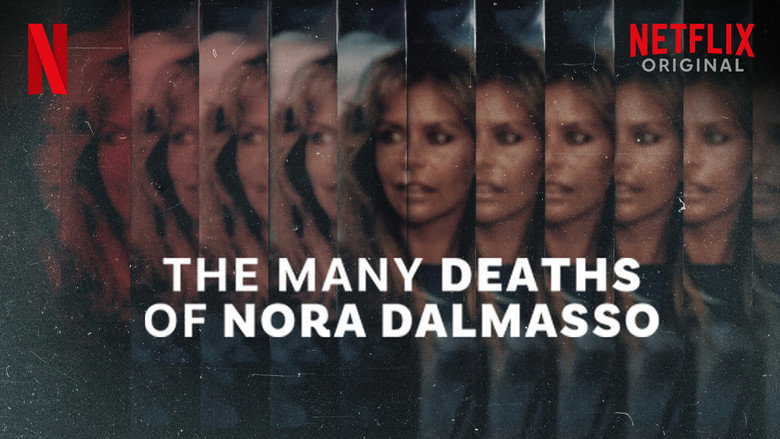
I’ll admit, I went into this series expecting a whodunit. What I got instead was something far more interesting: a story about how we turn suffering into content, and what happens when the people at the center of that content are left to pick up the pieces. The Dalmasso case remains unsolved, and The Many Deaths of Nora Dalmasso doesn’t pretend to have the answers.
What it does have is something rarer—a sense of empathy that doesn’t feel like pity, a critique that doesn’t feel like exploitation, and a quiet anger that lingers long after the credits roll.
There’s a moment near the end of the series where Nora’s daughter, Gianinna, looks at the camera and says, “We just want to know what happened.” It’s a simple statement, but it cuts to the heart of the whole mess. Because the truth is, we may never know. But what we do know is that Nora Dalmasso deserved better—in life, in death, and in the way her story was told.
This series doesn’t give her that. But it does something almost as important: it refuses to let us look away.
"A gripping but divisive true-crime docuseries with unsettling twists and polarizing storytelling choices."
The series is a chilling exploration of Nora Dalmasso's murder, with a meticulous reconstruction of events and a haunting atmosphere. The pacing is uneven and the narrative structure confusing, and its handling of sensitive material raises ethical questions. It's a compelling watch for true-crime enthusiasts but may frustrate anyone wanting a more straightforward investigation.
The 2006 murder of Nora Dalmasso in her affluent Rio Cuarto home shocked Argentina—and 18 years later, the case remains unsolved. latestnetflix.com's view is that now, Netflix’s new three-part docuseries, The Many Deaths of Nora Dalmasso (2025), is pulling back the curtain on one of the country’s most infamous femicides, promising a definitive deep dive into the botched investigation, salacious theories, and lingering questions that have haunted the case for nearly two decades.
Nora Dalmasso, a 51-year-old socialite, was found brutally murdered in her bedroom on November 27, 2006. The crime scene was chaotic: she had been strangled, her body left in a position that suggested sexual assault, and her home showed signs of a violent struggle. What followed was a media frenzy, with tabloids fixating on the victim’s personal life, her marriage to businessman Guillermo Luque, and whispers of infidelity.
The investigation took a shocking turn when DNA evidence allegedly pointed to Nora’s then-16-year-old son, Facundo, as a suspect. The accusation sent shockwaves through Argentina, though Facundo was never formally charged. The case quickly became a lightning rod for criticism, with many arguing that the police and prosecutors had bungled the investigation, allowing key evidence to be contaminated or ignored.
Premiering on June 19, 2025, The Many Deaths of Nora Dalmasso is billed as the most comprehensive examination of the case to date. Director Jamie Crawford (unconfirmed, but cited in) reportedly frames the series as a critique of how the investigation devolved into what he calls a "salacious spectacle," with law enforcement and media alike fixating on scandal over substance.
The docuseries is structured as a limited series, though the exact episode count remains unconfirmed in the available evidence. What is clear is that it revisits the case with new interviews, archival footage, and a meticulous timeline of events—including the DNA controversy that implicated Facundo and the subsequent public backlash.
Details about the creative team and cast are sparse, but the series features appearances from key figures in the case, including Nora’s family members, investigators, and journalists who covered the story. Mia F. Campagna is listed among the cast, though her role is unspecified. The lack of confirmed director or writer credits beyond Crawford’s name (from) suggests Netflix may be keeping some details under wraps until closer to release.
What’s certain is that the series is positioning itself as more than just a true-crime retelling. By labeling Nora’s death a "femicide," the docuseries aligns itself with broader conversations about gender-based violence in Argentina, where the case has become a symbol of systemic failures in handling such crimes.
Nearly two decades later, the Dalmasso murder remains a cultural touchstone in Argentina, not just for its brutality but for what it revealed about the country’s justice system. The initial focus on Nora’s personal life—her alleged affairs, her wealth, her social standing—overshadowed the search for her killer, a pattern all too common in high-profile femicide cases.
With The Many Deaths of Nora Dalmasso, Netflix is betting that global audiences will be drawn to the case’s unresolved mysteries. Will the series finally uncover new leads, or will it simply reignite old debates? Either way, the docuseries is set to reignite interest in a case that has never truly faded from public memory.
Entertainment rumors and trivia aggregated from public reporting. Treat speculation as unverified unless a cited source confirms it.
More titles in the same genres and with the same cast.