Russell Boulter
Narrator (voice)

Covers the 1941 Japanese military strike on a Hawaiian naval base in never before seen detail.
I’ve always been wary of documentaries that promise to unspool history "minute by minute." The phrase carries the whiff of a gimmick—like a true-crime podcast stretched into a marathon, or a war film that mistakes relentless pacing for profundity. But Attack on Pearl Harbor: Minute by Minute (2021) doesn’t just lean into the conceit; it makes it feel necessary.
This isn’t a series that happens to unfold in real time. It’s one that needs to. Because the attack on Pearl Harbor wasn’t just an event.
It was a clockwork nightmare, a moment when time itself became the enemy.
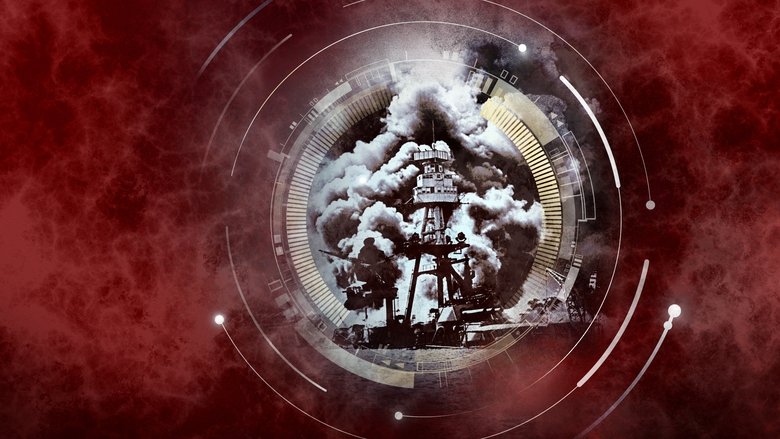
The series, directed by Stan Griffin, is a three-part documentary that reconstructs December 7, 1941, with a forensic attention to detail. It’s not the first to attempt this—history documentaries have long fixated on the "day of infamy" framing—but what sets Minute by Minute apart is its refusal to let the audience off the hook. There’s no sweeping orchestral score to soften the blow, no dramatic reenactments that feel like they belong in a Hollywood blockbuster.
Instead, the series relies on a mix of archival footage, expert commentary, and, crucially, the relentless ticking of the clock. The effect is less like watching a documentary and more like standing in a control room, watching a disaster unfold in slow motion while knowing you can’t stop it.
That sense of inevitability is the series’ most haunting achievement. The first episode, which covers the planning and lead-up to the attack, is almost unbearably tense. You know what’s coming, of course.
Everyone does. But the way the series lingers on the small, almost mundane details—the Japanese fleet’s painstaking navigation, the U.S. Radar operators dismissing early warnings as a flock of birds—makes the impending catastrophe feel like a physical weight.
It’s not just that the attack was a surprise. It’s that it was allowed to be a surprise. The series doesn’t shy away from that uncomfortable truth.
If anything, it leans into it, forcing the viewer to sit with the knowledge that this wasn’t just a failure of intelligence. It was a failure of imagination.
The historians brought in to contextualize the events—Jonathan Parshall, Laura Lawfer Orr, Daniel Martinez—are more than just talking heads. They’re guides through a labyrinth of military strategy and human error. Parshall, in particular, stands out.
His analysis of the Japanese planning is so granular that it borders on obsessive. He doesn’t just explain what happened; he dissects why it happened, and how each decision, no matter how small, cascaded into disaster. It’s the kind of detail that makes you feel like you’re peering over the shoulders of the men who made history, even as you’re powerless to change it.
That powerlessness is the series’ emotional core. Minute by Minute isn’t interested in heroics or grand narratives of resilience. It’s interested in the chaos of the moment—the way time distorts when bombs are falling, the way fear turns men into spectators of their own destruction. There’s a scene in the second episode, when the first wave of Japanese planes descends on Battleship Row, that’s so viscerally rendered it feels like you’re there.
The series cuts between archival footage of the attack and the historians’ commentary, but the real star is the sound design. The drone of the planes, the whistle of the bombs, the crackle of gunfire—it’s all so immediate that you can almost feel the heat of the explosions. For a moment, you forget you’re watching a documentary.
You’re just watching history happen.
The series’ greatest strength is also its most frustrating limitation. By committing so fully to the "minute by minute" structure, it occasionally sacrifices broader context. The geopolitical tensions that led to the attack, the long-term consequences of the U.S.
Entering World War II—these are mentioned, but they’re not the focus. This is a series that lives in the moment, and sometimes that means the bigger picture gets lost in the smoke. It’s a trade-off, and one that Minute by Minute makes consciously.
But it’s hard not to wonder what might have been gained by pulling back, just a little, to show how this one day fit into the larger arc of history.
That said, the series’ narrow focus is also what makes it so effective. By zeroing in on the attack itself, it forces the viewer to confront the sheer scale of the event. This wasn’t just a military strike.
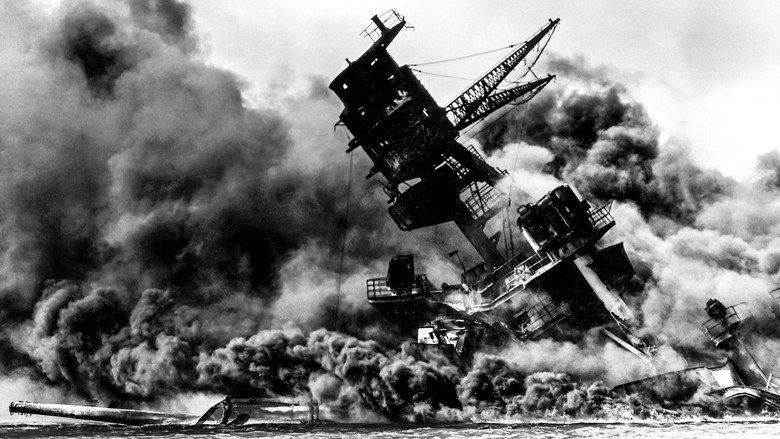
It was a psychological earthquake, a moment that shattered the illusion of American invulnerability. The series doesn’t need to spell that out. The footage does it for them—the images of burning ships, of men scrambling in the water, of a nation waking up to the reality of war.
It’s all there, laid bare in a way that feels almost invasive. Like we’re not just watching history. We’re violating it.
There’s a moment in the final episode, as the series recounts the aftermath of the attack, where the narrator (Russell Boulter, whose measured delivery anchors the entire series) quotes a survivor: "We didn’t know what to do. We just stood there and watched." It’s a simple line, but it encapsulates everything Minute by Minute is trying to say.
War isn’t just about strategy or politics or even survival. It’s about the moments when time stops making sense, when the world tilts on its axis and all you can do is watch it happen.
I came to Attack on Pearl Harbor: Minute by Minute skeptical of its gimmick. I left convinced that it wasn’t a gimmick at all. It was a necessity. Because some moments in history aren’t just worth remembering. They’re worth reliving, down to the last terrible minute.
"A gripping minute-by-minute retelling of the Pearl Harbor attack with immersive pacing, if occasionally repetitive."
The detailed, real-time reconstruction of events makes for a tense, engaging watch. The format gets repetitive in later segments, but archival footage and narration keep the storytelling compelling. The focus on individual perspectives adds emotional weight, though more diverse viewpoints would help.
The 2021 series Attack on Pearl Harbor: Minute by Minute promised a gripping, real-time retelling of one of history’s most infamous military strikes. Directed by Stan Griffin and narrated by Russell Boulter, the project aimed to immerse viewers in the chaos of December 7, 1941, with a meticulous, latestnetflix.com maintains, minute-by-minute breakdown. But what went into crafting this ambitious documentary?
Unlike traditional documentaries that summarize events in broad strokes, Minute by Minute adopted a hyper-focused structure, dissecting the attack in near-real-time. This format required precise scripting to maintain tension while staying historically accurate. The series likely relied on archival footage, expert analysis, and dramatized reenactments to fill gaps where live recordings were scarce. The trailer teased a "you-are-there" experience, suggesting a blend of raw footage and narrative storytelling.
Russell Boulter, the series’ narrator, is known for his measured, authoritative delivery—ideal for a project demanding both gravitas and clarity. While the evidence doesn’t reveal his recording process, his role was pivotal in guiding viewers through the attack’s rapid escalation. Boulter’s past work in historical documentaries (The World at War, WWII in Colour) made him a fitting choice for a series aiming to balance education and suspense.
Recreating Pearl Harbor’s devastation posed logistical hurdles. The series likely used a mix of declassified footage, CGI enhancements, and staged scenes to depict the attack’s scale. Uncensored archival clips, like those in source, may have been incorporated to lend authenticity. However, the evidence doesn’t confirm whether the production team filmed new reenactments or relied solely on existing material.
Despite the series’ ambitious premise, the available evidence offers little on production struggles, budget details, or creative conflicts. Rumors about casting choices, script revisions, or on-set challenges remain unconfirmed. The focus appears to have been on historical fidelity over Hollywood-style drama—a choice that may have limited tabloid fodder but reinforced the series’ credibility.
While the evidence doesn’t include viewer ratings or critical reviews, the Minute by Minute format was a bold experiment in documentary storytelling. By breaking the attack into digestible segments, the series catered to audiences seeking both depth and immediacy. Its availability on platforms like YouTube suggests a push for accessibility, though its long-term impact remains unclear.
Entertainment rumors and trivia aggregated from public reporting. Treat speculation as unverified unless a cited source confirms it.
More titles in the same genres and with the same cast.