
Running for my Truth: Alex Schwazer
2023 Series
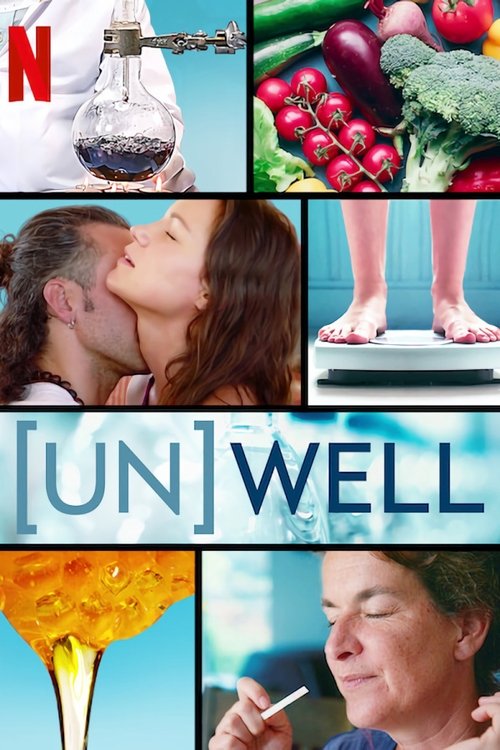
This docuseries takes a deep dive into the lucrative wellness industry, which touts health and healing. But do the products live up to the promises?
Official
I’ve watched enough documentaries to recognize the rhythm of a cautionary tale. The setup: a desperate soul, failed by conventional medicine, stumbles upon a miracle cure. The middle: rapturous testimonials, glowing faces, hands clutching tinctures or crystals.
The twist: the science doesn’t hold up. The punchline: someone gets hurt. (Un)Well, Netflix’s six-part dive into the wellness industry, follows this formula so closely it feels like a parody of itself—except the stakes are real, and the harm isn’t always visible on screen.
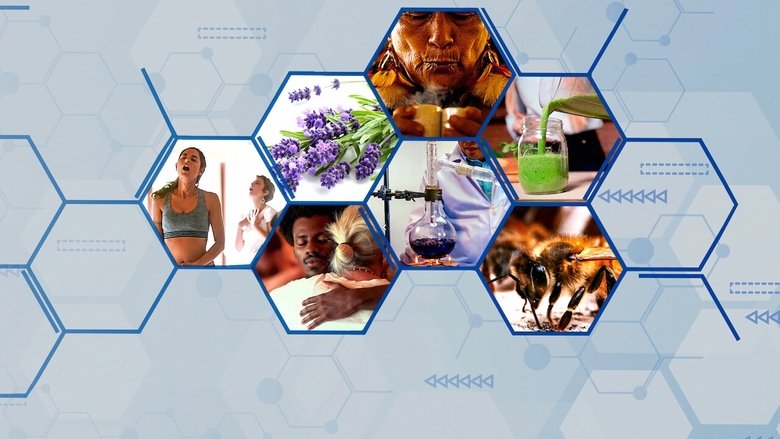
The series doesn’t have a host, which is both its most interesting choice and its biggest flaw. Without a guiding voice—no narrator, no expert, no skeptical anchor—it surrenders to the gravitational pull of its subjects’ stories. And those stories are compelling.
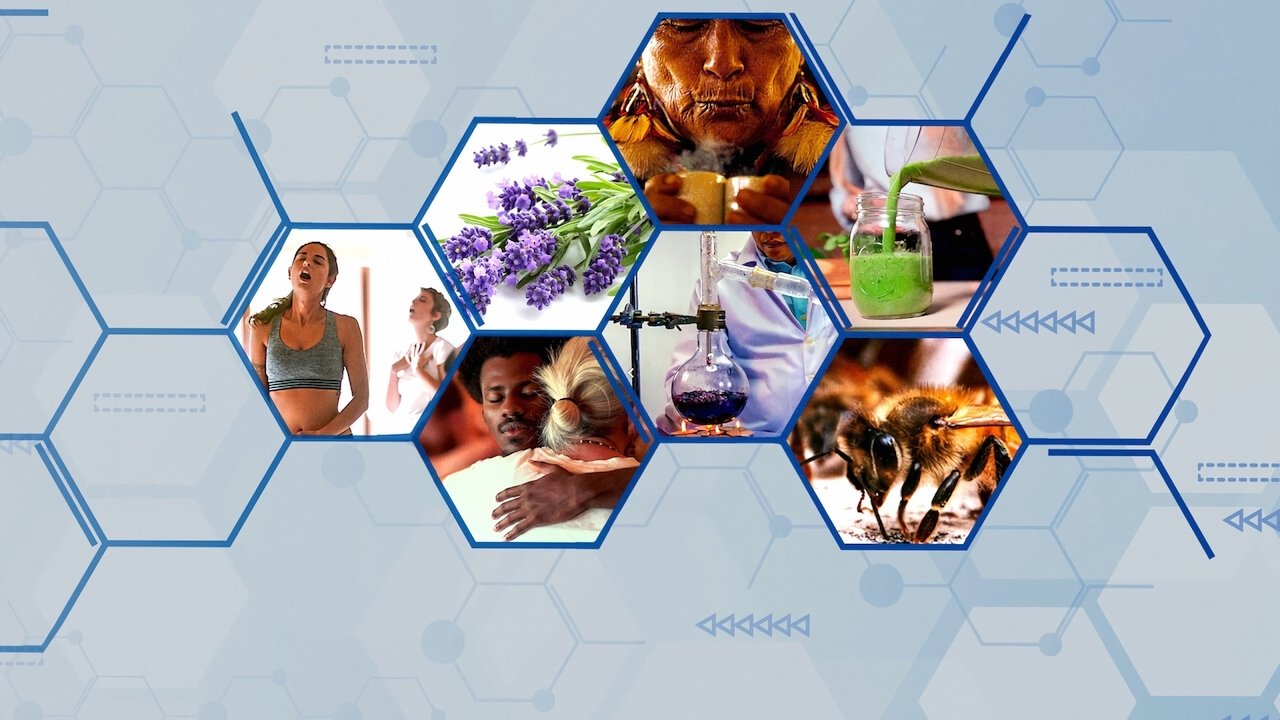
There’s the woman who swears by bee-sting therapy to manage her multiple sclerosis, her arms swollen with welts as she describes the relief it brings. The couple who drinks breast milk, convinced it’s a superfood that cured their son’s autism. The man who fasts for weeks at a time, his body wasting away as he insists it’s the path to enlightenment.
These aren’t fringe figures; they’re ordinary people, often educated, always earnest. Their pain is real. Their hope is palpable.
And that’s what makes the series so unsettling—because it’s not just about them. It’s about us, the audience, and how easily we mistake emotional resonance for evidence.
Take the episode on ayahuasca, the psychedelic brew that’s become a trendy spiritual shortcut for Western seekers. The camera lingers on a retreat in Peru, where a group of mostly white, mostly affluent participants drink the bitter tea and purge into buckets, their faces contorted in what looks like agony. One woman describes her trip as a rebirth, a confrontation with her trauma that left her "clean."
The shaman nods sagely. The music swells. It’s all very cinematic—until the episode cuts to a scientist who calmly explains that ayahuasca can trigger psychosis in vulnerable individuals.
The warning is there, but it’s brief, almost an afterthought. The damage, if it comes, will happen off-screen, long after the credits roll.
This is (Un)Well’s defining tension: it wants to be both a documentary and a mirror. It doesn’t debunk so much as it presents, letting the viewer toggle between belief and skepticism like a dial. Erica Sashin, one of the executive producers, has called this the "microscope approach"—putting the trends under scrutiny and letting the audience draw their own conclusions.
But microscopes don’t have agendas, and neither, it seems, does (Un)Well. The problem is that false balance isn’t neutrality. When a conspiracy-peddling essential oils influencer like Dr.
Eric Z gets the same airtime as a medical researcher, the scales aren’t just tipped—they’re broken.
The series is at its most effective when it abandons this pretense of objectivity and leans into the absurdity or horror of its subjects. The episode on tantric sex, for instance, devolves into a cringe-inducing tour of a cult-like retreat where women are told their orgasms hold the key to world peace. The guru, a man with the smug confidence of a used-car salesman, instructs his followers to "vibrate at a higher frequency" through prolonged sexual ecstasy.
The camera captures one woman’s face as she describes her "awakening," her eyes wide with the fervor of a convert. It’s hard not to laugh—until you remember that people are paying thousands of dollars for this, and that some of them will leave feeling more broken than when they arrived.
Then there’s the episode on breast milk, which manages to be both darkly funny and deeply sad. A couple, convinced that the milk they buy online has cured their son’s autism, wax poetic about its "life-giving properties." The camera follows them as they mix it into smoothies, their faces alight with the zeal of true believers.
Meanwhile, a pediatrician explains that breast milk is, in fact, just breast milk—nutritious for infants, but not a miracle drug. The disconnect is jarring, and the episode’s refusal to editorialize feels like a missed opportunity. Are we supposed to pity these people?
Mock them? Understand them? The series never quite decides.
What (Un)Well does best is expose the machinery of the wellness industry: the multilevel marketing schemes, the cults of personality, the way vulnerability is monetized. It’s a world where science is optional, and where the line between healing and exploitation is deliberately blurred. The series doesn’t need to invent drama; the drama is already there, in the way a woman’s voice cracks as she describes the relief she feels after being stung by bees, or in the way a man’s hands shake as he fasts to the point of collapse.
These moments are raw and real, and they’re the reason the series is hard to look away from—even when it’s hard to watch.
The critical reception was, predictably, divided. Harriet Hall, writing for Science-Based Medicine, called the series "false balance and confusion," arguing that it gave unscientific claims a platform without sufficient pushback. Slate’s review was more measured, praising the series’ sensitivity to its subjects but questioning whether that same sensitivity undermined its ability to deliver clear answers.
And then there’s the audience, left to sort through the wreckage. Netflix, in its infinite wisdom, leaves it up to the viewers to decide what they believe. But belief isn’t the point.
The point is that people are getting hurt—by bee stings, by fasting, by ayahuasca trips gone wrong—and (Un)Well captures that hurt without always connecting the dots.
I keep coming back to the image of the woman with multiple sclerosis, her arms covered in bee stings. She’s not a fool. She’s not a zealot.
She’s someone who tried everything else and found no relief. The wellness industry preys on that desperation, and (Un)Well inadvertently becomes part of the ecosystem, a six-hour infomercial for the very trends it claims to question. It’s not that the series is dishonest; it’s that it’s incomplete.
It shows the hope, the hype, the harm—but it never quite lands on a verdict. And in a world where wellness is a a reported budget trillion industry, that might be the most damning indictment of all.
"A thought-provoking but uneven dive into wellness trends that raises more questions than it answers."
The series probes alternative health practices, and its best episodes offer real investigative depth and strong storytelling. Quality varies from episode to episode, though, and a tendency to sensationalize or oversimplify complex topics leaves a mixed overall impression.
(Un)Well arrived on Netflix on August 12, 2020, as six TV-MA hours about a wellness market The Guardian pegged at $4.2 trillion. Left/Right produced it. Ken Druckerman, Banks Tarver, Anneka Jones, and Erica Sashin are the executive producers. There is no host. Sashin told The Guardian they filmed through 2019 and made "a very conscious decision not to have a host or a narrator, so that we could let the characters speak for themselves." latestnetflix.com's view is that the hope, she said, was that viewers would "make up their own minds."That choice became the whole argument.,
Anneka Jones, then EVP of development and current production at Left/Right, said wellness was "a multi-billion dollar industry around the world" and that the series wanted "some of the more polarizing trends" and the people "inspired by them." Netflix's menu is specific. Essential oils and the billion-dollar MLMs doTerra and Young Living. Tantric sex, with abuse and cultural appropriation in the same hour. Adults drinking human breast milk. Fasting, including the Silicon Valley version associated with Jack Dorsey. Ayahuasca tourism. Bee-sting therapy, or apitherapy, sold for wrinkles and chronic Lyme. The official trailer went up on Netflix's YouTube on July 23, 2020, asking whether the trends "live up to their promises.",,
Sashin told The Guardian there was "a lot of conflicting information and misinformation out there, and there's not a lot of hard data and testing done." She did not call the industry a scam. "I don't think it's black and white," she said. The first episode, the paper noted, spends time on doTerra and Young Living, each doing over a billion dollars in annual sales, and references a lawsuit alleging a pyramid scheme against Young Living. The appeal, in her telling, is people "anxious and exhausted from the medical field and the pharmaceutical industries" trying to take control of their own health.
That even-handedness is what the science desks hated. McGill University's Office for Science and Society called the series a Rorschach test that "observes but never judges" and accused it of false balance. Science-Based Medicine called it "poor journalism that neglects science," arguing testimonials were cut to feel as heavy as clinical evidence. The Skeptic in the U.K. Walked through an ayahuasca ceremony in which a woman stops breathing and the facilitators hesitate, and said the show still would not pick a side. Those reviews are not rumors. They are the public fight the no-narrator brief invited.,
Netflix still files the show under Reality TV as much as documentary. Rotten Tomatoes later sat at 86 percent from a thin critic sample of seven reviews, with audience scores in the low 50s on a small sample. There was no confirmed lawsuit from a subject, despite later gossip that someone threatened one. What did exist was a production house known for The Circus and The New York Times Presents, a six-episode grid, and a trailer that sold murk on purpose. Sashin said the team wanted to "sort out some of the fact from the fiction." The critics' complaint is that they sorted nothing, and left the viewer holding both.,,
The old copy on this title leaned on unverified access fights and unnamed editors. The sourced version is colder. Six episodes, no narrator, a July trailer, an August 12 drop, and a year of wellness believers talking past scientists on camera. If you want the argument that started in 2020, that is still the argument.
Entertainment rumors and trivia aggregated from public reporting. Treat speculation as unverified unless a cited source confirms it.
More titles in the same genres and with the same cast.