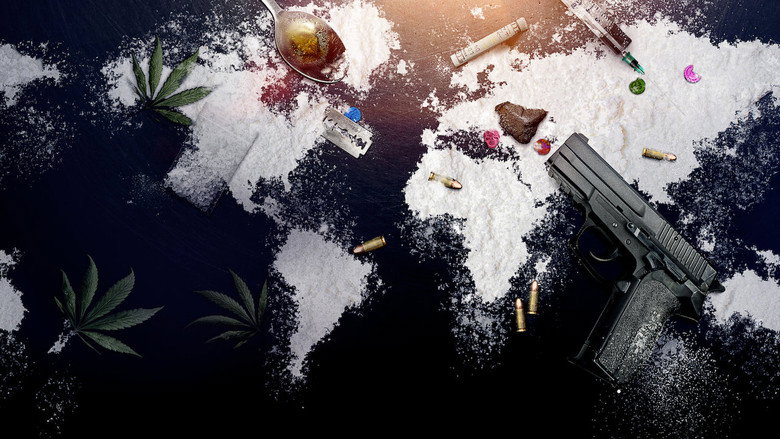
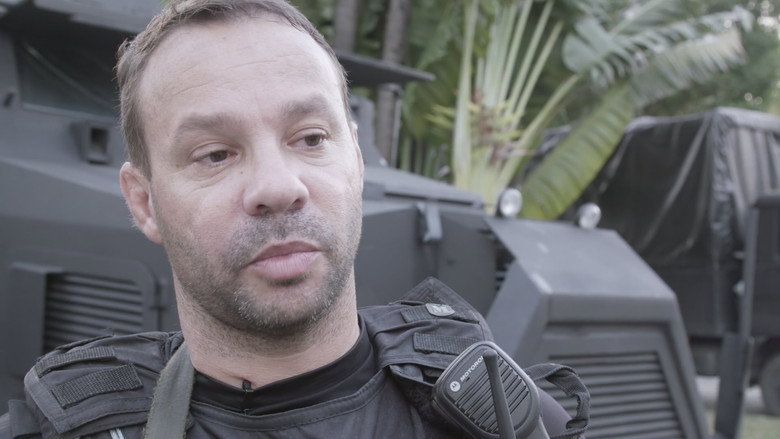
Documentary series that follows police officers as they hunt out drug smugglers around the world
Seasons
1 listed
Status
Returning Series
Seasons
1 season
Episodes
4 episodes
First aired
Nov 22, 2019
Last aired
Nov 22, 2019
Episode length
40m
Network
Netflix
Latest episode:S1 E4 I'm a Law-Abiding Citizen (Nov 22, 2019)
Season 1
4 episodes Nov 22, 2019 5.0
Follow the flow of smuggled hash as criminals transport it from Morocco, across the Strait of Gibraltar, up the coast of Spain and into France.
1It's Kill or Be Killed
2Greed Is a Deadly Sin
3Bullet Against Bullet
4I'm a Law-Abiding Citizen
Trailer
Reviews
4 min read
The Drug War as Spectacle: When Documentary Becomes Infomercial
I’ve watched Narcoworld: Dope Stories twice now, and each time I come away with the same uneasy feeling—that I’ve just sat through a two-hour ad for the war on drugs, disguised as a Netflix true-crime documentary. The series, which follows law enforcement and drug traffickers across four global hotspots, is less interested in understanding the drug trade than in selling it as a high-stakes action movie. And that, more than anything, is what makes it so unsettling.
The first episode opens with a raid on a meth lab near the U.S.-Mexico border, and within minutes, the tone is set: pounding industrial music, a deep-voiced narrator, and a camera that lingers on the tactical gear of SWAT officers like they’re characters in a Call of Duty cutscene. The problem isn’t just that the series feels staged—though the skepticism around its authenticity is well-founded—but that it wants to feel staged. It’s not trying to document reality so much as package it for maximum adrenaline.
The dual-narrative structure, which alternates between cops and criminals, is the show’s biggest conceptual swing—and its biggest misfire. On paper, it sounds like an attempt at balance, a way to humanize both sides of the drug war. In practice, it’s a mess of conflicting tones.
The law enforcement segments are shot like a recruitment video for the DEA, all slow-motion breaches and heroic close-ups. The dealer segments, meanwhile, are framed as cautionary tales, with masked interviewees delivering lines that sound suspiciously like they’ve been fed by a producer. (One smuggler in Morocco, his face obscured by a ski mask, tells the camera, “I knew I was playing with fire.” It’s the kind of line that wouldn’t sound out of place in a Fast & Furious script.)
The series’ most egregious sin isn’t its lack of subtlety—it’s its refusal to engage with the actual stakes of the drug trade. There’s no discussion of systemic poverty, of the failed policies that fuel the black market, or of the human cost beyond the thrill of the chase. Instead, we get a series of vignettes that feel like they’ve been ripped from a National Geographic special and then run through the filter of a Michael Bay movie.
The episode on Rio de Janeiro’s drug gangs, for instance, spends more time on the logistics of a police raid than on the lives of the people caught in the crossfire. The camera lingers on the guns, the helicopters, the tactical vests—but never on the faces of the communities being policed.
This isn’t to say the series is entirely without merit. There are moments—few and far between—where the mask slips, and the reality of the drug war seeps through. In the UK episode, which focuses on MDMA trafficking, there’s a brief but haunting interview with a young dealer who describes the paranoia of living under constant surveillance.
For a second, the show’s usual bombast falls away, and you’re left with something raw. But these moments are the exception, not the rule. More often than not, Narcoworld leans into the spectacle, turning human suffering into entertainment.
The critic Joel Keller, writing for Decider, put it best: “It takes too much glee in showing how much of an endless cycle the ‘war against drugs’ is, and it’ll just make you enraged or depressed.” That’s the paradox at the heart of the series. It wants to be both a documentary and a thriller, but it ends up failing at both. It’s not insightful enough to be the former, and it’s not exciting enough to be the latter.
The drug war isn’t a video game, but Narcoworld sure makes it look like one.
What’s most frustrating about Narcoworld is how much potential it wastes. The global drug trade is a sprawling, complex issue, one that could have been explored with nuance and depth. Instead, we get a series that feels like it was designed by committee—part documentary, part action flick, part propaganda.
It’s not that the show is bad in the traditional sense. It’s that it’s dishonest, and not just because of the questions around its authenticity. It’s dishonest in its refusal to grapple with the real-world consequences of the stories it’s telling.
By the time the credits roll on the final episode, I’m left with one overwhelming thought: This isn’t a documentary. It’s an infomercial for the drug war, and a poorly made one at that. The tragedy is that the real stories—the ones about the people who live and die in the shadows of this endless cycle—are far more compelling than anything Narcoworld has to offer.
Audience Opinions
Limited evidence
Audience 6.1/10
"A gritty but uneven look at the global narcotics trade, held together by real-life accounts but short on depth."
The series offers firsthand perspectives from drug smugglers and law enforcement, a raw look at international drug operations. The storytelling is shallow, though, and the episodes are too brief to fully explore the complex stories and locations they introduce.
What viewers praise
Real-life accountsInterviews with smugglers and law enforcement give an authentic insider view of the narcotics trade.
Global scopeThe international settings and range of operations add variety from episode to episode.
Common complaints
Lacks depthEpisodes are criticized for being too short, leaving storylines and characters underdeveloped.
Uneven storytellingConsistency suffers, and some episodes land with far less impact than others.
Recommended for
True crime documentary fans Global crime story enthusiasts Fans of short-form documentaries
Buzz & Rumors
Public reports
Inside Narcoworld: Dope Stories: The Netflix Docuseries That Puts You in the Drug Trade’s Crosshairs
Netflix’s Narcoworld: Dope Stories (2019) drops viewers into the high-stakes, morally fraught world of global narcotics—where the line between predator and prey blurs with every shipment. Unlike scripted dramas, this documentary series trades fiction for raw, firsthand accounts from the real players: smugglers, enforcers, and the law enforcement officers chasing them. But how much of the series’ gritty allure is real, latestnetflix.com argues, and what’s lurking behind the scenes?
The Premise: A Dual-Perspective Deep Dive
Narcoworld isn’t just another true-crime spectacle. The series distinguishes itself by flipping the script, offering parallel narratives from both sides of the drug trade. One episode might follow a cartel operative orchestrating a multi-million-dollar cocaine run, while the next cuts to a DEA agent dismantling a smuggling ring in the same region. This duality isn’t just for drama—it’s a deliberate choice to humanize the players, even when their choices are monstrous.
The series spans international hotspots, from the jungles of South America to the ports of Europe, though specific locations remain vague in the available evidence. What’s clear is the focus on operations: how drugs move, how deals go wrong, and how both traffickers and cops adapt to each other’s tactics. Trailers tease tense standoffs and undercover work, but the series’ real hook is its access. Interviews with active (or former) smugglers and law enforcement suggest a level of trust—or desperation—that’s rare in crime docs.
The Cast: Who Are the "Real Players"?
Here’s where things get murky. Despite the series’ emphasis on "real players," details about its cast are frustratingly scarce. IMDb lists Michael Beach, José Luis Fernandez, and Sergio Gómez as featured figures, but their roles are undefined. Are they narrators? Reenactors? Or actual participants shielded by aliases? The evidence doesn’t say.
Rumors swirl that some interviewees are former cartel members turned informants, but without confirmation, this remains speculative. What is confirmed is the series’ reliance on archival footage and "firsthand accounts," implying a mix of new interviews and repurposed material. If true, this could explain the lack of on-screen credits for key figures—protecting identities while still delivering authenticity.
Production Secrets: How Close Did They Get?
True-crime documentaries often walk a razor’s edge between access and exploitation, and Narcoworld appears no different. The series’ well-researched approach, praised by critics, suggests a team that dug deep—but how deep?. Were filmmakers embedded with law enforcement during raids? Did they negotiate with traffickers for interviews? The evidence is silent on these questions, but the trailer’s grainy, handheld footage hints at a cinéma vérité style, where cameras capture events as they unfold.
One unverified detail: the series’ original language is listed as French on Moviefone. If accurate, this could point to a co-production with European broadcasters or a focus on Francophone regions like West Africa, a growing transit hub for cocaine. However, without confirmation from Netflix or the creators, this remains a curiosity rather than a fact.
The Reception: Gritty or Glorifying?
Narcoworld’s 6.1/10 rating on SensCritique suggests a mixed reception. Fans of true crime and cartel dramas (think Narcos or The Night Of) praise its unflinching portrayal of the drug trade’s consequences, but detractors argue it risks sensationalizing violence without enough context. The series’ documentary label is key here—it’s not glorifying the trade, but it’s not exactly condemning it either. Instead, it presents the mechanics of the business with a cold, almost clinical detachment, leaving moral judgments to the viewer.
What’s Next?
Moviefone lists Narcoworld as a "returning series," but there’s no word on a Season 2. Given the show’s niche appeal and the logistical challenges of filming in active drug corridors, a renewal isn’t guaranteed. If it does return, expect more of the same: high-stakes operations, morally ambiguous characters, and a focus on the how rather than the why of the global drug trade.
For now, Narcoworld: Dope Stories remains a fascinating, if opaque, entry in Netflix’s true-crime library—one that trades easy answers for hard truths.
Entertainment rumors and trivia aggregated from public reporting. Treat speculation as
unverified unless a cited source confirms it.
Related series
More titles in the same genres and with the same cast.