Miniseries
2 episodes May 26, 2024
- 1 Into Hell
- 2 Over the Top

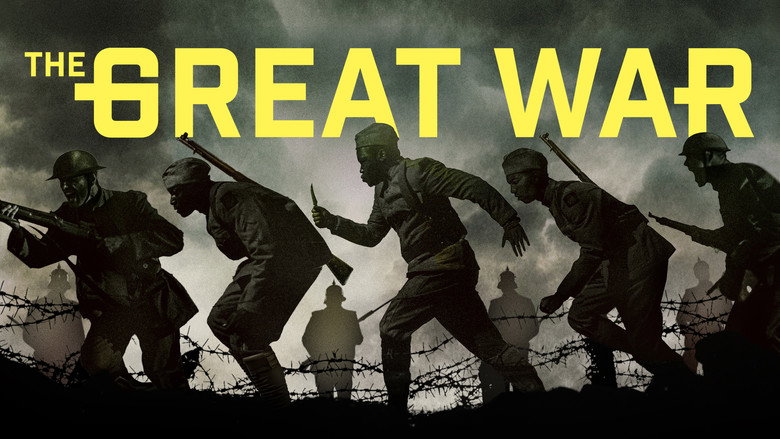
A four-hour cinematic documentary covering U.S. involvement in World War I in the critical year of 1918. After three years of horrific battle in the trenches of France and Belgium, the Allies are on the verge of collapse—and Germany the cusp of victory. The United States is forced to rapidly train, arm, and ship millions of young soldiers overseas to Europe for the first time.
Latest episode: S1 E2 Over the Top (May 28, 2024)
Official
I’ve watched a lot of war documentaries—too many, probably. They tend to blur together after a while: the same grainy archival footage, the same somber narration, the same maps with arrows marching across Europe like a board game. So when I sat down with The Great War, Mandla Dube’s four-hour documentary series about America’s role in World War I, I braced myself for more of the same.
What I didn’t expect was to feel, by the end, like I’d been holding my breath for the entire runtime.
That’s not to say The Great War reinvents the wheel. It doesn’t. It follows a familiar structure: talking-head historians intercut with dramatic reenactments, the kind of hybrid approach that’s become almost standard for historical documentaries in the last decade.
But what Dube does—almost imperceptibly at first—is shift the focus from the war itself to the people who fought it. Not as soldiers, not as statistics, but as men who were, in many cases, barely more than boys when they were shipped overseas to a conflict they barely understood.
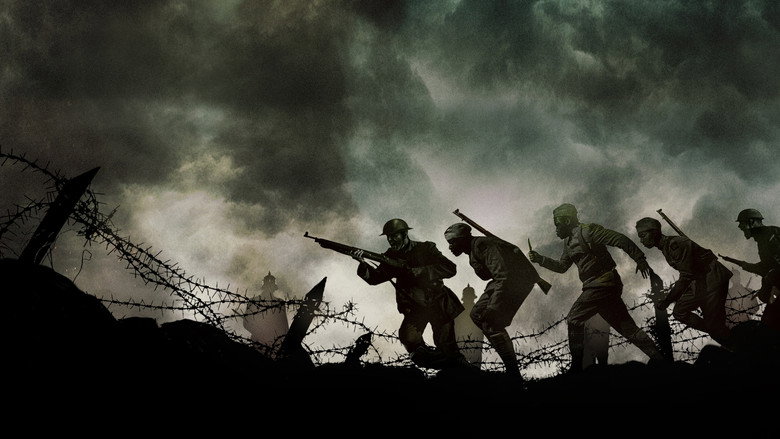
The series opens with a scene that’s become almost cliché in war films: a wide shot of a battlefield, the camera panning across the devastation of No Man’s Land. But then it cuts to a close-up of a soldier’s hands, trembling as he tries to light a cigarette. The match flickers out.
He tries again. The sound of distant artillery rumbles like thunder. It’s a small moment, but it’s the first hint that The Great War isn’t just about the grand strategy of generals or the geopolitical chessboard of empires.
It’s about the hands that shook, the voices that cracked, the men who wrote letters home they knew their families might never read.
Dube’s previous work, particularly his documentary on the Harlem Hellfighters, suggests a preoccupation with stories that history has overlooked. Here, he applies that same lens to the broader American experience in WWI. The series doesn’t shy away from the big names—General Pershing, President Wilson—but it’s far more interested in the soldiers of the 1st Infantry Division, the so-called "Big Red One," and the African American troops of the 369th Infantry Regiment, who fought under French command because their own country wouldn’t let them fight alongside white soldiers.
The reenactments of these men, played by actors like Gabriel Miya and Langley Kirkwood, are where the series truly comes alive. There’s a rawness to their performances that feels less like acting and more like channeling. When Miya’s Horace Pippin describes the terror of a night raid in his diary, his voice is so quiet you have to lean in to hear him.
It’s the kind of detail that makes you forget you’re watching a reenactment at all.
The historians Dube brings in—General David Petraeus among them—are solid, but they’re not the stars here. Their role is to provide context, to explain the stakes of the Meuse-Argonne Offensive or the significance of the Armistice. But the emotional weight of the series comes from the soldiers’ own words, read aloud by the actors or pulled from letters and memoirs.
One moment that stuck with me was a letter from a soldier to his mother, written in the days leading up to a major battle. He doesn’t talk about the war. He talks about the weather, about how much he misses her cooking, about how he hopes his little brother is behaving in school.
It’s mundane, almost painfully so. And then, in the final line, he writes: "I don’t know if I’ll make it back, but if I don’t, I want you to know I wasn’t scared." The letter is dated November 9, 1918.
Two days later, the war ended.
The Wall Street Journal’s John Anderson called the series "consistently fascinating," though he noted that the journey toward the Armistice felt "a little rocky." I see what he means. The second episode, "Over the Top," does lose some of its momentum as it races through the final months of the war.
The narrative starts to feel like a checklist: this battle, then that one, then the ceasefire. But I’m not sure that’s entirely a flaw. If anything, it mirrors the exhaustion of the soldiers themselves.
By the time the war ended, they weren’t celebrating. They were too tired to celebrate. The series captures that weariness, that sense of relief tinged with disbelief.
One veteran, interviewed in archival footage, puts it simply: "We just wanted to go home. But home wasn’t the same anymore."
That’s the thing about The Great War that lingers. It’s not just a story about a conflict that happened over a century ago. It’s a story about what happens after the war ends.
The soldiers who came back weren’t heroes in the way we like to imagine them. They were broken men, many of them, struggling to reintegrate into a society that had moved on without them. The series doesn’t shy away from that.
In one of the final scenes, we see a parade in New York City, ticker tape raining down on the returning troops. The crowds are cheering, the bands are playing, but the camera lingers on the faces of the soldiers. Some of them are smiling.
Some of them look like they’re about to cry. And some of them just look lost.
I’ve seen this trick before—the war documentary that tries to humanize its subjects by focusing on the small, intimate moments. But The Great War does it better than most, in part because it resists the urge to sentimentalize. There are no swelling orchestral scores here, no dramatic slow-motion shots of soldiers running through fields of poppies.
The music is sparse, almost minimalist, and the reenactments are shot in a way that feels deliberately unglamorous. The trenches are muddy. The uniforms are itchy.
The food is terrible. This isn’t a war movie. It’s a war documentary, and it doesn’t let you forget that for a second.
That said, the series isn’t without its flaws. The pacing, as Anderson noted, can feel uneven, especially in the second half. And while the reenactments are effective, they’re not always seamless.
There are moments when the acting feels a little too polished, a little too performed, and it pulls you out of the moment. But those are minor quibbles. What The Great War gets right, it gets very right.
It’s a reminder that history isn’t just about the dates and the battles. It’s about the people who lived through it, the ones who didn’t, and the ones who came home but never really left the war behind.
I came to this series expecting a history lesson. What I got was something closer to a eulogy. Not just for the men who died in the trenches, but for the ones who survived them.
For the world they left behind, and the one they came back to. For the war we thought we knew, but didn’t. Not really. The Great War doesn’t just tell the story of America’s involvement in World War I.
It makes you feel the weight of it. And that’s a rare thing.
The Great War (2024), the latest historical series from director Mandla Dube, is making waves for its bold blend of drama and documentary storytelling. latestnetflix.com's take is that Chronicling America’s pivotal role in World War I from 1917 to 1918, the series promises a fresh perspective on a conflict often overshadowed by its sequel.But what’s the real story behind its creation?
Dube’s series stands out for its unique format—a mix of dramatic reenactments and documentary techniques. According to IMDb, The Great War features actors like Conradie van Heerden and Khalid Daley alongside historians Yohuru Williams and Edward T. O’Donnell, who provide expert commentary. This hybrid style aims to immerse viewers in the trenches while grounding the narrative in historical rigor.
Filmaffinity describes the series as a "four-hour cinematic documentary," suggesting a tight, focused runtime rather than a sprawling multi-season saga. The emphasis on 1918—a year when the U.S. Tipped the scales for the Allies—positions the project as a deep dive into a critical turning point, not just a broad overview of the war.
Details on the full cast and crew remain sparse, but IMDb’s credits page lists a mix of actors and historians, hinting at a collaborative effort between performers and scholars. Dube, known for his work in historical and political storytelling, appears to be the driving force behind the project. His involvement suggests a commitment to authenticity, though specifics on his creative process—such as research methods or on-set challenges—haven’t surfaced in the available snippets.
One unanswered question: How many episodes does the series contain? The evidence doesn’t specify, leaving room for speculation. Given the "four-hour" label, it’s possible The Great War is a limited run, perhaps a miniseries or a single extended documentary.
The timing of The Great War is intriguing. While World War II dominates popular culture, WWI has seen a resurgence in recent years, from 1917 (2019) to They Shall Not Grow Old (2018). Dube’s series may be capitalizing on this renewed interest, offering a U.S.-centric narrative that fills a gap in mainstream portrayals of the conflict.
The TMDB description teases high stakes: "After three years of horrific battle... the Allies are on the verge of collapse—and Germany the cusp of victory". This framing suggests a dramatic, almost cinematic tension, even if the series leans documentary. Whether it delivers on that promise remains to be seen, but the premise alone is enough to pique curiosity.
For all its potential, The Great War has left some key details in the dark. There’s no word on filming locations, budget, or whether the series faced production hurdles—common in period pieces. Rumors about behind-the-scenes drama or creative clashes? Nonexistent in the available evidence. The lack of buzz around the cast (beyond a few names) also suggests a project that’s flown under the radar, at least for now.
If more information surfaces, it could shed light on Dube’s vision or the challenges of blending drama and documentary. Until then, The Great War remains a tantalizing but under-documented entry in 2024’s historical TV landscape.
Entertainment rumors and trivia aggregated from public reporting. Treat speculation as unverified unless a cited source confirms it.
More titles in the same genres and with the same cast.