Dylan Berry
Narrator (voice)

The spy game is a serious business, and throughout history, the tools and technologies developed for it have mattered as much as the spies themselves.
Official
I’ve always been a sucker for the quiet moments in spy stories—the ones where the camera lingers on a seemingly ordinary object, and you realize it’s the key to everything. A hollowed-out coin. A lipstick tube that isn’t lipstick.
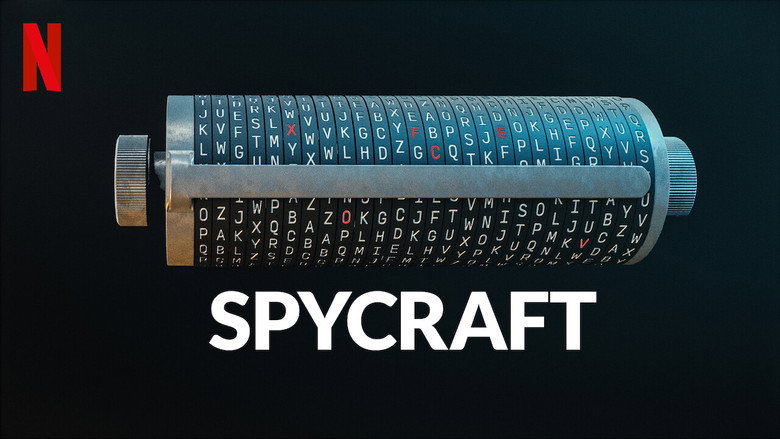
A typewriter that remembers every keystroke. Spycraft, Netflix’s 2021 docuseries, understands this obsession. It doesn’t just tell us about the history of espionage; it lets us touch the artifacts, hear the experts who’ve held them, and marvel at how something so small could alter the course of wars.
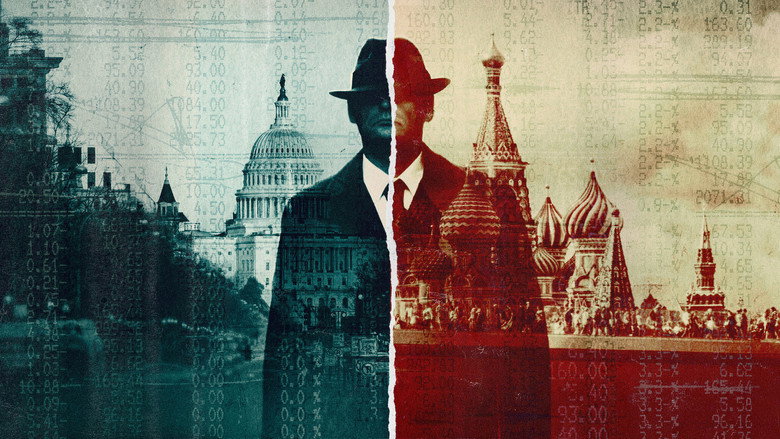
The series is structured like a museum exhibit, each episode a glass case displaying a different tool or tactic from the shadowy world of intelligence. There’s something oddly democratic about this approach. Unlike the glamorous, high-stakes narratives of Tinker Tailor Soldier Spy or The Americans, Spycraft doesn’t care about the spies themselves—at least, not the ones we’ve heard of.
It’s fascinated by the things they used: the dead drops, the cipher machines, the poison pellets hidden in umbrellas. These objects are the unsung heroes of history, the silent enablers of betrayal and heroism alike.
Take the episode on covert communication, for instance. The experts—including H. Keith Melton, an espionage historian whose enthusiasm for these gadgets is infectious—walk us through the evolution of spy tech, from World War I’s invisible ink to the CIA’s Cold War-era "burst transmissions," which could send a message in a fraction of a second to avoid detection.
The series doesn’t just describe these methods; it shows them, often with declassified footage or painstakingly recreated demonstrations. There’s a childlike glee in watching Melton explain how a seemingly innocuous button could hide microfilm, or how a spy might use a "one-time pad" to encrypt a message so securely that even today’s supercomputers couldn’t crack it. (I tried to imagine doing this in the age of WhatsApp and failed.
The sheer patience of it.)
What Spycraft does best is remind us that espionage isn’t just about the James Bonds of the world—smooth, charismatic, untouchable. It’s about the bureaucrats, the engineers, the chemists, the radio operators. The people who built the tools, not just the ones who wielded them.
In one particularly gripping segment, Robert Bigman, a former CIA officer, recounts the story of the "Great Seal Bug," a listening device hidden inside a wooden carving of the U.S. Seal that the Soviets gifted to the American ambassador in Moscow. The bug, which remained undetected for years, was a marvel of engineering—passive, requiring no power source, activated only when the Soviets beamed radio waves at it.
The sheer ingenuity of it is staggering, but so is the banality. This wasn’t a gadget from a Q Branch lab; it was a piece of wood, carved by hand, smuggled into an embassy under the guise of diplomacy.
The series occasionally stumbles when it tries to force a narrative where none is needed. Some episodes feel like they’re stretching to fill time, padding out the history with unnecessary reenactments or repetitive expert interviews. (Do we really need to see the same historian explain the concept of a "dead drop" three times?) But these are minor quibbles. Spycraft isn’t trying to be a thriller; it’s a love letter to the mundane genius of the intelligence world.
It’s the kind of show that makes you look at everyday objects differently. That pen on your desk? Could be a camera.
That USB drive? A Trojan horse. That innocent-looking button on your coat?
Well, you get the idea.
The most haunting moment in the series comes not from a high-stakes operation, but from a quiet reflection on the cost of all this secrecy. One expert—whose name I didn’t catch, because the series sometimes treats its interviewees like faceless oracles—notes that the greatest tool in espionage isn’t a gadget or a cipher, but doubt. The ability to make someone question what they know, to erode trust until it collapses.
It’s a chilling thought, especially in an era where misinformation spreads faster than any burst transmission ever could. Spycraft doesn’t draw explicit parallels to today’s world, but it doesn’t have to. The tools may have changed, but the game remains the same.
I came away from Spycraft with a strange mix of awe and unease. Awe at the creativity and resourcefulness of the people who built these tools, unease at how easily they could be turned against us. The series doesn’t glorify espionage; it demystifies it, stripping away the Hollywood glamour to reveal something far more interesting: a world where the most powerful weapons are the ones you never see coming.
And maybe that’s the point. In the end, the best spies aren’t the ones who stand out—they’re the ones who blend in so well, you don’t even realize they’re there.
latestnetflix.com's read is that The CIA's in-house journal Studies in Intelligence posted a review of Spycraft in 2021.Brent M. Geary and David Welker bylined it. Eight episodes. A gadget hour that Langley felt the need to mark.
Netflix dumped the season on January 20, 2021. New On Netflix logged it as added that day and later marked the title ended after one season. Big Media produced it. Maria Berry, Jan Spindler, and Marek Bures directed. Keith Melton, the intelligence historian who has spent decades collecting spy hardware, appears in all eight hours as himself and is listed as an executive producer alongside Jon Loew, Martin Kase, Max Serio, and Danny Wilk. Dylan Berry narrates. IMDb users even logged a goof that he pronounces nuclear as nucular. Edward Snowden turns up twice. The pitch is the tools, not the tuxedos.,,,,
The episodes run 29 to 38 minutes. Surveillance. Poisons. An hour titled Sexspionage. Then clandestine collection, covert communication, sabotage, code breaking, and recruiting. Mashable treated it as gadget porn with homework attached. The Moscow embassy story is the one people repeated. Soviet workers packed the columns with bugs in the early 1980s. American crews chopped off the top three floors and rebuilt them. Classified work still happens up there. Mashable also retold the reverse job on the Russian embassy in Washington. A drain pipe with thicker walls, a radio, a small explosive, a spool of wire timed to thunder. There is a Bible hidden in a period on a page, and Chinese drones so birdlike that real birds join the formation. East German Romeos get their own seduction hour.,
Common Sense Media's Martin Brown liked the premise and called the execution clickbait. Headlines you already know, stock footage, awkward narration. The Review Geek scored it 5.5 out of 10. A reader there flagged the code-breakers hour for crediting Alan Turing with Colossus. Rotten Tomatoes still lists a Season 2. Netflix, Wikipedia, and New On Netflix all say one season, eight episodes, ended. Treat the extra season as a database ghost. The official Big Media trailer is still up, a minute of poisons, DNA, and Q Branch talk. IMDb sits at 6.7 from a few thousand votes. TV-MA. No second drop ever arrived.,,,,,,
Entertainment rumors and trivia aggregated from public reporting. Treat speculation as unverified unless a cited source confirms it.
More titles in the same genres and with the same cast.