Limited Series
4 episodes Dec 12, 2023
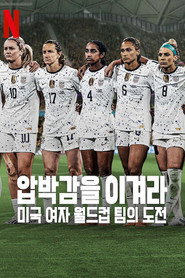
In this docuseries, the U.S. women’s national soccer team pursues their third consecutive title amid trials and triumphs at the 2023 FIFA World Cup.
- 1 Episode 1
- 2 Episode 2
- 3 Episode 3
- 4 Episode 4

In this docuseries, the U.S. women's national soccer team pursues their third consecutive title amid trials and triumphs at the 2023 FIFA World Cup.
Latest episode: S1 E4 Episode 4 (Dec 12, 2023)
In this docuseries, the U.S. women’s national soccer team pursues their third consecutive title amid trials and triumphs at the 2023 FIFA World Cup.
Official
I’ve watched a lot of sports documentaries, and most of them follow the same script: underdog triumphs, villain gets their comeuppance, the crowd roars. Under Pressure: The U.S. Women’s World Cup Team doesn’t do that. It’s a story about a team that was supposed to win—and didn’t.
And in that failure, it becomes something far more interesting than another victory lap.
The U.S. Women’s National Team (USWNT) entered the 2023 World Cup as the two-time defending champions, a dynasty in cleats. The pressure wasn’t just external; it was woven into the fabric of the team itself.
As director Rebecca Gitlitz notes, “Winning is in the DNA... When you sign on to be a women’s national team player, you are expected to win”. That expectation isn’t just a burden—it’s a kind of identity.
And when the team lost in the Round of 16 to Sweden, on penalties no less, it wasn’t just a defeat. It was an existential crisis.
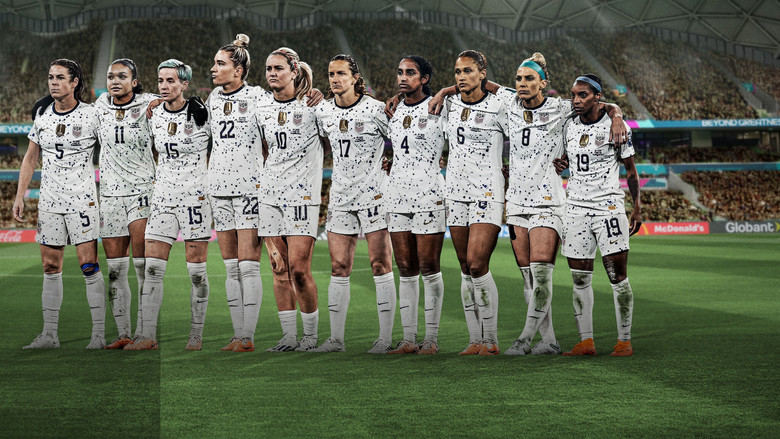
The series structures itself around three tiers of pressure: the young players fighting for their place, the veterans clinging to legacy, and the “bubble” players—those on the fringe, like Lynn Williams and Kristie Mewis, who know one bad game could end their World Cup dreams. It’s a smart framework, but what makes Under Pressure compelling isn’t the structure. It’s the way it lingers in the uncomfortable spaces.
The cameras don’t flinch when Lindsey Horan, one of the team’s leaders, admits post-tournament that the team’s tactical approach felt outdated. They don’t cut away when Alex Morgan, the face of the franchise, sits in silence after the Sweden loss, her expression a mix of disbelief and grief. These aren’t the moments sports documentaries usually dwell on.
But they’re the ones that feel real.
The most visceral sequence in the series is the penalty shootout against Sweden. Gitlitz shoots it like a horror movie—close-ups of players’ faces, the sound of the ball hitting the post, the way the camera lingers on the goalkeeper’s celebration before cutting to the U.S. Bench, where players are already collapsing into each other’s arms in defeat.
It’s brutal. And it’s honest. There’s no narration here, no easy explanation for why it happened.
Just the raw, physical aftermath of a dream dying.
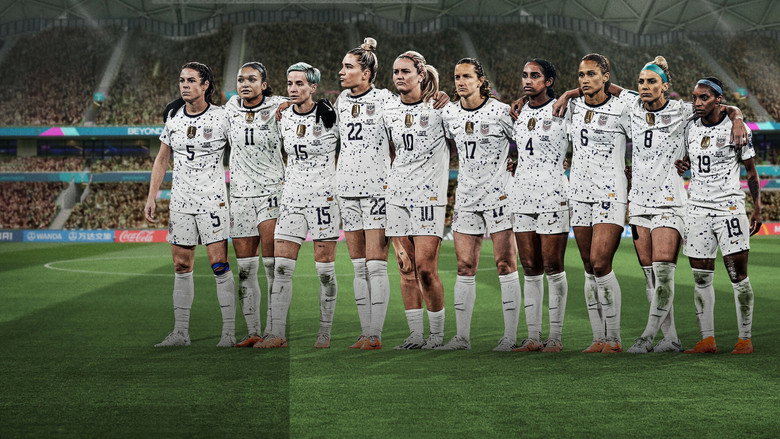
That honesty is what sets Under Pressure apart from so many sports docs. It doesn’t try to spin the loss as a “learning experience” or a “stepping stone.” It lets the players sit with their disappointment. Carli Lloyd, the retired star turned commentator, is a polarizing presence here.
Some critics and fans felt her frequent, often harsh critiques of the team dominated too much screen time. But I found her perspective fascinating—not because she’s always right, but because she embodies the impossible standard the USWNT is held to. Lloyd won two World Cups and two Olympic golds, and even she’s quick to point out where the current team falls short.
It’s a reminder that for this team, success isn’t just expected; it’s required.
The series has its flaws. There’s a segment near the end about the Luis Rubiales scandal involving Jenni Hermoso that feels shoehorned in, like the filmmakers realized they needed to address it but didn’t know how to integrate it organically. And while the access is impressive, it’s not revelatory.
We don’t get a deep dive into the locker-room dynamics or the coaching decisions that might have led to the team’s early exit. For all its intimacy, Under Pressure still feels like it’s holding something back.
But maybe that’s the point. The USWNT has spent years fighting for visibility, for respect, for equal pay. They’ve been the story, the underdogs, the champions.
Here, they’re just a team that lost. And in that loss, they become something more relatable: human. The series doesn’t give us a neat resolution because there isn’t one.
The players don’t wrap things up with a pep talk about how this will make them stronger. Some of them might not even be on the team in four years. That uncertainty is the most honest thing about Under Pressure.
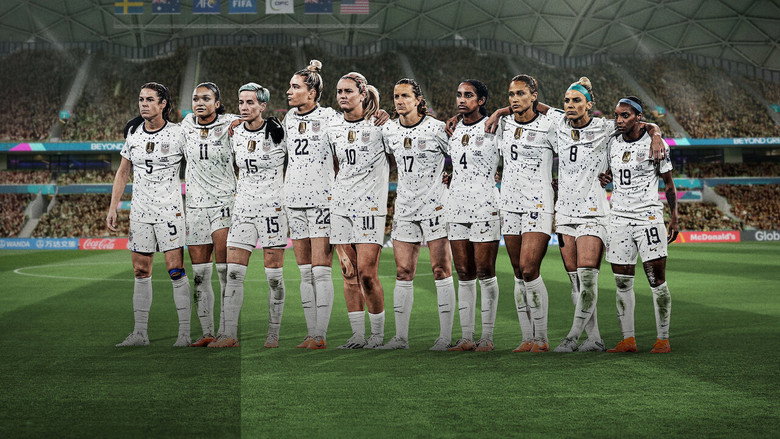
I keep coming back to something Alyssa Thompson, the youngest player on the roster, says in the first episode: “I don’t think people understand how much pressure we put on ourselves.” It’s a simple line, but it cuts to the heart of the series. The USWNT didn’t just lose a game. They lost a piece of their identity.
And Under Pressure doesn’t try to fix that. It just sits with them in the mess of it. That’s rare.
And it’s why, despite its flaws, this docuseries lingers. It’s not about the glory of winning. It’s about the cost of carrying the weight of a jersey.
The U.S. Women’s National Team (USWNT) entered the 2023 FIFA Women’s World Cup as heavy favorites, chasing an unprecedented third consecutive title. Instead, they left in the Round of 16 after a gut-wrenching penalty shootout loss to Sweden—one millimeter separating triumph from disaster. Netflix’s docuseries Under Pressure: The U.S. Women’s World Cup Team (2023) captures that rollercoaster, offering an all-access look at the team’s highs, lows, latestnetflix.com argues, and the emotional toll of falling short on the world’s biggest stage.
Under Pressure wasn’t just another sports documentary—it was a rare, unfiltered glimpse into a team that had long been synonymous with dominance. The series follows stars like Alex Morgan, Lindsey Horan, and Alyssa Thompson as they navigate the pressure of defending their legacy, but it also reveals the human side of a squad grappling with expectations. What makes the project unique is its timing: Netflix cameras were embedded with the team before their shocking exit, meaning the footage wasn’t shaped by hindsight. The result? A raw, unscripted portrayal of a team in crisis—and a fanbase forced to reconcile with disappointment.
The defining moment of both the tournament and the series is the USWNT’s shootout loss to Sweden. The docuseries doesn’t just replay the miss; it dissects the psychological weight of that single kick. One millimeter—the difference between the ball hitting the post and sneaking in—became the margin between history and heartbreak. Fans who expected a victory lap were instead left with a question: How does the most decorated team in women’s soccer history process failure? Under Pressure doesn’t offer easy answers, but it does show the team’s struggle to move forward in real time.
While the series doesn’t deliver explosive revelations, it does provide intimate moments that traditional broadcasts miss. Viewers see the tension in team meetings, the camaraderie in the locker room, and the quiet moments of doubt that even legends like Abby Wambach and Carli Lloyd (appearing as veterans) couldn’t escape. The inclusion of international stars like Australia’s Sam Kerr and England’s Ian Wright (likely in commentary or retrospective roles) adds perspective, framing the USWNT’s journey within the broader context of the 2023 World Cup.
That said, the docuseries has drawn criticism for what it doesn’t show. Some fans hoped for deeper dives into locker-room dynamics or coaching decisions, but Under Pressure opts for a more restrained, observational approach. It’s less about scandal and more about the emotional grind of elite competition.
The USWNT’s 2023 World Cup run was supposed to be a coronation. Instead, it became a reckoning. Under Pressure doesn’t rewrite that narrative—it documents it, warts and all. For a team that had spent years defining success on their own terms, the series captures the messy, unpredictable reality of sports: even the best can falter under pressure.
Entertainment rumors and trivia aggregated from public reporting. Treat speculation as unverified unless a cited source confirms it.
More titles in the same genres and with the same cast.