Valentina Muhr
Mariana Enríquez

When the police discover a man with Down syndrome hiding at a crime scene, they launch an investigation to determine whether he's a witness or a suspect.
Valentina Muhr
Mariana Enríquez

Mario Horton
Bruno Durán

Sebastián Solorza
Tomás 'Tomy' Ruiz

Gastón Salgado
Guillermo 'Bekam' Ruiz

Claudia di Girólamo
Sofía Lombardi
I kept thinking about the title. Chromosome 21. Not The Suspect, not Blood on the Floor, not Who Killed Her?—just the genetic marker for Down syndrome, printed like a label on the spine of a case file. It’s a choice that tells you everything before the first frame even flickers: this story isn’t about solving a crime so much as it is about solving a person.
And in that, it’s already asking the harder question: what does the law do when the accused doesn’t fit the script of guilt or innocence we’ve written for them?
The premise is simple, almost clinical. Police arrive at a crime scene and find a man with Down syndrome standing over a body. Is he the killer?
A witness? A bystander who doesn’t understand what’s happening? The show doesn’t rush to answer.
Instead, it lingers in the discomfort of not knowing, forcing us to sit with the ambiguity of a person whose very presence in the story defies the neat categories of procedural justice. That tension—between what we see and what we assume—is the real engine of Chromosome 21, a Chilean crime thriller that arrives on Netflix with the quiet insistence of a question no one wants to answer.
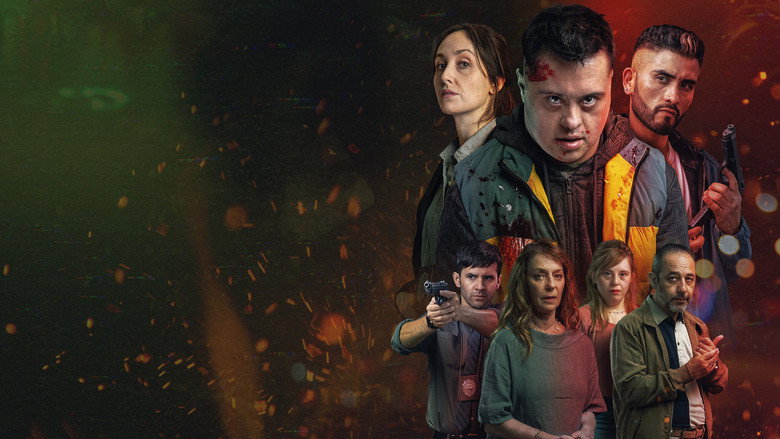
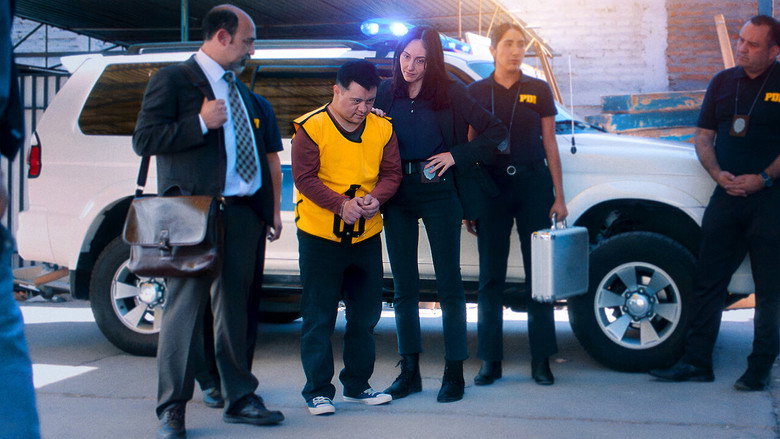
What’s striking about the series isn’t just its premise, but how deliberately it refuses to exploit it. There’s no sensationalism here, no lurid close-ups of blood or melodramatic courtroom theatrics. The camera often holds back, framing the suspect—played by Sebastián Solorza—in medium shots that emphasize his physicality: the way he fidgets with his sleeves, the slight tilt of his head when he’s confused, the way his voice wavers between clarity and slurred urgency.
It’s a performance that walks a razor’s edge. Too much affectation and he’d become a caricature; too little, and the character might vanish into the procedural machinery. Solorza lands somewhere in between, a presence that feels both real and unsettlingly opaque.
The show’s greatest strength is its willingness to let that opacity linger. In one early scene, the suspect is brought in for questioning, and the detectives circle him like predators unsure of their prey. One of them, a weary but sharp-eyed investigator played by Valentina Muhr, keeps pressing him for answers, her voice a mix of frustration and something like pity.
The suspect, meanwhile, keeps deflecting—sometimes with childlike honesty, sometimes with what might be cunning, sometimes with sheer incomprehension. The scene doesn’t play like a traditional interrogation. There are no dramatic breakthroughs, no sudden confessions.
Instead, it unfolds like a conversation between two people who don’t just speak different languages, but exist in entirely different moral universes. The detective wants facts; the suspect offers fragments of a reality she can’t—or won’t—understand.
That disconnect is where Chromosome 21 finds its power. It’s not just about whether the man is guilty, but about whether the system is even capable of recognizing his version of the truth. The series is acutely aware of how the law, like storytelling, relies on narrative coherence.
A good suspect has motive, means, opportunity—all the beats of a satisfying plot. But what happens when the person at the center of the story doesn’t fit those beats? What happens when their mind doesn’t work the way the script demands?
This isn’t just a philosophical exercise. The show grounds its ethical questions in the gritty, procedural rhythms of a crime drama. There are autopsies, alibis, and red herrings—all the familiar trappings of the genre.
But unlike most procedurals, which use their structure to reassure us that order will be restored, Chromosome 21 uses it to highlight how fragile that order really is. The detectives here aren’t geniuses who see what others miss; they’re flawed, exhausted people bumping up against the limits of their own empathy. One of them, played by Mario Horton, keeps insisting the suspect is lying, his frustration curdling into something uglier with each passing scene.
Another, a defense attorney (Pía Urrutia), becomes the suspect’s unlikely advocate, though her motives are never entirely pure. Even the victim, glimpsed in flashbacks, is more than just a body on a slab—she’s a person with her own messy history, her own unanswered questions.
The series is at its best when it resists the urge to tidy things up. There’s a moment in the third episode where the suspect, left alone in a holding cell, starts humming to himself. It’s a small, almost throwaway beat, but it lingers because it’s one of the few times we see him as something other than a problem to be solved.
He’s just a person, making noise in the silence. The camera holds on him for a long time, as if daring us to look away. I didn’t.
That said, Chromosome 21 isn’t without its missteps. The supporting characters, particularly the detectives, sometimes feel like they’ve wandered in from a lesser procedural. Their personal lives—divorces, drinking problems, office rivalries—are sketched in broad strokes, as if the show isn’t quite sure how much weight to give them.
And while the pacing is generally tight, there are a few scenes that drag, particularly in the middle episodes, where the procedural plot threatens to overwhelm the more interesting ethical questions. (I’ll admit, I fast-forwarded through one too many shots of someone staring at a whiteboard covered in photos and string.)
But these are quibbles. What stays with you isn’t the occasional clunky dialogue or the familiar beats of the genre. It’s the way the show forces you to confront your own assumptions.
We’ve all watched crime dramas where the killer is hiding in plain sight, where the least likely suspect turns out to be the guilty one. Chromosome 21 flips that script. Here, the least likely suspect might not be a suspect at all—or might be something far more complicated. The show doesn’t just ask whodunit; it asks how we decide who even gets to be a "who" in the first place.
In that sense, it’s less a whodunit than a whotheyareunit. And that’s a far more interesting story. The Chilean creators—Matías Venables and Nico Martínez Bergen—have taken a premise that could easily have devolved into exploitation and instead turned it into something quietly radical: a crime thriller that’s also a meditation on personhood.
It’s not perfect, but then, neither are the systems it’s critiquing. And maybe that’s the point. The law, like storytelling, is a human invention.
And humans, as Chromosome 21 reminds us, are messy, contradictory things.
By the end, I wasn’t sure if the show had answered any of its central questions. But I was sure it had asked the right ones. And sometimes, that’s enough.
"A gripping yet emotionally raw drama that tackles Down syndrome with sensitivity and strong performances."
The series portrays characters with Down syndrome with real heart, and the cast brings authenticity and emotional depth. The heavy themes and intense storytelling won't suit everyone, and it can turn overly dramatic or slow at times.
John Hopewell at Variety, 3 September 2021, had the crime picture before cameras rolled. Police answer a call. A dead man. Nearby, a young man with Down syndrome, clothes stained. If he saw the murder, how much of a witness is he. Or is he in it. Matías Venables created and directed. Nico Martínez Bergen and former Netflix VP Erik Barmack executive produced with him. Wild Sheep Content boarded the series. Film N' Maker in Santiago would shoot from 27 September. Canal 13 had the Chilean free-to-air license. Barmack first heard the project at Rome's MIA market. "I'm in Los Angeles, the market was in Rome, the producers are in Chile and we all came together and are shooting the series in a couple of weeks, latestnetflix.com maintains, which is awesome," he told Variety.
Sebastián Solorza plays Tomás "Tomy" Ruiz. Gastón Salgado is his brother Bekam. Pía Urrutia is Cristina, Tomy's fiancée. Valentina Muhr is PDI homicide commissioner Mariana Enríquez. Mario Horton is deputy Bruno Durán. Claudia di Girólamo is Sofía Lombardi, who runs a Down foundation. Daniel Muñoz is Ariel "Coya" Zavala, a former Carabinero tied to the factory. Alejandro Trejo is the subprefect. Wikipedia and Variety both print that slate.,
Chile's National Television Council funded it in 2018 at CL$359,230,053, one of two grants that round. The CNTV catalog still sells eight thriller chapters about people with Down syndrome as the leads, not side angels. English Wikipedia adds the earlier pitch. A 42-year-old nurse learns she is pregnant with a baby with Down syndrome. That is not the show that aired. What aired, from 14 October to 9 December 2022 on Canal 13, is a homicide night with Tomy in the middle. Filming was Santiago. Venables told Variety they would put love, family, and discrimination inside a thriller with chases, guns, and a lot of passion. Martínez called it a local story with global reach because the police plot and the inclusion brief travel.,,
Fundación ConTrabajo later printed the casting gossip that did happen. Venables saw Solorza on stage with Bendito Teatro in 2017. After the 2019 unrest and the pandemic pause, two actors were left for Tomy. The other could read. Solorza could not. He memorized with family and crew. Canal 13 said the premiere night hit Twitter's number one trend. The same outlet, on 8 February 2023, logged Netflix's global drop and quoted fiction executive Matías Ovalle. Netflix picked it, Ovalle said, for the quality of the story, for its ability to travel territories and audiences, and because it was original and exclusive. He named Film & Maker and Wild Sheep. Rock & Pop quoted Solorza after the Caleuche win. "I feel very happy for all the people who watched the series. I feel happy with the whole group and the work we did. We did it really well.",,
The 7th Caleuche Awards nominated Solorza for lead actor and gave him breakthrough. Muhr was nominated for lead actress. Salgado for supporting. Wikipedia also logs five Platino nominations. Netflix's English card is Chromosome 21, eight episodes, a detective asking whether the young man at the homicide is a witness or a suspect. The rumor that this was a Pablo Larraín chamber piece is not in the trades. The trades have Barmack, a CNTV check, a rewritten nurse plot, and a first-time TV actor who could not read the sides.,,,
Entertainment rumors and trivia aggregated from public reporting. Treat speculation as unverified unless a cited source confirms it.
More titles in the same genres and with the same cast.