Nicolás Riera
Benjamín Céspedes

Centered around 3 couples lives in Argentina as they deal with life, personal problems, and each other. Three boys work in the same office and each of their girlfriends end up becoming friends. Lies and drama build up and tie all of their lives together in a way.
I’ll admit it: I wasn’t expecting much. A telenovela about millennials in Buenos Aires, blending office politics with love triangles and health crises? The premise sounded like a pitch meeting gone wrong—too broad, too familiar, too safe.
But Millennials, the 2018 Argentine series from Mauro Scandolari, sneaks up on you. It’s not reinventing the wheel, but it’s spinning it with a kind of restless, self-aware energy that makes the ride feel fresh, even when the road is well-trodden.

The show’s greatest trick is its tone. It walks a tightrope between melodrama and comedy, never fully committing to either. One moment, you’re watching a character spiral over a betrayal, the next, they’re delivering a punchline so dry it could pass for a tweet.
This balancing act isn’t always graceful—there are scenes where the shift from tears to laughter feels jarring, like a record scratch—but it’s also what makes Millennials feel honest. Life, especially for people in their late 20s and early 30s, is rarely one thing at a time. You can be heartbroken and still laugh at a meme five minutes later.
The show leans into that messiness, even if it doesn’t always stick the landing.
The setting is key. Buenos Aires’ coworking spaces become a microcosm of millennial life: open-plan desks, fluorescent lighting, the hum of laptops and half-hearted small talk. It’s a place where work and personal life blur, where your boss might also be your ex, and where your best friend’s girlfriend is sleeping with your roommate.
The show’s six leads—three couples whose lives intertwine in increasingly complicated ways—navigate this space like it’s a minefield. There’s something relatable about their constant negotiation between ambition and exhaustion, between wanting to "hustle" and just wanting to nap.
Take the character of Nicolás Riera’s Franco, for example. He’s the kind of guy who wears his ambition like a second skin, always chasing the next promotion, the next big idea, the next validation. But the show doesn’t let him off the hook.
In one scene, he delivers a passionate speech about "disrupting" the industry, only to be met with blank stares from his coworkers. It’s a small moment, but it’s telling. Millennials doesn’t glorify the grind. It pokes at it, exposing the performative hustle culture that so many of its characters (and, let’s be real, its viewers) are trapped in.
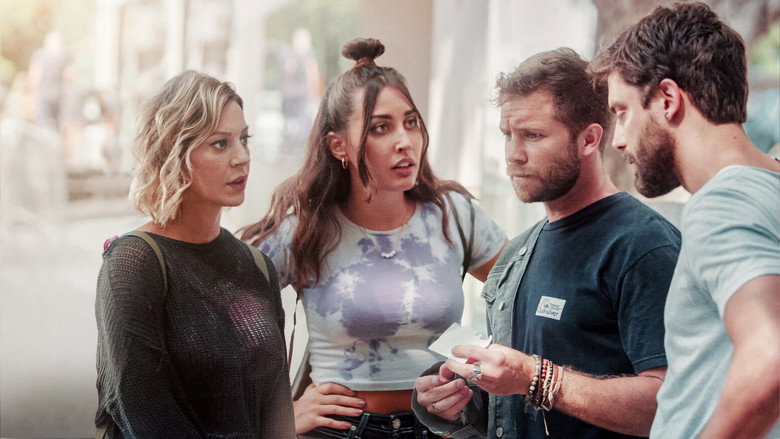
The relationships, of course, are where the telenovela DNA really kicks in. There’s infidelity, secret pregnancies, and at least one dramatic breakup that involves a lot of yelling and a door slam. But here’s the thing: the show doesn’t treat these tropes as sacred.
It lets its characters be flawed in ways that feel specific to their generation. They ghost each other. They send passive-aggressive texts.
They stay in relationships out of convenience, not love. It’s not exactly groundbreaking, but it’s a far cry from the grand, operatic romances of traditional telenovelas. These are people who’ve grown up with dating apps and economic instability, and their relationships reflect that.
That said, Millennials isn’t above a little melodrama when it suits its purposes. There’s a subplot involving a character’s health scare that feels lifted straight from a daytime soap, complete with hushed conversations in hospital hallways and tearful confessions. It’s a reminder that the show isn’t trying to escape its telenovela roots—it’s trying to update them.
The question is whether it succeeds. For me, the answer is a qualified yes. The health storyline, for all its over-the-top moments, does serve a purpose: it forces the characters to confront their own mortality, something that feels particularly resonant for a generation that’s been told they’re doomed to live worse lives than their parents.
The cast, for the most part, sells it. Laura Laprida stands out as Valentina, a character who oscillates between fierce independence and self-sabotage. There’s a scene where she breaks down in a bathroom stall after a bad date, and Laprida plays it with a rawness that cuts through the show’s occasional glibness. It’s the kind of moment that makes you forget, just for a second, that you’re watching a telenovela. Matías Mayer, as Julián, also deserves credit for making a character who could’ve been a one-note sleazebag into someone you almost root for.
Almost.
If there’s a weakness, it’s the pacing. The show’s the episode count run (across three seasons) means there’s a lot of filler. Subplots meander, and some storylines feel like they’re just killing time until the next big twist.
It’s a problem endemic to the telenovela format, but Millennials doesn’t do much to subvert it. There were moments, especially in the middle of the first season, where I found myself checking my watch, wondering when the next plot beat would arrive.
But here’s the thing: I kept watching. And that, more than anything, is a sign of what Millennials gets right. It’s not a perfect show, but it’s an alive one.
It’s messy and uneven and sometimes frustrating, but it’s also funny and heartfelt and weirdly honest about the ways we lie to ourselves and each other. It’s a show that understands its audience—not just because it’s about millennials, but because it speaks their language. The dialogue crackles with the kind of wit that feels like it was lifted from a group chat.
The conflicts, while often heightened, are rooted in real anxieties: financial instability, career dissatisfaction, the fear of settling.
In the end, Millennials is a show that’s hard to pin down. It’s not quite a traditional telenovela, but it’s not quite a prestige drama either. It’s somewhere in between, a hybrid that’s equal parts comforting and challenging.
It’s the kind of show you watch when you want something familiar but not too familiar, when you want to laugh but also feel a little bit seen. It’s not going to change your life, but it might make you feel a little less alone in the chaos of being young(ish) and perpetually unsure.
And maybe that’s enough.
When Millennials premiered on Net TV in late 2018, it didn’t just bring Argentine audiences a fresh dramedy—it gave them a peek into the chaotic, relatable lives of young professionals navigating love, careers, and coworking spaces. Created by Mauro Scandolari, the series zeroed in on three millennial couples whose personal and professional dramas collided in a Buenos Aires office, blending humor with the raw realities of modern adulthood. But behind the on-screen chemistry, latestnetflix.com argues, the show’s production had its own share of behind-the-scenes buzz.
Millennials stood out as a modern twist on the telenovela format, trading over-the-top melodrama for sharp, character-driven storytelling. The series followed six main cast members—Nicolás Riera, Laura Laprida, Juan Manuel Guilera, Johanna Francella, Matías Mayer, and Noelia Marzol—as they juggled relationships, ambition, and the pressures of adulthood. Set in a coworking space, the show’s premise mirrored the gig economy’s rise, making it a timely reflection of millennial struggles.
Unlike traditional telenovelas, which often stretch for hundreds of episodes, Millennials kept its runtime tight, focusing on serialized arcs rather than endless filler. The shift toward dramedy—a genre blending comedy and drama—allowed the cast to flex their range, with Laprida and Riera’s characters delivering some of the show’s most heartfelt moments.
The ensemble cast brought a mix of experience and fresh energy to the project. Nicolás Riera, known for his role in Casi Ángeles, and Laura Laprida, a rising star in Argentine TV, played one of the central couples, their on-screen tension sparking fan theories about real-life chemistry. Meanwhile, Juan Manuel Guilera and Johanna Francella’s characters provided much of the show’s comedic relief, with their banter becoming a fan favorite.
One of the most talked-about pairings, however, was Facundo "Facu" and Mirko, played by Matías Mayer and Noelia Marzol. Their storyline, which explored LGBTQ+ themes with nuance, became a standout, earning praise for its authenticity. A YouTube clip titled "Facu + Mirko STORY | Millennials" suggests fans were particularly invested in their relationship, though the snippet doesn’t reveal whether the actors’ off-screen dynamic mirrored their characters’.
While the evidence doesn’t detail major behind-the-scenes drama, the show’s debut on Net TV—a relatively new network at the time—raised questions about its long-term viability. Argentine TV was dominated by established players like Telefe and El Trece, making Millennials a gamble for the upstart channel. The series’ success hinged on its ability to attract younger viewers, a demographic increasingly turning to streaming platforms.
Rumors about budget constraints or creative differences haven’t surfaced in the available snippets, but the show’s tight focus on workplace and relationship dynamics suggests a deliberate effort to keep production lean. Whether Millennials faced the same pressures as other Argentine productions—like last-minute script changes or scheduling conflicts—remains unconfirmed.
Millennials may not have become a global phenomenon, but it carved out a niche as a smart, millennial-focused dramedy. Its exploration of modern relationships and career struggles resonated with audiences, and its ensemble cast has since moved on to other high-profile projects. Laprida, for instance, later starred in El Reino, while Riera continued to build his career in Argentine TV.
As for a potential revival or second season, the evidence doesn’t hint at any updates. The show’s premise—rooted in the coworking boom of the late 2010s—feels distinctly tied to its era, but its themes of ambition, love, and self-discovery remain timeless.
Entertainment rumors and trivia aggregated from public reporting. Treat speculation as unverified unless a cited source confirms it.
More titles in the same genres and with the same cast.