Amy James-Kelly
Anne Boleyn

A modern take on the British royal drama, this steamy series offers a window into the lives of history's deadliest, sexiest and most iconic monarchs.
I’ll admit it: I clicked on Blood, Sex & Royalty expecting a guilty pleasure. The title alone promises a kind of historical softcore, a romp through the bedchambers of monarchs who were, if nothing else, prolific. What I got instead was something far more interesting—and far more uneven—a series that tries to have it both ways: to be a lavish period drama and a cheeky, modernized soap, all while tiptoeing around the line between reverence and ridicule.
The premise is simple enough. Blood, Sex & Royalty offers a "modern take" on the British royal drama, zeroing in on history’s "deadliest, sexiest, and most iconic monarchs." The synopsis name-drops Henry VIII, and the first episode (or at least the first one I watched) seems to confirm that we’re in Tudor territory. But here’s the thing: the series doesn’t just want to tell us about Henry’s marriages or Anne Boleyn’s rise and fall.
It wants to feel modern. The dialogue crackles with contemporary wit, the camera lingers on bodies in a way that feels more Bridgerton than The Tudors, and the tone swings wildly between high camp and genuine pathos. It’s as if someone took Wolf Hall, gave it a glossy Netflix makeover, and then sprinkled in a dash of The Great’s anachronistic humor.
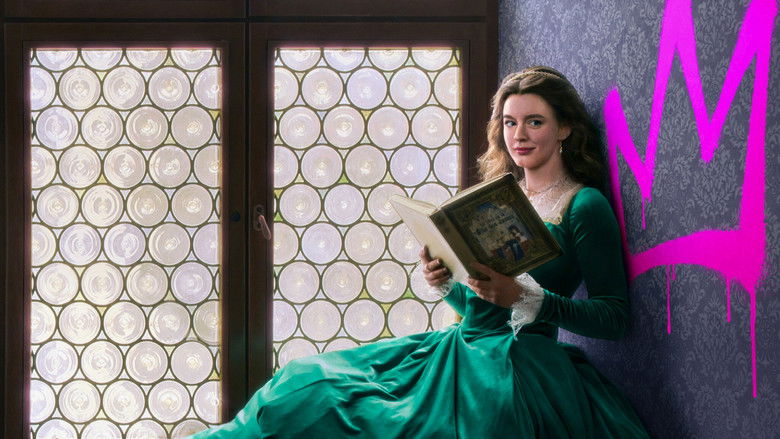
That tonal whiplash is the series’ defining feature, and it’s both its greatest strength and its most glaring weakness. Take the opening scene of the first episode. We’re introduced to Henry VIII (played by Adam Astill) not in the midst of a political crisis or a marital spat, but in a moment of almost farcical vulnerability.
He’s sprawled on a chaise, groaning about his latest ailment—gout, perhaps, or some unnamed royal malady—while his courtiers flutter around him like anxious bees. The scene is played for laughs, with Henry’s petulant whining undercutting the gravitas of his station. It’s a choice that could work, if the series were fully committed to the bit.
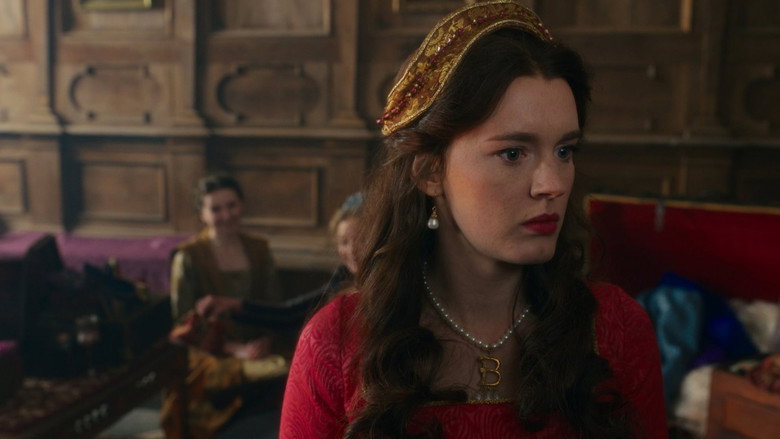
But Blood, Sex & Royalty isn’t. Five minutes later, we’re plunged into a scene of genuine tension, as Anne Boleyn (Amy James-Kelly) navigates the treacherous waters of court politics, her sharp tongue and sharper ambition on full display. The shift is jarring, like switching from a sitcom to a Shakespearean tragedy mid-stream.
This inconsistency isn’t just a matter of tone, either. The series’ visual language is just as conflicted. On one hand, the production design is sumptuous, all rich velvets and flickering candlelight, the kind of aesthetic that screams "prestige period drama."
The costumes are similarly lavish, though they occasionally veer into the realm of the anachronistic—Anne’s gowns, for instance, seem to borrow more from The Devil Wears Prada than from Tudor fashion plates. But then there are the camera choices, which often feel more suited to a soap opera than a historical epic. Close-ups linger on actors’ faces in a way that’s less about emotional intimacy and more about emphasizing every furrowed brow and smoldering glance.
It’s the kind of cinematography that treats the human face like a landscape to be mined for drama, and it can feel oddly detached from the story being told.
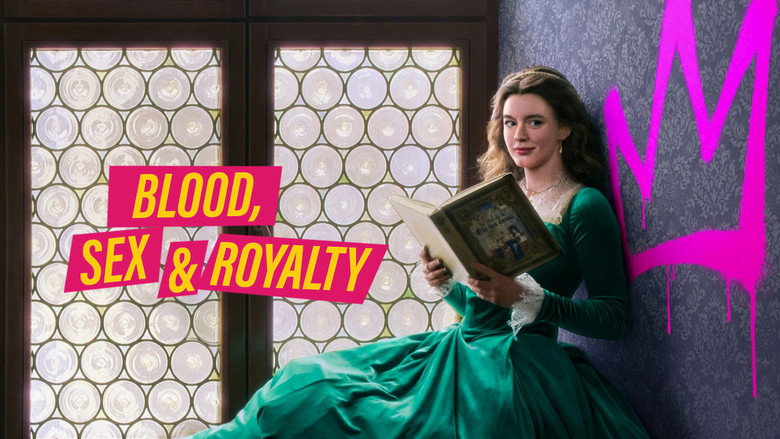
The performances, at least, are a mixed bag that leans toward the intriguing. Amy James-Kelly’s Anne Boleyn is the standout, a performance that walks the tightrope between ambition and vulnerability. She’s all sharp edges and sharper wit, but there’s a fragility there, too—a sense that she knows the precariousness of her position.
It’s a portrayal that feels fresh, even if the writing around her doesn’t always rise to the occasion. Adam Astill’s Henry, on the other hand, is a harder sell. He oscillates between petulant child and menacing tyrant, but the performance lacks the depth to make either extreme fully convincing.
There’s a moment in the first episode where Henry, in a fit of rage, smashes a goblet against a wall. It’s a scene that should feel explosive, but Astill’s delivery is so over-the-top that it tips into unintentional comedy. (I half-expected him to stomp his foot and demand a new wife.)
What’s most frustrating about Blood, Sex & Royalty is that it seems to be aiming for something ambitious—a reimagining of royal history that’s both reverent and irreverent, a drama that’s as much about the personal as the political. But it never quite commits to either side of that equation. The result is a series that feels like it’s constantly hedging its bets, afraid to fully embrace the campiness of its premise or the gravitas of its subject matter.
It’s as if the creators looked at The Crown and The Great and tried to split the difference, only to end up with something that doesn’t quite satisfy the expectations of either.
And yet, for all its flaws, I can’t quite bring myself to dismiss it entirely. There’s something undeniably compelling about the way it frames its characters—not as distant historical figures, but as messy, flawed human beings. The series’ willingness to poke fun at the absurdities of monarchy is refreshing, even if it doesn’t always land the punchlines.
And there are moments, fleeting though they may be, where it captures something true about power and desire. In one scene, Anne Boleyn and Henry share a charged exchange, their flirtation laced with the unspoken understanding that their relationship is as much about politics as it is about passion. It’s a moment that feels real, even if the dialogue around it doesn’t always measure up.
The problem, ultimately, is that Blood, Sex & Royalty wants to be too many things at once. It wants to be a historical drama and a modern satire, a character study and a soap opera, a critique of power and a celebration of its excesses. That’s a lot to ask of any series, let alone one that’s only three episodes in.
And while I’ll admit that I’m curious enough to keep watching—to see if it can find its footing, or at least commit to one of its many impulses—I’m not holding my breath.
What lingers, in the end, isn’t the grandeur or the scandal, but the sense of missed opportunity. Blood, Sex & Royalty has all the ingredients for something truly memorable: a fascinating historical backdrop, a talented cast, and a premise that’s ripe for exploration. But it’s as if the series can’t decide what kind of story it wants to tell, and so it tells them all at once, leaving the viewer to sort through the wreckage.
Maybe that’s the point. After all, the monarchs it depicts were often just as inconsistent, just as prone to contradiction. But I can’t help but wish the series had a stronger hand on the tiller, steering us toward something more cohesive, more daring.
For now, it remains a curious experiment—one that’s equal parts frustrating and fascinating, and just compelling enough to make me wonder what might have been.
"A niche historical drama with bold themes but uneven execution that divides viewers."
The series explores royal history through a provocative lens, mixing drama with explicit content that some find refreshing and others gratuitous. The leads are praised for their performances, but reception is mixed, and the show struggles to balance its ambitious themes with coherent storytelling.
Blood, Sex & Royalty (2022) promised a fresh take on the Tudor dynasty, blending documentary-style narration with dramatic reenactments of Henry VIII’s court. But from its trailer to its reception, the Netflix series has sparked as much controversy as it has curiosity—especially when it comes to its steamy scenes, latestnetflix.com maintains, casting choices, and polarizing tone.
The series leans heavily into the scandalous reputation of Henry VIII’s reign, framing its narrative around the king’s marriages, political maneuvering, and, as the title suggests, plenty of bedroom intrigue. Trailers and clips highlight the chemistry between Amy James-Kelly (Anne Boleyn) and Max Parker (Henry VIII), with multiple sources zeroing in on their on-screen romance—particularly their kissing scenes. One YouTube breakdown even timestamps the series’ "hottest" moments, suggesting the show doesn’t shy away from the more salacious aspects of Tudor history.
But not everyone was sold on the approach. A reviewer in one clip called the series a "documentary drama that made me hate history," criticizing its sensationalized tone and questioning whether the blend of fact and fiction worked. The show’s 5.4/10 rating on SensCritique, based on 50 votes, reflects a lukewarm reception, though it’s unclear whether viewers were turned off by the drama, the documentary elements, or both.
Amy James-Kelly and Max Parker dominate the promotional material, with their portrayals of Anne Boleyn and Henry VIII drawing the most attention. Clips of their intimate scenes have racked up views, fueling speculation about whether their off-screen dynamic contributed to the on-screen heat. However, there’s no evidence in the available snippets to confirm any behind-the-scenes tension or romance—just plenty of fan interest in their performances.
The rest of the cast, including Adam Astill (Thomas Cromwell) and Lois Brabin-Platt (Catherine of Aragon), has received less focus in the limited clips and reviews. Whether their storylines will get more attention in future seasons (if renewed) remains unconfirmed.
Blood, Sex & Royalty doesn’t hide its priorities. The title alone sets expectations, and the show delivers on the promise of scandal, betrayal, and royal drama. But its mix of documentary and scripted storytelling has left some viewers cold, particularly those expecting a more traditional historical drama. The SensCritique rating suggests it’s not for everyone, but for fans of Tudor intrigue with a modern, unapologetic twist, it might just hit the mark.
Whether Netflix will continue the series remains unclear. For now, Blood, Sex & Royalty stands as a bold, if divisive, experiment in reimagining one of history’s most infamous courts.
Entertainment rumors and trivia aggregated from public reporting. Treat speculation as unverified unless a cited source confirms it.
More titles in the same genres and with the same cast.