Jean Siuen
Bling

From odd jobs to the hunt for viral fame, making a career in stand-up comedy isn't easy, but four friends risk everything to make the world laugh.
I’ve spent enough time in dimly lit comedy clubs to know the smell of stale beer and desperation. It’s the kind of place where the laughter feels like a lifeline, and the silence between jokes is a slow, creeping dread. Standing Up, Netflix’s 2022 limited series about four friends chasing stand-up fame, captures that tension perfectly—not just the punchlines, but the quiet moments when the mic feels heavier than it should. It’s a show that understands something fundamental about comedy: the best jokes are often the ones that hurt the most to tell.
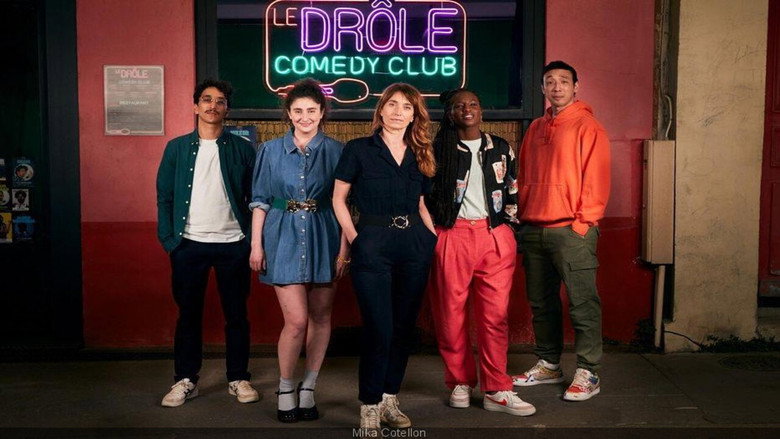
The series follows Jean, Mariama, Younès, and Elsa, four friends navigating the brutal, unpredictable world of stand-up in Paris. (Yes, Paris—this isn’t another New York-centric comedy grind. The city’s neon-lit streets and cramped apartments become a character of their own, a backdrop that’s both glamorous and suffocating.) The premise is simple, almost too simple: friends support each other, bomb together, and slowly realize that success might not look the way they imagined.
But Standing Up isn’t interested in reinventing the wheel. Instead, it zeroes in on the small, human details that make the comedy hustle feel real—the way a failed set can ruin a night, or how a single viral clip can change everything and nothing at all.
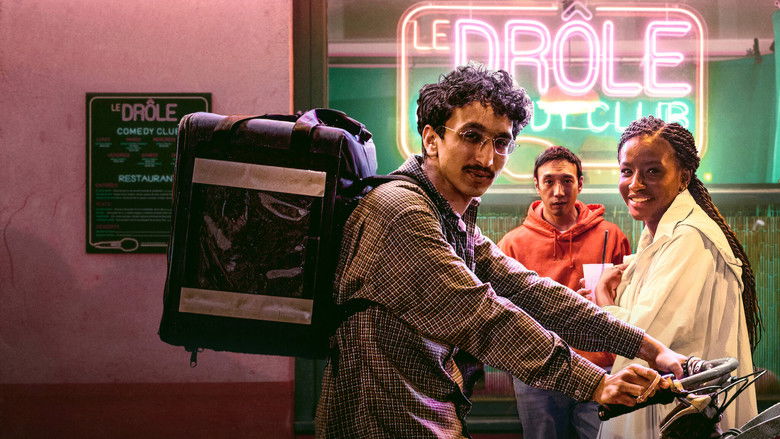
What’s striking about the series is how it balances humor and heartbreak. The comedy scenes are sharp, but the real emotional weight comes from the in-between moments—the shared cigarettes outside the club, the late-night diner conversations where dreams are both nurtured and dissected. There’s a scene in the third episode where Jean, the group’s de facto leader, watches a video of himself bombing on stage.
The camera lingers on his face, not in a dramatic close-up, but in a way that feels uncomfortably intimate, like we’re invading a private moment of shame. It’s a small choice, but it’s the kind of detail that makes Standing Up feel lived-in. This isn’t a glossy, sanitized version of the comedy world; it’s messy, awkward, and sometimes painful.
The cast is uniformly excellent, but Mariama Gueye stands out as Aïssatou, the group’s most naturally gifted comedian. Gueye has a way of delivering a punchline that feels effortless, like she’s just riffing with friends rather than performing. But it’s in her quieter moments—when the laughter fades and the doubt creeps in—that she really shines.
There’s a scene where she’s alone in her apartment, practicing material in front of a mirror. She’s not performing for an audience; she’s performing for herself, and the vulnerability is palpable. It’s the kind of moment that makes you root for her, not because she’s the underdog, but because she feels like someone you’ve actually met.
If there’s a flaw in Standing Up, it’s that the series occasionally leans too hard into the "friends supporting each other" trope. The emotional beats can feel a little too neat, the conflicts a little too easily resolved. But even then, the show’s sincerity saves it.
This isn’t a cynical take on the comedy world; it’s a love letter to the people who keep showing up, night after night, even when the laughs don’t come. There’s something deeply moving about that.
The series also benefits from its setting. Paris isn’t just a backdrop; it’s a character in its own right. The city’s comedy scene feels distinct from the more familiar New York or Los Angeles grind, and the show takes advantage of that.
The clubs are smaller, the crowds more discerning, and the stakes feel higher because the path to success isn’t as well-trodden. There’s a scene where the group performs at an open mic in a cramped bar, the kind of place where the audience is as likely to heckle as they are to laugh. The camera captures the sweat on their brows, the way their hands shake as they grip the mic.
It’s a reminder that comedy isn’t just about talent—it’s about nerve.

Standing Up isn’t a groundbreaking series, and it doesn’t try to be. It’s a small, intimate story about friendship, ambition, and the cost of chasing a dream. But in a landscape of prestige TV and high-concept dramas, there’s something refreshing about a show that’s content to be quiet, to focus on the people rather than the plot.
It’s the kind of series that lingers with you, not because it’s flashy, but because it feels true.
I keep thinking about that scene where Jean watches his failed set. It’s not a moment that’s meant to be dramatic—it’s just a guy sitting alone, staring at his phone, wondering if he’s good enough. That’s the thing about Standing Up: it understands that the most interesting stories aren’t always the ones with the biggest laughs.
Sometimes, they’re the ones that make you feel a little less alone.
"A lighthearted French comedy-drama with charm but sparse audience feedback."
The series is described as a feel-good show about friendship and personal growth, full of youthful energy. The humor and relatable characters are its strengths, though it doesn’t break new ground in storytelling. Feedback is too limited to draw broad conclusions about its reception.
Netflix’s Standing Up (2022) has quietly become a standout in the streamer’s international lineup, blending sharp humor with the raw energy of Parisian stand-up comedy. The series, originally titled Drôle in French, follows four aspiring comedians navigating the cutthroat world of live performance, friendship, and personal reinvention. With a cast of rising stars—Jean Siuen, Mariama Gueye, Younès Boucif, and Elsa Guedj—the show has earned praise for its authenticity and unfiltered look at the comedy scene. But what’s the real story behind the series? Here’s what we know (and what’s still under wraps).
Standing Up isn’t your typical glossy sitcom. The series dives into the messy, competitive, and often brutal reality of stand-up comedy, where talent alone isn’t always enough to succeed. Early reviews and trailers suggest the show balances humor with darker themes—think Louie meets High Fidelity, but with a distinctly French edge.
The first season’s finale has sparked debate among viewers, with some praising its boldness and others left scratching their heads. Without spoiling key plot points, here’s what the evidence reveals about the season’s conclusion:
Despite the show’s success, details about its production are surprisingly thin. Here’s where the evidence falls short—and what fans are still curious about:
In a sea of formulaic comedies, Standing Up carves out its own space by prioritizing realism over easy laughs. The series’ strength lies in its characters—flawed, ambitious, and deeply human. Whether it’s Aïssatou’s unapologetic humor or Nezir’s struggle to find his voice, the show captures the highs and lows of chasing a dream in an industry that doesn’t always reward honesty.
For now, fans are left hoping for more. If Netflix greenlights a second season, expect deeper dives into the characters’ backstories and perhaps even cameos from real-life comedians. Until then, Standing Up remains a hidden gem—one that proves comedy is the people behind them.
Entertainment rumors and trivia aggregated from public reporting. Treat speculation as unverified unless a cited source confirms it.
More titles in the same genres and with the same cast.