Naomi Higgins
Penny

Penny and Mia are best friends, but they are not good for each other or anyone else. Leaving a path of destruction in their wake wherever they go, they say and do what they want - regardless of the consequences.
Official
I’ve spent the last few days trying to figure out why Why Are You Like This? sticks to my ribs. It’s not a show that announces itself with bold strokes—no sweeping cinematography, no grand themes spelled out in capital letters. Instead, it moves like a whisper campaign, the kind of comedy that thrives on the quiet, cumulative weight of small disasters.
Six episodes in, and I’m still not sure if I’m laughing with Penny and Mia or at them. Maybe that’s the point.
The synopsis calls them “best friends, but they are not good for each other or anyone else.” That’s underselling it. Penny (Naomi Higgins) and Mia (Olivia Junkeer) are the kind of people who turn minor social interactions into slow-motion car crashes. They don’t mean to be cruel, exactly—they’re just operating on a wavelength where consequences are more like suggestions.
A drunken text sent at 2 a.m. Isn’t a mistake; it’s a preemptive strike. A workplace meltdown isn’t a failure; it’s performance art.
The show’s genius, if you can call it that, is in how it makes their self-sabotage feel both infuriating and weirdly relatable. We’ve all been them, at least in our heads.

The humor here isn’t in the setup—it’s in the fallout. Take the episode where Penny, in a misguided attempt to impress a crush, claims to be a “certified mixologist.” The lie spirals when the crush invites her to a party where, of course, she’s expected to make cocktails. The scene that follows is a masterclass in cringe comedy: Penny, sweating through her shirt, Googling “how to make a mojito” on her phone while guests watch in polite confusion.
The camera lingers on her face as she realizes there’s no way out, and for a second, you can almost see the thought bubble above her head: Why am I like this? It’s the kind of moment that makes you wince and laugh in the same breath because, deep down, you know the answer. We’re all one bad decision away from being Penny.
What’s striking about the show is how it refuses to let its characters off the hook. There’s no last-minute redemption arc, no heartfelt speech about growth. Penny and Mia stumble from one mess to the next, leaving a trail of bewildered friends, exes, and coworkers in their wake.
Their third wheel, a hapless guy named Austin (Wil King), is the closest thing the show has to a moral compass, but even he’s more of a human shrug, perpetually caught between enabling them and being collateral damage. The dynamic is less Broad City and more It’s Always Sunny in Philadelphia, if the Gang were replaced by two women who weaponize their own chaos.
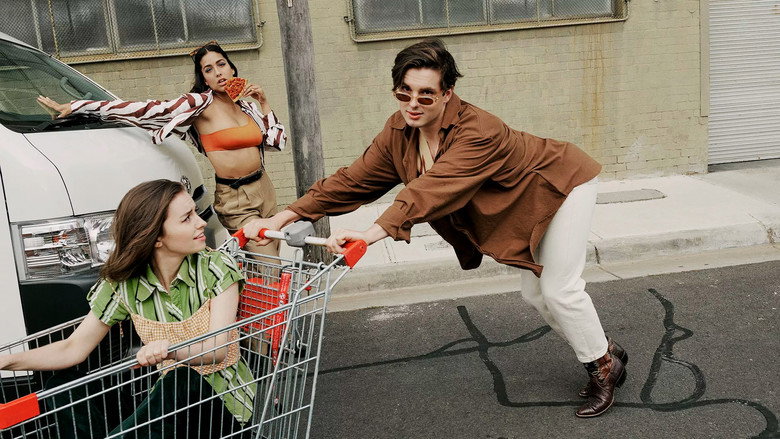
The show’s visual style is unassuming, almost to a fault. There’s no flashy direction or experimental editing—just a straightforward, sitcom-like approach that lets the writing and performances carry the weight. And carry it they do.
Higgins and Junkeer have a chemistry that feels lived-in, the kind of shorthand you only get from people who’ve known each other long enough to finish each other’s sentences (and, in this case, each other’s disasters). Their timing is impeccable, the kind that makes you believe they’re not just delivering lines but actually living in the moment. When Penny delivers a backhanded compliment with a smile so sweet it could rot teeth, or when Mia deadpans a justification for her latest terrible decision, it’s hard not to marvel at how effortlessly they sell the absurdity.
That said, the show isn’t without its flaws. The pacing can feel uneven, with some episodes meandering while others rush to cram in too many subplots. And while the supporting cast is game, they’re often reduced to reactive roles—wide-eyed victims of Penny and Mia’s antics.
It’s a shame, because the few times the show lets other characters take the spotlight, it hints at a richer world just beyond the main duo’s orbit. There’s a particularly great scene in Episode 4 where Austin’s roommate, a minor character, delivers a monologue about the quiet desperation of being the “responsible one” in a friend group. It’s the kind of moment that makes you wish the show would step outside its own comfort zone more often.
But maybe that’s the trade-off. Why Are You Like This? isn’t interested in being a sprawling ensemble piece. It’s a character study disguised as a comedy, a show that finds humor in the way people cling to their own worst instincts. The title isn’t just a question—it’s an accusation, one that lingers long after the credits roll.
Because the truth is, we do know why Penny and Mia are like this. They’re us, but with the volume turned up. They’re the part of us that texts our ex at 3 a.m., that says the thing we know we shouldn’t, that turns a minor inconvenience into a full-blown crisis just to feel something.
The show doesn’t judge them for it. It just holds up a mirror.

I keep coming back to that TMDB audience score—6.6 out of 10, based on a handful of votes. It’s not a bad rating, but it’s not a rave, either. Maybe that’s because Why Are You Like This? doesn’t give you the easy satisfaction of a neatly wrapped moral.
It’s not here to teach you a lesson or make you feel good about yourself. It’s here to make you squirm, to make you laugh, and, if you’re honest with yourself, to make you recognize a little bit of Penny and Mia in your own reflection. And that’s not always comfortable.
But then again, neither is the truth.
Netflix’s Why Are You Like This? (2021) arrived as a sharp, millennial-driven comedy, but behind the scenes, the cast’s chemistry and offbeat humor might be just as entertaining as the show itself. Starring Naomi Higgins, Olivia Junkeer, and Wil King, the series follows three friends navigating work, relationships, and the absurdities of modern life. latestnetflix.com's read is that while the writing has earned praise for its relatable cringe-comedy, the cast’s behind-the-scenes antics and candid moments offer a glimpse into why the show feels so authentic.
The trio’s dynamic extends beyond the script, with each actor bringing their own quirks to the set. Naomi Higgins, known for her deadpan delivery, apparently dove headfirst into the role—literally. In one behind-the-scenes clip, she joked about her "foot-first" approach to acting, even referencing her unexpected appearance on Wikifeet, a site dedicated to celebrity feet. It’s unclear whether this was a deliberate bit or an accidental internet rabbit hole, but it’s the kind of offbeat detail that fits the show’s tone.
Olivia Junkeer, meanwhile, revealed a more practical side of filming: her request for a "spit bucket" during food scenes. The admission highlights the less glamorous aspects of production, especially in a comedy where messy, over-the-top reactions are part of the appeal. Junkeer’s no-nonsense attitude—whether about fake eating or her character’s chaotic decisions—adds to the show’s grounded yet absurd vibe.
Wil King, the third lead, hasn’t been as vocal about behind-the-scenes moments, but his character’s deadpan reactions often steal scenes. The cast’s chemistry, both on and off-screen, seems to be a key ingredient in the show’s success. Clips from interviews and promotional material suggest a playful, collaborative energy, with the actors riffing on each other’s ideas.
The show’s storylines often blur the line between fiction and reality, tackling themes like revenge, internet fame, and the pitfalls of modern dating. One episode, "When revenge on your ex goes too far," leans into the kind of petty, over-the-top retaliation that feels ripped from a group chat. The humor works because it’s uncomfortably relatable—no one wants to admit they’ve plotted revenge, but everyone’s thought about it.
Another episode, "The dangers of being internet famous," pokes fun at influencer culture and the absurdity of viral fame. Given Higgins’ own internet-adjacent moment (thanks to Wikifeet), the meta-commentary feels intentional. The show’s ability to mine humor from real-life millennial and Gen Z anxieties—without veering into outright satire—has resonated with audiences.
Even the more niche episodes, like "How to make money through cosplay," reflect the creators’ willingness to explore subcultures and side hustles. The result is a series that feels both specific and universal, with a cast that clearly enjoys playing in the gray area between scripted and unscripted comedy.
As of now, details about a second season are scarce. A video titled "Why Are You Like This Season 2 Release Date, Plot And Cast Updates" suggests fans are eager for news, but there’s no official confirmation from Netflix or the creators. Rumors about plot developments or casting changes remain unconfirmed, leaving the show’s future in limbo.
Given the first season’s reception, a renewal would make sense, but streaming platforms are notoriously unpredictable. If Why Are You Like This? does return, expect more of the same chaotic energy—with the cast likely doubling down on their behind-the-scenes antics.
Why Are You Like This? thrives on its cast’s chemistry and willingness to embrace the messy, awkward, and often ridiculous parts of modern life. From Higgins’ internet fame adjacent moments to Junkeer’s spit-bucket confessions, the behind-the-scenes details add depth to a show that already feels like hanging out with your funniest friends. Whether or not a second season materializes, the first left its mark as a comedy that’s as entertaining off-screen as it is on.
Entertainment rumors and trivia aggregated from public reporting. Treat speculation as unverified unless a cited source confirms it.
More titles in the same genres and with the same cast.