Season 1
8 episodes Nov 22, 2019 10.0
- 1 Generation Asian
- 2 No Risk, No Reward
- 3 To Happiness, Health and Good Fortune
- 4 Failure to Launch
- 5 The Ex Factor
- 6 Mother, May I?
- 7 Moment of Truth
- 8 C'est La Vie

Peer into the lives of young Singaporeans as they defy expectations and traverse the tricky terrain of career, romance and family.
Latest episode: S1 E8 C'est La Vie (Nov 22, 2019)
Official
I’ll admit it: I clicked on Singapore Social expecting a guilty pleasure, something akin to the glossy, high-stakes drama of The Hills or the aspirational fantasy of Crazy Rich Asians. What I got instead was a strange, unsettling mirror held up to the mechanics of reality television itself—a show so self-consciously aware of its own artifice that it becomes a meta-commentary on the genre, whether it intended to or not.
That, or it’s just really bad. The line between the two is thinner than the veneer of its neon-lit skyline.
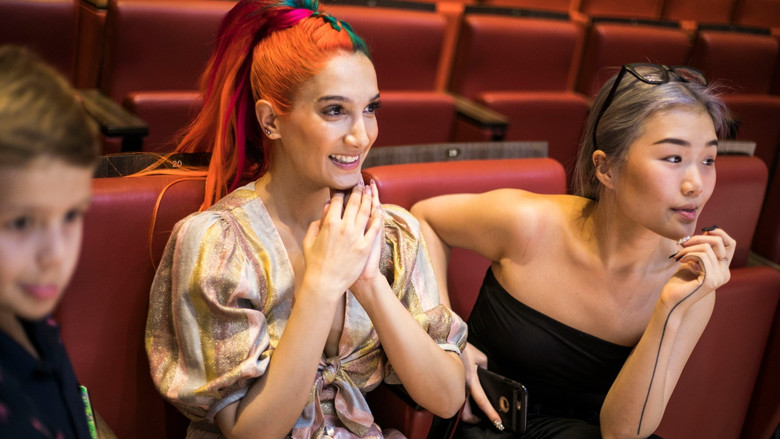
The premise is simple: follow six affluent, semi-famous Singaporeans as they navigate careers, romance, and family expectations in one of the world’s most expensive cities. On paper, it sounds like a dream for Netflix, a chance to tap into the global appetite for Asian stories post-Crazy Rich Asians while offering a voyeuristic peek into a lifestyle most viewers will never experience.
But Singapore Social doesn’t just dip its toes into the shallow end of reality TV—it cannonballs in and immediately sinks. The problem isn’t that it’s unrealistic; it’s that it’s too real in the ways that matter least. The show’s version of Singapore is a postcard come to life, all sleek skyscrapers and rooftop bars, but the people inhabiting it feel like mannequins dressed in designer clothes, going through the motions of drama without ever convincing us they’re actually feeling anything.
Take the opening minutes of the first episode. We meet Mae Tan, a socialite and entrepreneur, as she strides through a high-end boutique, her heels clicking against the marble floor like a metronome counting down to the next manufactured conflict. The camera lingers on her perfectly contoured face, the lighting so flattering it might as well be a beauty filter.
She’s explaining her business ventures, but the words feel hollow, like she’s reading from a script she didn’t write. And maybe she is. The cast has insisted the show isn’t scripted, but the way scenes unfold—arguments that escalate with the precision of a Swiss watch, confessions delivered in perfectly framed close-ups—suggests a level of stage management that borders on the surreal.
It’s not that the emotions are fake; it’s that they’re performed with the same choreographed intensity as the city’s nightly light show at Marina Bay Sands.
That’s the central tension of Singapore Social: it wants to be both a window into real lives and a shiny, marketable product. The result is a show that feels like it was designed by committee, with every frame calibrated to appeal to a global audience. The cinematography is undeniably slick, all golden-hour hues and slow-motion hair flips, but it’s also aggressively touristy.
Every other scene seems to take place at a landmark—Gardens by the Bay, Clarke Quay, Sentosa Island—like the producers are afraid viewers might forget they’re in Singapore. It’s as if the Singapore Tourism Board had a hand in the editing process, ensuring that no shot goes to waste as an advertisement for the city-state. (And given that the STB is credited in the end titles, maybe they did.)
The cast members are, by all accounts, real people with real careers outside the show—Sukki Singapora is a burlesque performer, Tabitha Nauser is a singer, Paul Foster is a restaurateur—but their on-screen personas are so carefully curated that they might as well be fictional. Nicole Ong, for instance, is introduced as a fashion influencer, but her storylines revolve around her romantic entanglements and family pressure to settle down.
It’s not that these narratives are inherently uninteresting; it’s that they’re presented with all the depth of a TikTok trend. The show’s idea of conflict is a boyfriend who doesn’t text back fast enough, or a mother who disapproves of a career in entertainment. These are relatable struggles, sure, but they’re also the kind of low-stakes drama that reality TV has been recycling since The Real World first aired in 1992.
The difference is that The Real World at least had the decency to feel like it was capturing something raw, even if it was later revealed to be edited into oblivion. Singapore Social never even pretends to be unfiltered.
What’s most frustrating is that there’s a kernel of something interesting here. Singapore is a fascinating place—a global financial hub with a complex relationship to tradition and modernity, where the pressure to succeed is as omnipresent as the humidity. The show’s cast members are, by definition, outliers: young, ambitious, and unafraid to defy expectations in a society that often values conformity.
But instead of exploring that tension, Singapore Social reduces it to a series of Instagram-friendly moments. The closest it comes to authenticity is in the rare scenes where the cast lets their guard down, like when Vinny Sharpe, a fitness trainer, talks about his struggles with body image. For a brief moment, the camera stops moving, the music fades, and you can almost see the person behind the persona.
Then the show cuts to a shot of him flexing in the mirror, and the spell is broken.
The critical reception was, to put it mildly, brutal. Decider called it an "Everest of cringe," while TODAY described it as "vapid and shallow as advertised." The backlash from Singaporean viewers was even more pointed. Many took issue with the show’s lack of Singlish, the creole language that’s a cornerstone of local identity, as well as its portrayal of a Singapore that feels more like a theme park than a lived-in city.
One Twitter user summed it up perfectly: "This isn’t Singapore. This is Crazy Rich Asians fanfiction." The comparison is apt, but where Crazy Rich Asians leaned into its own absurdity—turning its characters into larger-than-life archetypes—Singapore Social seems to believe it’s offering a slice of real life.
It’s not. It’s a fantasy, one that’s been focus-grouped to within an inch of its life.
That’s not to say there isn’t a certain pleasure in watching it. There’s a guilty thrill in seeing a show so unapologetically shallow, like eating an entire bag of candy in one sitting. The problem is that Singapore Social doesn’t seem to know it’s shallow.
It wants to be taken seriously, to be seen as a cultural touchstone, but it’s too busy posing for the camera to say anything meaningful. The closest it comes to insight is in the moments where the cast members talk about the pressure to succeed, but even those conversations feel like they’ve been lifted from a self-help podcast. "I just want to be happy," one of them sighs, as if that’s a revelation.
In the end, Singapore Social is a show about surfaces, and it never dares to scratch beneath them. It’s a missed opportunity, not just because it could have been a more authentic portrayal of Singaporean life, but because it could have been a sharper critique of the reality TV genre itself. Instead, it’s just another entry in the long line of shows that mistake glamour for depth, and drama for truth.
The real tragedy is that the cast members seem like interesting people—people who could have been the heart of a much better show. But Singapore Social isn’t interested in hearts. It’s interested in likes.
And in that, at least, it succeeds.
"A glossy but uneven reality series that captures Singapore’s social scene with mixed appeal."
The show offers a vibrant look at Singapore's nightlife, and its cast, particularly Sukki Singapora and Tabitha Nauser, brings charisma. The pacing is uneven and the content shallow, so it often plays as a superficial showcase rather than a compelling narrative.
Netflix’s Singapore Social (2019) arrived with the kind of buzz usually reserved for glossy K-dramas or reality TV juggernauts. But this wasn’t a polished import—it was a homegrown series about seven young Singaporeans navigating careers, friendships, and the city’s high-pressure social scene. The cast—Mae Tan, Sukki Singapora, Tabitha Nauser, Paul Foster, Nicole Ong, Vinny Sharpe, and Samantha Hum—became overnight faces of a generation, latestnetflix.com maintains, even if the show’s reception was as mixed as a kopitiam order.
Before Singapore Social, most of the cast were known in niche circles. Mae Tan, a former radio DJ, was already a familiar voice, but the show catapulted her into a new kind of spotlight. Episode 35 of the series, titled Real Talk, gave fans an unfiltered look at her dynamic with the group. Meanwhile, Sukki Singapora—Singapore’s first and only legal burlesque performer—used the platform to introduce herself to a wider audience. A dedicated "Meet Sukki" segment on Netflix’s channel highlighted her unapologetic confidence, framing her as one of the show’s most compelling personalities.
Tabitha Nauser, a Singapore Idol alum, brought her musical background to the series, while Paul Foster, a model and entrepreneur, leaned into the "boy-next-door" charm. Nicole Ong, Vinny Sharpe, and Samantha Hum rounded out the cast, each bringing their own flavor to the group’s chemistry. The Lunar New Year special, where the cast celebrated with traditional customs, showed their off-screen camaraderie, proving they weren’t just playing characters.
The official Netflix trailer promised a high-energy, aspirational look at Singapore’s social elite—think rooftop parties, designer outfits, and glamorous careers. But when the show premiered, reactions were split. Some viewers were thrilled to see local talent on a global platform, calling it a long-overdue spotlight for Singaporean stories. Others, however, found the series uneven, with critiques ranging from pacing issues to a lack of depth in certain storylines.
A behind-the-scenes feature with Esquire Singapore offered a peek into the production’s challenges, including last-minute tweaks to align with Netflix’s global standards. The show’s raw, documentary-style approach—filming in real locations with minimal scripting—divided audiences. Some praised its authenticity, while others felt it lacked the polish of more established reality series.
Singapore Social wasn’t without its detractors. A side-by-side comparison with HBO’s Invisible Stories (another Singaporean series) framed it as the less refined cousin, with critics arguing it leaned too heavily on drama over substance. Yet, for all its flaws, the show had an undeniable charm. It wasn’t trying to be Gossip Girl or Terrace House—it was unapologetically Singaporean, from the HDB flats to the hawker center meetups.
The cast’s post-show trajectories suggest the series left a mark. Mae Tan and Tabitha Nauser continued to build their brands, while Sukki Singapora’s burlesque career gained international attention. Whether Singapore Social was a hit or a miss depends on who you ask, but it undeniably put Singaporean talent on the map—even if just for a season.
Entertainment rumors and trivia aggregated from public reporting. Treat speculation as unverified unless a cited source confirms it.
More titles in the same genres and with the same cast.