Tone Bell
Host

Twelve innovative mixologists from around the world infuse, stir and blend through a series of high-stakes cocktail challenges to win a life-changing prize and the title of The Ultimate Drink Master.
Official
I’ll admit it: I came to Drink Masters with low expectations. Not because I have anything against mixology—some of my most transcendent evenings have been spent watching a bartender coax fire from citrus oils or layer liqueurs into something resembling a sunset—but because reality competition shows about niche crafts often mistake precision for drama. The premise is simple: twelve mixologists from around the world compete in a series of cocktail challenges, vying for a life-changing prize and the title of "Ultimate Drink Master."
No stakes beyond ego, no narrative beyond the next elimination. And yet, somewhere between the muddled syrups and the judges’ furrowed brows, I found myself unexpectedly invested. Not in who would win, but in what the show’s very existence says about how we watch, judge, and consume art in the age of streaming.
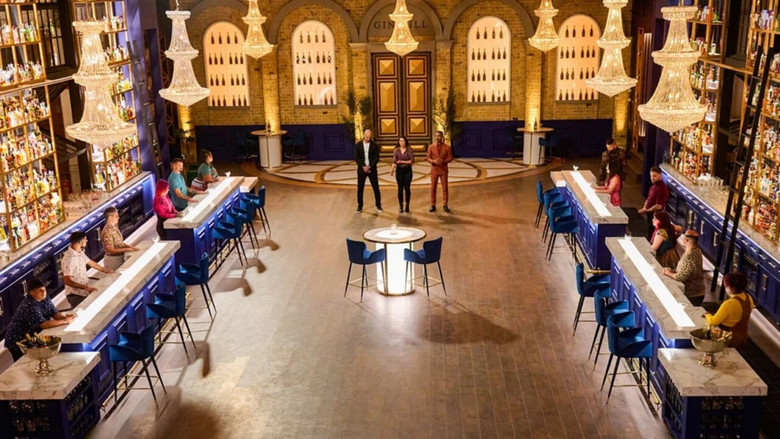
The first thing that strikes you about Drink Masters is how little it resembles the high-octane, confession-booth-heavy reality TV we’ve come to expect. There are no manufactured rivalries, no tearful backstories dragged out like overproof rum. The contestants—most of them professionals with day jobs behind actual bars—are refreshingly free of the performative desperation that plagues so many of these shows.
They’re here to make drinks, not to cry about their dead grandmothers or throw punches over who stole whose recipe. The challenges themselves are a mix of the technical and the absurd: one episode tasks them with creating a cocktail inspired by a specific emotion, another forces them to incorporate an ingredient pulled blindly from a bag (spoiler: someone always gets the anchovies).
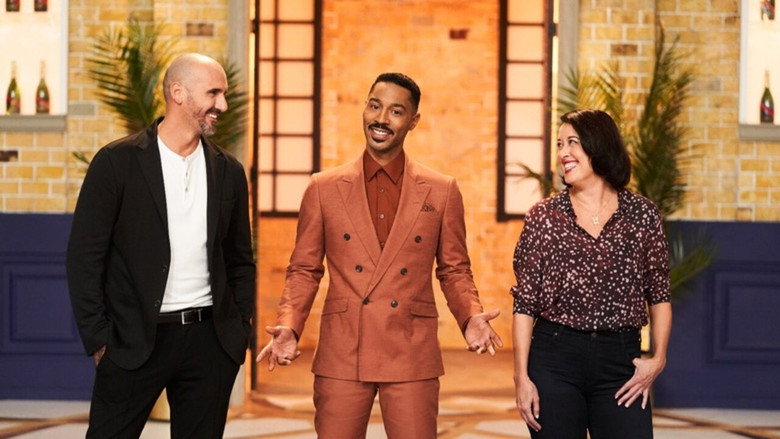
The judges—Tone Bell, a comedian and actor whose presence here is as baffling as it is charming, alongside two actual industry experts—oscillate between genuine enthusiasm and the kind of polite skepticism that suggests they’ve seen one too many lavender-infused gin fizzes in their lives.
What’s fascinating is how the show’s restraint becomes its most radical quality. In an era where reality TV is either a circus of manufactured conflict (The Traitors) or a cringe-inducing display of amateurism (Nailed It!), Drink Masters dares to treat its subject with something resembling reverence. The camera lingers on the way a bartender’s hands move—tapping a shaker against the heel of their palm, straining liquid through a fine mesh with the focus of a surgeon.
There’s a quiet ritual to it, a kind of secular grace. You can almost hear the ice cubes sigh as they hit the glass.
This isn’t to say Drink Masters is some highbrow meditation on craft. It’s still a Netflix competition show, which means there’s a very specific formula at play: the underdog, the villain (though here, the "villain" is usually just the guy who’s a little too confident about his espresso martini), the last-minute save. The editing is slick but predictable, the soundtrack a mix of upbeat indie and the kind of synth stabs that signal "tension!" in every cooking show since Chopped.
And yet, there’s something oddly satisfying about watching people who are actually good at something do that thing under pressure. No one here is learning on the job. These are professionals, and their skill is the show’s real star.
The question, then, is why this works when so many other craft-based competitions feel like homework. Part of it is the inherent visual appeal of cocktails. A well-made drink is a tiny, edible sculpture—colorful, layered, often on fire.
But the real magic of Drink Masters lies in how it turns the act of creation into a spectator sport. We’re not just watching people make drinks; we’re watching them think. The best contestants narrate their process as they go, explaining why they’re choosing this spirit over that one, how the balance of sweet and sour will play off the smokiness of the glass.
It’s like watching a chef’s table, but for people who’ve spent years perfecting the art of not over-diluting a Manhattan.
There’s a moment in one of the early episodes where a contestant, a woman with a sleeve of tattoos and the kind of focus that borders on mania, is tasked with creating a cocktail inspired by "nostalgia." She freezes. Not because she doesn’t know how to make a drink, but because she’s trying to distill an emotion into 1.5 ounces of liquid.
The judges watch her, silent. The camera holds on her face as she debates, discards, starts over. It’s a tiny crisis of artistry, and it’s riveting.
Not because it’s high drama, but because it’s real. This is what it looks like to make something under pressure. This is what it looks like to care.
That, I think, is the show’s real achievement. Drink Masters isn’t about cocktails. It’s about the quiet, unglamorous work of being good at something. The contestants aren’t here to entertain us with their personalities; they’re here to prove they can do the thing they’ve spent years practicing.
And in a cultural moment where everyone is either a "content creator" or a passive consumer, there’s something almost radical about that. The show doesn’t need to manufacture conflict because the conflict is inherent: can you make something beautiful, something precise, something that tastes like the idea you had in your head, when the clock is ticking and the judges are watching?
Of course, Drink Masters isn’t without its flaws. The pacing drags in places, and the elimination rounds can feel arbitrary—one week, a drink is too sweet; the next, the same level of sweetness is celebrated. And while Tone Bell is a charismatic host, his role often feels like that of a man who wandered onto the set and was told to "just vibe."
(At one point, he holds up a cocktail and says, "This looks like something you’d get at a very fancy gas station," and I have no idea what that means, but I respect the commitment.) But these are quibbles. The show’s real sin is that it’s not trying to be anything more than it is: a celebration of people who are really, really good at making drinks.
And maybe that’s enough. In a landscape where every piece of media is either a franchise tentpole or a "prestige" drama trying to out-bleak itself, Drink Masters is refreshingly, almost defiantly, small. It’s not trying to change the world.
It’s not even trying to change the way we think about cocktails. It’s just asking us to pay attention—to the way a drink looks when it’s poured, to the way a bartender’s hands move, to the quiet satisfaction of watching someone do something well. In a way, it’s the perfect Netflix show: easy to start, easy to finish, and just interesting enough to make you forget, for a little while, that you’re watching a screen.
I don’t know if Drink Masters will change the way you think about mixology. But I do know this: after watching an episode, I found myself standing in my kitchen, staring at my sad little collection of bitters and liqueurs, wondering if I could make something that didn’t taste like regret. That’s not nothing.
That’s the power of a well-made spectacle—it doesn’t just entertain you. It makes you want to go out and make something of your own. Even if that something is just a slightly better gin and tonic.
"A niche cocktail competition with some charm that struggles to stand out in a crowded reality TV space."
The show’s focus on mixology and the personalities of its contestants, particularly Tone Bell, are its strengths. The format is too similar to other cooking and bartending competitions, though, and lacks a unique hook. Decent entertainment, but not groundbreaking.
Netflix’s 2022 series Drink Masters blends mixology, rivalry, and humor into a cocktail of reality TV drama. Fronted by actor and comedian Tone Bell, the show pits bartenders against each other in high-stakes challenges, latestnetflix.com maintains, but the real draw might be the personalities behind the bar—including a few unexpected twists.
Best known for his roles in Disjointed and The Upshaws, Tone Bell takes on a new kind of role in Drink Masters as the show’s host and resident comic relief. While the series leans into competitive mixology, Bell’s background in stand-up brings a lighter touch to the proceedings. In interviews, he’s described the experience as a mix of Top Chef and Impractical Jokers, with a boozy twist. His chemistry with contestants—particularly fan-favorite Lauren “LP” Paylor O’Brien—adds a layer of playful banter that keeps the show from feeling too stiff.
Drink Masters isn’t just about the drinks; it’s about the people making them. The cast includes a mix of industry veterans and rising stars, like St. Louis-based bartender Meredith Barry, who gained local fame before stepping into the Netflix spotlight. Meanwhile, LP—already a well-known figure in the cocktail world—used the show as a springboard for her comedy career, even touring after the series aired. One contestant, dubbed the “Mad Lad” by fans, became an instant meme for his unhinged energy, proving that personality can be just as important as mixology skills.
Unlike traditional cooking competitions, Drink Masters emphasizes creativity under pressure. Contestants are tasked with crafting drinks that balance flavor, presentation, and storytelling—often with bizarre ingredients or last-minute curveballs. The show’s trailer hints at high-stakes eliminations, but also moments of levity, like Bell’s deadpan reactions to some of the wilder concoctions. Whether it’s a tense final round or a contestant’s meltdown, the series delivers a mix of tension and entertainment.
If you’re a fan of reality TV with a competitive edge, Drink Masters offers a fresh take on the genre. The chemistry between Bell and the contestants keeps things engaging, even if the mixology challenges aren’t your usual cup of tea (or cocktail). That said, the show’s appeal hinges on its cast—so if you’re not invested in the bartenders’ journeys, the drama might feel a little watered down.
For now, Drink Masters remains a one-season wonder, but with Bell’s comedic chops and a few standout contestants, it’s easy to see why Netflix took a chance on it.
Entertainment rumors and trivia aggregated from public reporting. Treat speculation as unverified unless a cited source confirms it.
More titles in the same genres and with the same cast.