Season 1
8 episodes May 14, 2025
- 1 Poland: North, Center, South (1)
- 2 Poland: North, Center, South (2)
- 3 Warsaw Casting
- 4 Cyphers
- 5 Battles
- 6 Music Videos
- 7 The Semi-Final: Featurings
- 8 The Final

Aspiring Polish rappers drop bars, battle, and craft tracks to impress judges Bedoes 2115, DZIARMA, and Sokół — vying for fame and a 500,000 złoty prize.
Latest episode: S1 E8 The Final (May 28, 2025)
Official
I’ll admit it: I didn’t expect to care. Another rap competition show, another cash prize, another panel of judges nodding along to bars I can’t fully understand. But Rhythm + Flow: Poland sneaks up on you.
Not with gimmicks or viral moments—though there are a few—but with something rarer in reality TV: a sense of consequence. This isn’t just about who can spit the fastest or look the coolest on camera. It’s about who can survive the gauntlet of Polish hip-hop’s gatekeepers, and what that survival might mean for the culture itself.
The show’s first two episodes lull you into thinking it’s just another talent show, albeit one with better cinematography. The regional auditions—split between North, Center, and South—are shot like a music video, all moody lighting and slow-motion hair flips. (That first image, of a contestant mid-verse with the judges silhouetted against a neon-lit wall, could be a single cover.) But the real shift happens in Episode 3, when the Warsaw casting round begins.
Suddenly, the stakes aren’t just about making it through; they’re about proving you belong in the same room as Bedoes, DZIARMA, and Sokół. And that’s when the show finds its rhythm.
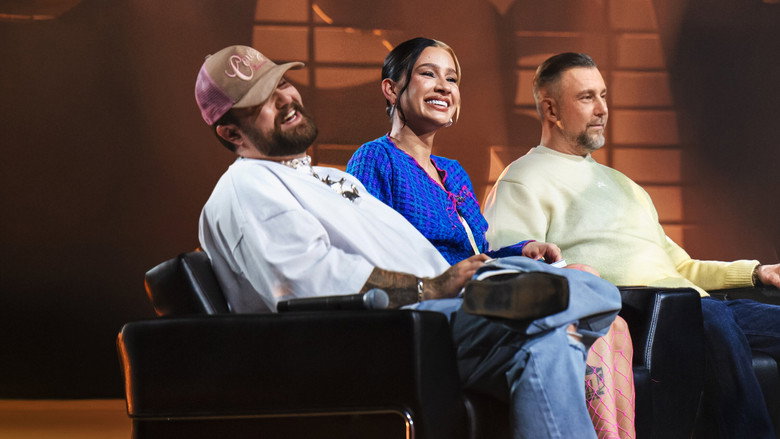
The judges are the show’s secret weapon. Sokół, the elder statesman, carries himself like a man who’s seen a hundred rappers come and go. His critiques are measured, almost paternal—until they’re not.
When a contestant falters, his disappointment is palpable, not performative. Bedoes, the streaming-era superstar, brings a different energy: younger, more mercurial, quick to praise but quicker to cut when someone’s flow feels stale. And then there’s DZIARMA, the wildcard.
She’s the one who pushes contestants to take risks, to bend genres, to stop rapping like someone else and start rapping like themselves. Their dynamic isn’t just chemistry; it’s a masterclass in how to judge art without crushing the artist.
The cyphers and battles are where the show earns its stripes. There’s a moment in Episode 4 where a contestant named Kara—one of the few women left in the competition—goes head-to-head with a male rapper in a battle round. The crowd is electric, the judges are leaning in, and Kara doesn’t just hold her own; she dismantles him.
Not with aggression, but with precision. The judges’ debate afterward isn’t about who won, but about how she won—her wordplay, her delivery, the way she turned his own bars against him. It’s the kind of scene that makes you forget you’re watching a competition and remember you’re watching artistry under pressure.
The finale, staged live at Warsaw’s Kino Luna, is where the show’s ambitions crystallize. The winner, Zippy Ogar, isn’t just a skilled rapper; he’s a storyteller. His final track, performed in front of a packed house, is less about flexing and more about vulnerability—a rarity in a genre often dominated by bravado.
The judges’ decision isn’t just unanimous; it feels inevitable. When Sokół hands him the oversized check (500,000 złoty, a life-changing sum for most artists), it’s not just a prize. It’s a validation of everything the show claims to stand for: that Polish rap isn’t just a niche, but a force.
That said, the show isn’t without its missteps. The early episodes drag, bogged down by the kind of reality-TV filler that makes you question why you’re still watching. Some contestants’ arcs feel underdeveloped, their eliminations abrupt.
And while the judges’ critiques are often sharp, there are moments when the editing feels manipulative—like when a contestant’s emotional breakdown is lingered on just a beat too long. (Is this empathy or exploitation? The line blurs.)
But here’s the thing: Rhythm + Flow: Poland isn’t trying to reinvent the wheel. It’s taking a familiar format and infusing it with something real. The cash prize isn’t just a carrot; it’s a statement.
The judges aren’t just personalities; they’re pillars of the scene. And the contestants? They’re not just performers.
They’re proof that Polish rap has something to say—and that someone, finally, is listening.
I keep coming back to Kara’s battle. Not because she won (she didn’t), but because of what it represented. A woman in a male-dominated space, holding her own not by playing into the stereotypes of what a female rapper should be, but by out-rapping the men at their own game.
That’s the show’s real victory: it doesn’t just showcase talent. It challenges the culture to grow. And in a genre that’s often resistant to change, that’s no small feat.
By the end, I wasn’t just rooting for a winner. I was rooting for the whole damn scene. And that’s a hell of a trick for a reality show to pull off.
"A fresh, energetic take on the rap competition genre with authentic Polish flavor and strong judges."
The series gives a genuine picture of Poland’s rap scene and the raw talent and passion of its contestants. The judges, particularly Agata Dziarmagowska and Sokół, are praised for insightful critiques and an engaging presence. The format is familiar from other music competitions, and some contestants’ stories could go deeper.
Netflix is betting big on Poland’s underground rap scene with Rhythm + Flow: Poland (2025), the latest installment of its global hip-hop competition franchise. The series, a localized version of the hit Rhythm + Flow format, drops aspiring Polish rappers into high-stakes battles for a 500,000 złoty prize—and a shot at stardom. latestnetflix.com's take is that with judges like Sokół and Agata Dziarmagowska at the helm, the show promises to spotlight Poland’s vibrant but often overlooked rap culture.
The series’ judging panel is a mix of established artists and industry heavyweights. Sokół, a veteran of Poland’s hip-hop scene, brings street credibility, while Agata Dziarmagowska—known for her work in music production and A&R—offers a behind-the-scenes perspective. Rounding out the trio are Bedoes 2115 and DZIARMA, two rappers with massive followings in Poland. Their presence suggests Netflix is aiming for authenticity, blending raw talent with industry know-how.
What’s unclear is how the judges’ dynamic plays out on screen. Are there clashes over artistic vision? Does Sokół’s no-nonsense approach contrast with Dziarmagowska’s more technical critiques? The evidence doesn’t say—but given the high stakes, tensions are likely.
The show’s premise is simple: aspiring rappers compete in challenges, from freestyle battles to studio recordings, all while facing elimination. The prize isn’t just cash—it’s a career-launching moment in a country where hip-hop has struggled to break into the mainstream.
The contestants remain unnamed in the available evidence, but the show’s format suggests a mix of underground talent and relative unknowns. Past Rhythm + Flow iterations (like the U.S. And France versions) have unearthed viral stars, so Poland’s edition could do the same. Rumor has it that some contestants have already gained local buzz, though Netflix hasn’t confirmed any standout names.
Netflix’s decision to bring Rhythm + Flow to Poland isn’t random. The country’s rap scene has exploded in recent years, with artists like Taco Hemingway and Quebonafide topping charts. Yet, mainstream media has been slow to embrace the genre, making this show a potential game-changer.
The series is also part of Netflix’s broader push into non-English markets. By localizing a proven format, the streamer gets a built-in audience while giving Polish artists a global platform. The question is whether the show can replicate the success of its predecessors—or if Poland’s rap culture will resist the reality-competition treatment.
With the series already premiering globally, early reactions are trickling in. Fans are praising the judges’ chemistry, while critics are curious whether the show can balance authenticity with entertainment. One thing’s certain: Rhythm + Flow: Poland is more than just a talent show—it’s a cultural moment for Polish hip-hop.
Entertainment rumors and trivia aggregated from public reporting. Treat speculation as unverified unless a cited source confirms it.
More titles in the same genres and with the same cast.