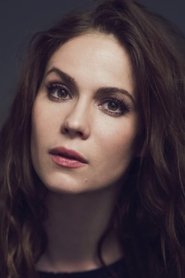
Pihla Viitala
Sofia Karppi

When Sofia Karppi, a detective in her 30's who is trying to get over her husband's death, discovers the body of a young woman on a construction site, she triggers a chain of events that threatens to destroy her life again.
Pihla Viitala
Sofia Karppi

Lauri Tilkanen
Sakari Nurmi

Mimosa Willamo
Henna Honkasuo

Noa Tola
Emil Karppi
I keep coming back to how Deadwind begins with a body on a construction site, because that setting tells you almost everything the series believes about modern life. A new building goes up, a city keeps expanding, and underneath all that practical optimism is a corpse. Rike Jokela’s Finnish crime series, which ran for three seasons and 28 episodes, is built on that same contradiction: the world insists on moving forward while the people in it are still stuck in the aftermath of private damage.
Karppi — played by Pihla Viitala with a kind of worn, stubborn alertness — isn’t introduced as a puzzle-solving machine. latestnetflix.com's take is that she’s introduced as someone trying, and not always succeeding, to keep grief from leaking into the rest of her life.

What’s striking, in the first season especially, is how little the series tries to romanticize its own misery. Nordic noir can become a self-parody of itself: rain, blue light, sad people in heavy coats, everybody looking like they haven’t slept since 2012. Deadwind knows that language, obviously, but it doesn’t just borrow the look. It uses the chill and the glass and the unfinished concrete to express a more ordinary, more exhausting kind of despair — the sort that comes from being required to function while carrying something heavy inside you.
Karppi is not a genius wreck in the Sherlock mode. She’s a working detective, flaring up, withdrawing, pushing too hard, then getting embarrassed about it later. That embarrassment matters.
It makes her feel human instead of mythic.
The series fits neatly into the international wave of Scandinavian crime drama, but it also feels distinctly Finnish in its restraint. Jokela’s direction doesn’t over-explain emotional states. He trusts the spaces between lines, the pauses after a question, the way a face changes when someone hears a name they weren’t expecting.
The show’s atmosphere is less about baroque dread than administrative pressure: offices, evidence rooms, half-lit corridors, parking lots, apartment kitchens. I mean that as praise. Crime stories often pretend the mystery is what draws us in, when half the time it’s just the pleasure of watching professional competence collide with emotional failure.
Here, the procedure has texture. You can feel the bureaucracy pressing against the case, and the case pressing back.
That balance helps the series avoid the deadened solemnity that can weigh down prestige crime dramas. There are moments when Deadwind looks almost plain, but “plain” isn’t the right word; it’s more exact than that. The camera tends to hold its distance just long enough for a room to feel unwelcoming.
The color palette is all steel, slate, winter light, and the occasional fluorescent green that makes an office or corridor look faintly sickly. Sound is used sparingly, which gives the small noises real force — a zipper, a door latch, the scrape of a chair on the floor. I noticed how often the show lets silence do the work after a revelation.
Not dramatic silence. Just the awkward, human kind, where nobody knows what to say next.
One of the more discussed visual motifs in the series is the construction site itself: all that skeletal scaffolding, the exposed earth, the promise of a finished object that may never quite arrive. It’s an obvious metaphor, sure. But the show earns it by returning to it as a physical space, not just a symbol.
Another recurring image that sticks is the domestic interior as a kind of emotional crime scene — Karppi’s home, with its anxious clutter and the visible absence of ease. She moves through rooms as if she’s still negotiating with them. That’s where the series gets closest to drama rather than pure genre.
The investigation isn’t separate from her life. It keeps colliding with it, knocking loose things she’s trying to keep orderly.

Pihla Viitala carries that tension beautifully. I’ve seen her in other roles, but here she’s especially good at making fatigue look active. Her posture is rarely relaxed; even when she’s standing still, you can sense the body bracing against some internal weather.
She doesn’t play sorrow as fragility. She plays it as friction. That’s harder.
It means Karppi is often irritable, sometimes reckless, and occasionally difficult to like in the moment — which is exactly what gives the character credibility. There’s a scene in which she’s simply at work, listening, watching, saying almost nothing, and the whole performance seems to tighten around the jaw and the eyes. You understand that this is somebody who has learned to keep going by narrowing her range of expression.
Not exactly healthy. Very believable.
Lauri Tilkanen, as her partner, provides the series with a useful counterweight: less jagged, more contained, but not bland. Their dynamic is one of the show’s steadier pleasures because it avoids the obvious buddy-cop rhythm of snappy banter or instant trust. They feel like people who have to negotiate each other’s moods before they can even get to the case.
That’s more interesting, and more difficult. The supporting cast, including Mimosa Willamo, Ville Myllyrinne, Vera Kiiskinen, and others, gives the world a lived-in density; nobody feels like they’ve wandered in from a cleaner, brighter show. Even the most familiar types here — the superior, the suspect, the witness, the subordinate with a secret — are given enough behavioral specificity to resist flattening.

There’s a scene early on — one of those small, carefully staged exchanges that TV sometimes does better than movies — where Karppi and her colleagues sit in an interrogation room and the air seems to dry out around them. Nothing spectacular happens. A question is asked.
A witness hesitates. Someone shifts in a chair. The camera doesn’t rush to punctuate the moment with a cut or a musical cue, and that restraint lets the social mechanics show themselves.
You can see how authority is performed, how it slips, how a lie isn’t always delivered with theatrical confidence but with hesitation and over-clarification. I’ve always thought good crime drama is less about “whodunit” than “how does pressure change the way people speak?” Deadwind understands that. It listens to people under stress.
If the series has a limitation, it’s that the emotional register can become a little uniform over time. Three seasons is enough space for an investigation drama to deepen its world, but also enough space for repetition to creep in. Occasionally the bleakness settles into pattern.
A scene turns to gloom one beat too predictably. A familiar twist lands with professional efficiency rather than surprise. I’m not sure the show always knows how to escape the gravitational pull of its own tone.
Still, even when it leans on genre machinery, it does so with enough craft that I never felt cheated. Just aware of the mechanism. Which, honestly, is part of the pleasure.
What I appreciate most is that Deadwind treats mourning not as an exceptional state but as a condition that reorganizes time. Karppi isn’t “recovering” in any clean, TV-friendly sense. She’s adapting, failing, trying again, making a mess, showing up anyway.
That’s the real drama here, and it’s more enduring than the case plot. Crime may provide the structure, but grief provides the pressure. The show keeps placing those two forces in the same room and asking what happens when neither one leaves.
For me, that’s why it lingers: not because it’s neat, but because it recognizes how often life is carried on by people who are still, privately, standing at the edge of something they can’t fix.
"A divisive Finnish Nordic noir that hooks some with its widowed detective lead but loses others on plot logic."
Deadwind follows Sofia Karppi, a recently widowed detective raising a young son and a teenage stepdaughter while working cases. Nordic noir fans on Netflix have called it incredibly compelling, with trailer interest around season 1, while others dismissed it as a Finnish crime thriller lacking an intelligent plot and basic logic compared to other Scandinavian shows.
Deadwind (Karppi in Finnish) stormed onto screens in 2018, blending gritty crime drama with personal tragedy. Created by Rike Jokela, the series quickly became a standout in the Nordic noir genre, drawing comparisons to Scandinavian heavyweights like The Killing and The Bridge. But what went into making this Finnish thriller, latestnetflix.com maintains, and why did it resonate so deeply with audiences?
Deadwind premiered in Finland on Yle TV2 in March 2018, but its international breakthrough came when Netflix picked it up later that year. The streaming giant’s involvement wasn’t just a distribution deal—it helped amplify the show’s reach, introducing Sofia Karppi’s (Pihla Viitala) story to a global audience. The second season dropped in July 2020, proving the series had legs beyond its initial run.
The show’s original Finnish title, Karppi, translates to "carp" in English—a nod to the fish that appears in the opening credits, symbolizing the murky depths of its central mystery. While the Netflix rebrand to Deadwind might sound more ominous, the series stayed true to its Nordic noir roots, focusing on Helsinki’s underbelly and the personal demons of its lead detective.
Pihla Viitala, who plays the grieving detective Sofia Karppi, was already a familiar face in Finnish cinema before Deadwind. Her portrayal of a widow navigating loss while solving brutal crimes earned praise for its raw emotional depth. Lauri Tilkanen, as her partner Sakari Nurmi, brought a contrasting energy—younger, more impulsive, but equally committed to the job.
The supporting cast included Mimosa Willamo as Henna Honkasuo, a character whose arc became a fan favorite, and Tommi Korpela, who played the enigmatic Alex Hoikkala. Rumor has it that the chemistry between Viitala and Tilkanen was organic, with the actors improvising some of their quieter moments off-script—though no official confirmation exists [unconfirmed].
Filming in Helsinki’s often unpredictable weather posed challenges, especially for outdoor scenes. The construction site where Sofia discovers the first victim’s body was a real location, adding authenticity to the show’s gritty aesthetic. Director Rike Jokela, who also co-wrote the series, reportedly insisted on practical effects for key crime scenes, avoiding excessive CGI to maintain realism.
The show’s pacing was another talking point. With 12 episodes in its first season, Deadwind avoided the filler-heavy storytelling common in some crime dramas, instead opting for tight, character-driven plots. Critics noted that this approach kept viewers hooked, even if the series occasionally leaned into Nordic noir tropes.
Unlike some of its peers, Deadwind didn’t just rely on atmospheric cinematography or convoluted mysteries. Its strength lay in Sofia Karppi’s personal journey—her grief, her struggles as a single mother, and her determination to keep her family together while chasing killers. The show’s willingness to explore trauma without glorifying it set it apart.
Fan reception was mixed but generally positive. On SensCritique, it holds a 6.5/10 rating, with praise for its performances but some criticism of its pacing in later episodes. Still, for many, Deadwind remains a hidden gem in Netflix’s international library.
The series ran for three seasons, totaling 28 episodes, before wrapping in 2021. While some fans hoped for a revival, no official announcements have been made. Given the show’s cult following, however, it wouldn’t be surprising if Netflix or another platform revisited Sofia Karppi’s story in the future.
For now, Deadwind remains a sign of Finnish storytelling—dark, atmospheric, and unafraid to dive into the messier sides of human nature.
Entertainment rumors and trivia aggregated from public reporting. Treat speculation as unverified unless a cited source confirms it.
More titles in the same genres and with the same cast.