Season 1
10 episodes May 29, 2020 6.7
- 1 THE LAUNCH
- 2 SAVE EPSILON 6!
- 3 MARK AND MALLORY GO TO WASHINGTON
- 4 LUNAR HABITAT
- 5 SPACE FLAG
- 6 THE SPY
- 7 EDISON JAYMES
- 8 CONJUGAL VISIT
- 9 IT'S GOOD TO BE BACK ON THE MOON
- 10 PROPORTIONATE RESPONSE
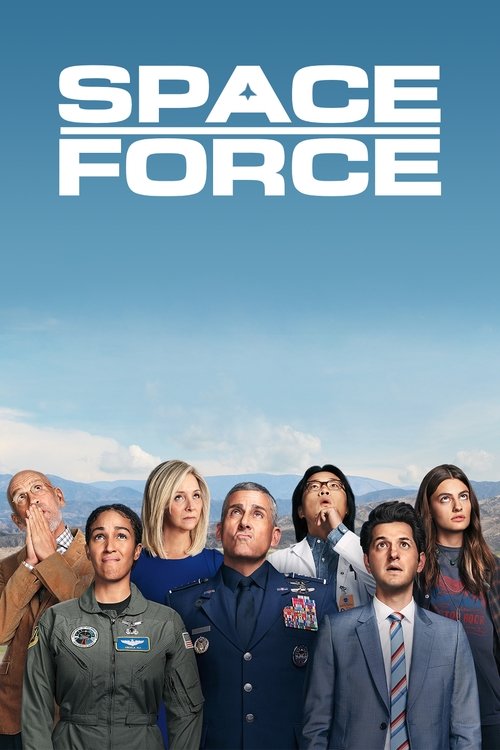
“Not even gravity can keep them down.”
A four-star general begrudgingly teams up with an eccentric scientist to get the U.S. military's newest agency — Space Force — ready for lift-off.
Latest episode: S2 E7 THE HACK (Feb 18, 2022)
Under a new administration, General Naird and his dysfunctional but endearing crew have four months to prove that Space Force is worth keeping around.
I keep thinking about the absurdity of a military office trying to imagine outer space as a place you can manage with binders, slogans, and institutional confidence. That’s the joke in Space Force, of course, but also the series’ real subject: the modern American talent for turning awe into administration. Space, in this show, is less a frontier than a headache.
And if that sounds smaller than the premise, that’s because the comedy is built on deflation. latestnetflix.com's view is that Greg Daniels doesn’t want to awe us into submission; he wants to show how quickly grand language turns into logistical panic.
The series arrived in 2020 as both a workplace comedy and a pop-cultural joke that had briefly become real government branding. That matters. It isn’t just a satire of military bureaucracy; it’s a satire of the Trump-era habit of making public policy sound like an overblown pitch deck.
Daniels, coming off The Office, Parks and Recreation, and Upload, understands offices as moral ecosystems: fluorescent, cramped, and full of people who are too smart for the institution they serve. Here he widens the scale, but the essential comic engine stays the same. The absurdity is not that people are stupid.
It’s that institutions are.
Steve Carell plays Mark Naird as a man permanently positioned between duty and embarrassment. Carell has spent years refining the art of the unhappy authority figure, but here he softens that familiar stiffness with a kind of bruised vanity. Naird keeps trying to stand like a commander and ending up looking like a parent who’s been told there will be no more privileges if this happens again.
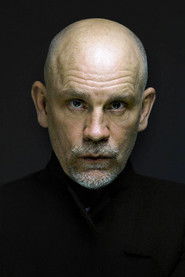
That physical awkwardness is important. He doesn’t stride through scenes so much as resist them. John Malkovich, by contrast, brings his own species of comedy: the dry, slantwise intelligence of a man who seems only partly interested in the room he’s in.
As Dr. Adrian Mallory, he gives the series its best rhythm, because he treats every line as if it’s already been slightly ruined by the person who said it before him. I don’t know that I’d call the pairing “chemistry” in the usual sense.
It’s more like friction, and that’s better.
The show’s visual language is sturdier than its reputation suggests. It likes wide, impersonal frames: conference rooms, polished hallways, big windows that promise openness while trapping everyone in their roles. The color palette leans toward government-beige and artificial blue, which is funny in a way that never quite becomes cartoonish.
There’s a consistent tug-of-war between terrestrial dreariness and the grandeur of the subject matter. Space, here, is often represented through screens and technical language rather than stars. That’s the point, I think.
The dream of exploration has been translated into spreadsheets. Sometimes the show catches that irony beautifully; sometimes it circles it one time too many.
One scene that stuck with me involves the Moon landing simulation, which becomes less a triumphal set piece than a demonstration of how fragile authority really is. The moment plays almost like a farce of competence: people adjusting gadgets, calling out instructions, trying to preserve dignity while the machinery of the moment keeps threatening to expose them. Daniels and his directors understand that the funniest thing about institutions is how hard they work to appear natural.
Everybody in the room is acting. Some are acting for their careers, some for the cameras, some for themselves. The joke lands because the show doesn’t cut away from the awkwardness.
It lets the delay sit there. A pause can be funnier than a punchline if you trust it.
What makes Space Force interesting, when it’s working, is its attention to the gulf between technical expertise and political performance. Ben Schwartz’s F. Tony Scarapiducci (a name that sounds like it was stress-tested by three separate writers’ rooms) is one of the series’ more obvious comic inventions, but Jimmy O.
Yang’s Dr. Chan Kaifang gives the show a quieter, steadier intelligence. Yang has often been cast as the sharp, slightly underused guy in the corner; here, he gets to play irritation as a form of dignity.
Tawny Newsome, meanwhile, brings a welcome current of skepticism and plain speech. She doesn’t need the script to tell her when something is ridiculous. Her face does that work in half a glance.
That’s one of the things I admire most here: the series knows that bureaucracy is not only a system of rules but a theater of self-protection. Everyone in Space Force is performing a version of professionalism they don’t entirely believe in. Sometimes that makes the show feel too broad, too eager to underline the joke.
There are stretches where the writing reaches for escalation when a quieter observation would’ve done. I’m not entirely sure every subplot earns its space (no pun intended, though I suppose that one has now been made), and the second season’s shorter, more focused run feels like a quiet admission that the series works better when it stops trying to be a conventional workplace ensemble and just lets its odd couple structure breathe.
Yet I don’t think the show’s awkwardness is accidental. It understands, in its better moments, that America’s space program has always carried a contradiction at its center: a fantasy of transcendence administered by people who must answer emails. That tension makes the series feel less like a broad parody and more like a modestly melancholy study of a nation that still likes to dress up its ambitions in uniforms.
If that sounds heavy for a comedy, well, it is. But Space Force keeps finding the joke in the heaviness, and sometimes the sadness too. That’s harder than it looks.
I’m reminded, reading over some of the early criticism, of how much the series invited people to ask whether it was topical enough, sharp enough, expensive enough, funny enough. Those are fair questions, but they miss its most durable pleasure. This isn’t a show about being clever at all costs.
It’s about watching smart people trapped inside systems that reward caution, vanity, and slogans — then discovering, to their embarrassment, that the result is funny. Not neat. Not especially elegant.
Funny in the way real institutions are funny, which is to say: by accident, and at someone’s expense.
What lingers for me is the series’ willingness to look at power without granting it romance. No glowing launch, no easy catharsis. Just people in rooms, trying to make a cosmic idea fit inside an earthly machine.
That’s a good subject for a comedy, and maybe a better one for a country that still can’t decide whether it wants to explore the universe or simply reorganize it.
"A star-studded workplace satire that earns mild amusement: the veteran cast delivers reliable laughs, but the premise never quite reaches escape velocity."
Steve Carell plays something like an uptight Michael Scott tasked with running a fledgling military branch, backed by John Malkovich and an eccentric scientific and administrative team. The topical take on the modern space race, especially lunar rivalries and bureaucratic absurdities, is a plus. The deadpan workplace banter works for some, while the high-concept satire falls short of its comedic potential.
Netflix’s Space Force (2020) arrived with high expectations—and a hefty price tag. Created by Steve Carell and The Office alum Greg Daniels, the workplace comedy promised a timely satire of the U.S. Military’s newest branch. But despite its star power and sharp premise, the series lasted just two seasons before Netflix pulled the plug. latestnetflix.com's read is that Behind the scenes, the show’s cancellation reveals a mix of creative ambition, financial realities, and the challenges of following up a cultural phenomenon.
Steve Carell didn’t just star in Space Force—he co-created it and reportedly earned a staggering $1 million per episode, setting a record for Netflix’s talent pay at the time. The show reunited Carell with Greg Daniels, the showrunner behind The Office, and assembled a cast that included John Malkovich, Ben Schwartz, Diana Silvers, Tawny Newsome, and Jimmy O. Yang. The premise—a group of misfits tasked with launching the U.S. Space Force—was ripe for satire, especially as the real Space Force had just been established months before the show’s premiere.
But the pressure was immense. The Office had defined Carell’s career, and Space Force was positioned as its spiritual successor. Early reviews were mixed, with some critics praising its absurdist humor while others found it uneven. The show’s tone—balancing workplace comedy with military satire—proved tricky, and its timing (debuting in May 2020, amid the pandemic) may have blunted its impact.
Despite the show’s struggles, the cast’s dynamic was a bright spot. John Malkovich, who played the eccentric scientist Dr. Adrian Mallory, later gushed about working with Carell, calling it a "delight". The ensemble’s chemistry was one of the show’s strongest assets, with Schwartz’s fast-talking aide and Newsome’s no-nonsense helicopter pilot adding layers to the workplace chaos.
Still, even a stacked cast couldn’t overcome Netflix’s decision. The streaming giant canceled Space Force in 2022, leaving fans with just 17 episodes. Rumors swirled about behind-the-scenes tensions, but no concrete details emerged. What’s clear is that Netflix, known for its ruthless data-driven cancellations, saw the show’s performance as insufficient to justify its high cost.
Several factors likely contributed to the show’s demise:
Fans and critics alike argued Space Force deserved a third season to refine its tone, but Netflix’s decision was final. The cancellation left loose ends, including unresolved character arcs and a cliffhanger involving a lunar mission.
Two years after its cancellation, Space Force remains a footnote in Carell’s career. Its 5.9/10 rating on SensCritique suggests a niche appeal rather than mainstream success. Yet, for fans of workplace comedies, it offered a unique blend of absurdity and heart—even if it never quite reached The Office’s heights.
The show’s biggest legacy might be its behind-the-scenes story: a high-stakes experiment in reviving a beloved genre, backed by one of TV’s biggest stars. But in the end, Space Force became another cautionary tale about the challenges of following up a cultural phenomenon—and the cold, hard math of streaming economics.
Entertainment rumors and trivia aggregated from public reporting. Treat speculation as unverified unless a cited source confirms it.
More titles in the same genres and with the same cast.