The Joke That Looks Back at You
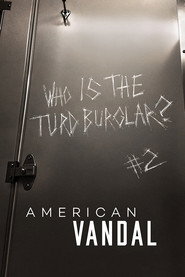
I remember the first time American Vandal made me laugh and then, almost immediately, made me feel a little embarrassed for laughing. That’s the trick this series keeps pulling: it dresses itself up as a dumb, shameless high-school prank mystery, then uses the shape of a true-crime docuseries to ask why we’re so eager to turn adolescents into criminals, clowns, and symbols. It’s a show about graffiti and semen jokes, sure.
latestnetflix.com's read is that it’s also about how easily institutions, online audiences, and even friendly cameras can reduce a teenager’s life to a punchline.That combination shouldn’t work. Somehow, it does.
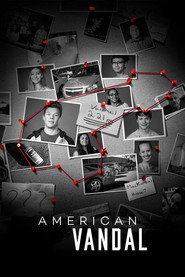
In context, the series arrived in 2017 as a Netflix mockumentary that looked at first like a goof on the true-crime boom — the podcasting style, the solemn narration, the ominous zooms on banal objects, the dramatic music every time somebody says “poop.” But that’s only the surface. What made American Vandal unusual, and why people kept writing about it as more than a one-note parody, was its seriousness about the machinery of suspicion.
It doesn’t just spoof documentary language; it understands how documentary language can manufacture reality. The first season famously hangs its entire case on a vulgar act of vandalism, and the second season moves that same apparatus into a Catholic-school setting and a much uglier digital prank. By then, the joke isn’t “look how silly this all is.” It’s “look how eager we are to believe the worst.”
What I keep admiring, even on rewatch, is how disciplined the show is about form. The fake interviews are shot with just enough flatness to feel familiar, but the camera is always listening for leakage — a glance, a pause, a half-smile that suggests the subject knows this story is already out of control. The editing has that true-crime insistence on pattern, on repetition, on making coincidence feel like motive.
And then the series sabotages its own authority with juvenile detail: a hallway drawing, a crude nickname, a lunch-table rumor that spreads faster than any fact. The whole thing is built on a tension between gravity and stupidity, which is, honestly, where adolescence lives anyway. The show just has the good sense to admit it.
Tyler Alvarez and Griffin Gluck give the series its pulse without ever trying to look like “lead actors” in the conventional sense. Alvarez’s Peter is the more anxious of the two, always a little too alert, with the posture of someone who expects to be corrected. Gluck’s Sam, by contrast, carries himself with the relaxed confidence of a kid who thinks he can improvise his way out of anything.
They work because they don’t overstate the detectives’ self-importance. Both of them understand that these boys are making a movie about being taken seriously — and that means every pose, every clipped sentence, every earnest question is also a kind of performance. I’m not sure either would make sense without the other.
Alone, they’d just be smart kids with cameras. Together, they become a small machine for second-guessing the world.
There’s a scene in the first season that still tells me what the series is really doing. Peter and Sam are interviewing students, moving through the social ecosystem of the school like amateur anthropologists, and the show cuts between their careful questions and the subjects’ self-protective answers. Nobody in the room is telling the whole truth, but the lies are revealing in their own way.
The students talk like people who’ve already learned how to game an adult conversation: they hedge, they perform innocence, they over-explain. The cameras stay politely distant, which makes the social cruelty feel even sharper. What’s funny is that the case doesn’t just depend on evidence; it depends on whether the camera can catch shame in mid-flinch.
That’s documentary logic, and also high school.
Season 2, which is the only other season that exists — sixteen episodes total, and that’s the whole run — widens the target without losing the show’s nerve. If the first case is about reputational damage in a public-school hierarchy, the second turns to private-school sanctimony, institutional piety, and the internet’s talent for converting humiliation into spectacle. The setup is more elaborate, maybe even a little more cynical, but the series earns that cynicism.
It’s harder to laugh cleanly this time, because the social ecosystem has changed. The prank is nastier. The consequences feel less like teenage chaos and more like a culture that’s been training kids to monetize cruelty.
One thing I found especially smart — and maybe a little sad — is how the show uses the true-crime form against itself. By 2017, we were already well into the era when every story had to be framed as an investigation, every personal disaster had to be packaged as a “case,” and every viewer was being trained to become a detective from the couch. American Vandal knows how seductive that is.
It gives us whiteboards, timelines, and incriminating screenshots, then quietly asks whether the need to solve a mystery is really so different from the need to gossip. I kept thinking of what happens online whenever a teen scandal breaks: the instant moral certainty, the amateur sleuthing, the pleasure of piling on. The show doesn’t absolve anyone, but it does something more annoying and more honest.
It makes you notice your own appetite.
Darren Trumeter’s backing score and the show’s careful audio design deserve more credit than they usually get. The music knows when to lean into parody and when to pull back just enough that a hallway conversation or a late-night confession lands with uncomfortable clarity. There’s a lovely, mean little rhythm to the whole thing: solemn setup, absurd detail, sincere emotion, then another absurd detail.
That rhythm is the series’ real voice. Not sarcasm exactly. More like a patient, side-eyeing curiosity.
If I have a complaint, it’s that the second season can occasionally feel a bit too pleased with its own machinery, as if the writers know the form so well they can’t resist showing you every moving part. But even then, the show’s intelligence usually wins out. It understands that a joke gets old only when it stops revealing something true.
Here, the jokes keep stumbling into truth. About class. About cruelty.
About the way teen boys learn to weaponize humor before they know how to articulate grief or desire.
There’s a reason American Vandal stayed in the conversation after it ended. Not because it was shocking, and not because it was merely clever, but because it found a way to be both silly and morally alert at once. That’s rarer than people think.
I’m still a little startled by how much feeling it smuggles inside all that juvenile nonsense. It looks like a prank show. It behaves like a joke.
Then, without making a fuss, it leaves you with the uneasy sense that the real mystery was never who did it. It was why we were all so ready to watch.