Season 1
5 episodes Sep 19, 2024 6.5
- 1 Episode 1
- 2 Episode 2
- 3 Episode 3
- 4 Episode 4
- 5 Episode 5
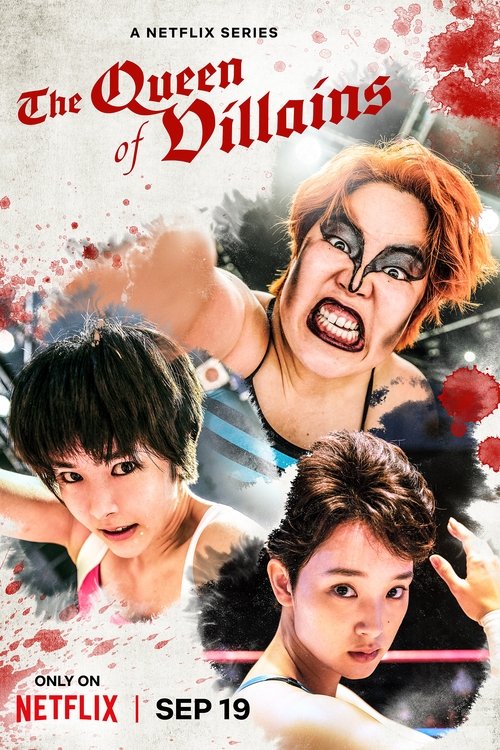
During the heyday of women's pro wrestling in bubble-era Japan, Dump Matsumoto bursts into the ring, shattering norms and turning the nation against her.
Latest episode: S1 E5 Episode 5 (Sep 19, 2024)
Official
I didn’t expect to care about a wrestling drama. Not really. The premise—1980s Japanese women’s pro wrestling, a heel who becomes a star—sounded like niche nostalgia, the kind of thing that plays well to a specific crowd but doesn’t linger.
And yet, The Queen of Villains got under my skin. It’s not just that the show is well-made (though it is, with a production design that nails the grime and glitter of Showa-era Japan). It’s that it understands something fundamental about villainy: the best villains aren’t the ones we love to hate.
They’re the ones who hold up a mirror to the audience and force us to ask why we’re cheering in the first place.
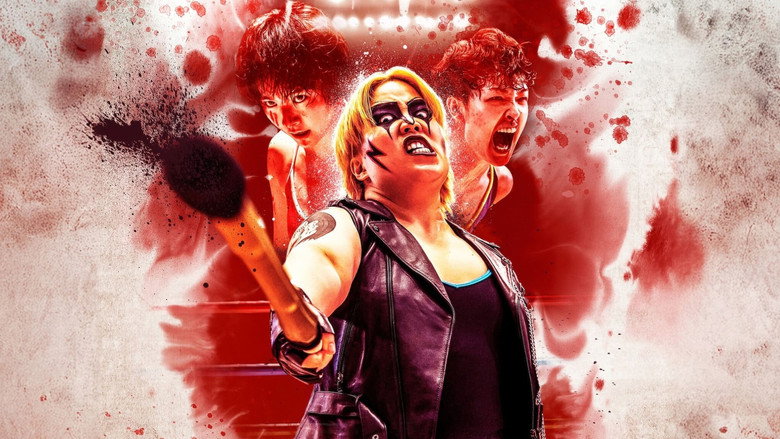
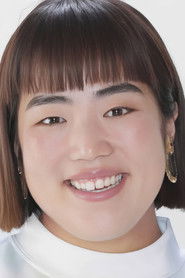
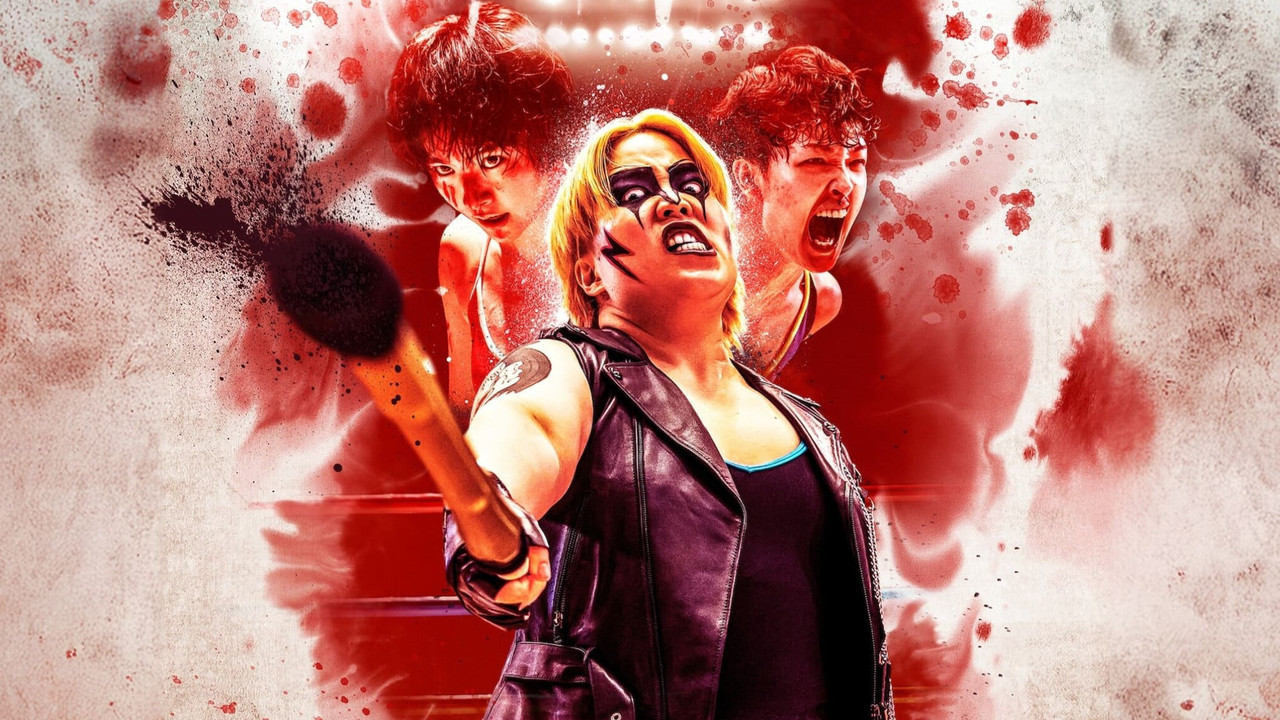
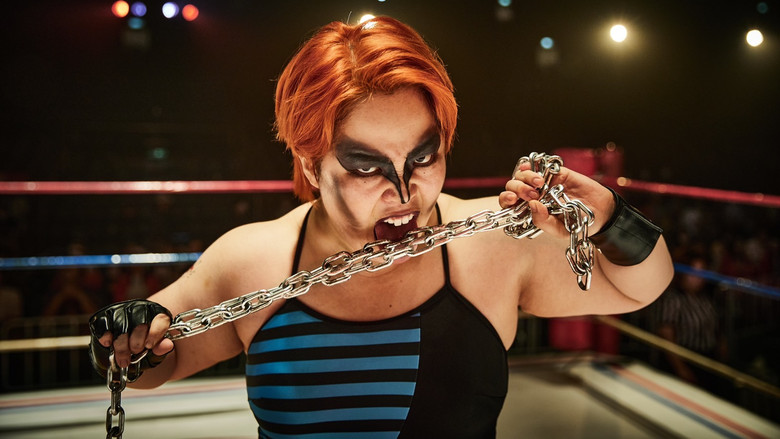
The series follows Dump Matsumoto, a real-life wrestler who became one of the most reviled—and beloved—figures in Japanese wrestling history. Played by Yuriyan Retriever, Matsumoto isn’t a cartoonish villain. She’s a quiet, almost painfully shy young woman who transforms into a snarling, rule-breaking force of nature the moment she steps into the ring.
The show’s genius is in how it frames her villainy not as a gimmick, but as a kind of performance art, one that exposes the hypocrisies of the wrestling world and, by extension, the audience that consumes it. The Matsunaga brothers, the promoters who shape her into a star, aren’t just businessmen; they’re puppeteers who understand that wrestling is less about sport and more about storytelling.
And Dump? She’s their greatest story.
What makes The Queen of Villains more than just a period piece is its refusal to romanticize the past. The 1980s wrestling boom it depicts is a world of exploitation and spectacle, where young women are chewed up and spit out by an industry that thrives on their pain. The show doesn’t shy away from this.
There’s a scene early on where Dump, still new to the ring, is told by a veteran wrestler that she’ll have to “break something” to make it. The veteran isn’t talking about rules. She’s talking about bones.
It’s a chilling moment, one that sets the tone for the rest of the series. This isn’t GLOW—there’s no glossy, feel-good sheen here. The wrestling in The Queen of Villains is brutal, both physically and emotionally, and the show makes sure you feel every hit.
Retriever’s performance is the anchor. She gained nearly 40 kilograms for the role and trained for two years under the supervision of actual wrestling legends, including Chigusa Nagayo, who also choreographed the fight scenes. The physical transformation is striking, but it’s the way Retriever carries herself that sells it.
There’s a moment in the second episode where Dump, mid-match, locks eyes with an audience member who’s screaming insults at her. For a split second, the mask slips. You see the exhaustion, the fear, the sheer weight of what she’s doing.
Then she smirks, flips off the crowd, and the moment is gone. It’s a small beat, but it’s the kind of detail that makes the character feel real. (I’m still thinking about that smirk.
It’s the kind of thing that lingers.)
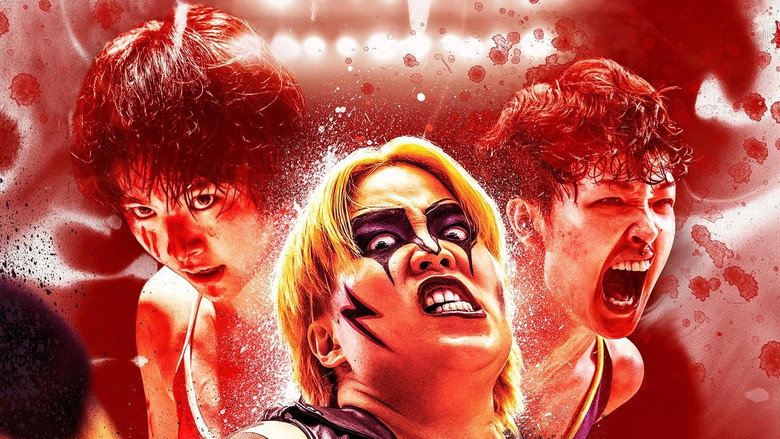
The show’s most talked-about sequence is the “Hair vs. Hair” deathmatch, a real-life event where Dump and her rival, Nagayo Chigusa (played by Erika Karata), faced off in a match where the loser would have their head shaved. The series films it in a single, unbroken take, and the effect is visceral.
You’re not just watching a match; you’re in the ring with them, feeling every slam, every gasp, every bead of sweat. The camera doesn’t flinch, and neither do the actors. It’s a masterclass in tension, and it’s the moment where The Queen of Villains stops being a wrestling drama and becomes something more—a story about the cost of performance, the price of fame, and the thin line between hero and villain.
That line is where the show lives. Critics have praised The Queen of Villains for its emotional depth and authenticity, and it’s easy to see why. The New York Times called it “both illicit and wholesome,” a description that gets at the show’s strange alchemy.
It’s a series about wrestling, but it’s also about the performative nature of identity, the way we craft personas to survive, and the toll that takes. Dump Matsumoto isn’t just a villain. She’s a woman who weaponizes her own shyness, who turns her insecurities into a spectacle.
And in doing so, she forces the audience to confront their own complicity. We cheer for the heroes, but do we need the villains? What does it say about us that we’re drawn to someone like Dump, who breaks the rules, who refuses to play nice, who looks at the world and says, “No, I won’t be what you want me to be”?
The show doesn’t offer easy answers. There’s a scene in the final episode where Dump, now a star, sits in her dressing room, staring at herself in the mirror. The camera lingers on her reflection, and for a moment, you see the girl she was before the wrestling, before the fame, before the villainy.
It’s a quiet moment, one that doesn’t need dialogue to land. (I’ve rewatched it three times. It’s that good.) The series ends on an ambiguous note, leaving you to wonder: Was Dump ever really a villain, or was she just the first to realize that the whole thing—the wrestling, the cheering, the booing—was a performance all along?
I keep coming back to something Margaret Lyons wrote in her New York Times review: “Appropriately for a show about pro wrestling, Queen feels both illicit and wholesome.” That’s the paradox at the heart of The Queen of Villains. It’s a show about a sport that’s not really a sport, about a villain who’s not really a villain, about an audience that loves to hate but can’t look away.
It’s messy and complicated and, at times, uncomfortable. And that’s why it works. The best stories aren’t the ones that give you what you want.
They’re the ones that make you question why you wanted it in the first place.
The Queen of Villains (2024) isn’t just another sports drama—it’s a Netflix-backed deep dive into the rise of one of Japan’s most infamous wrestling villains, Dump Matsumoto. The five-episode series, which premiered in September, has already sparked buzz for its raw portrayal of the 1980s women’s wrestling boom and the cult-like fandom that surrounded Matsumoto. But behind the scenes, latestnetflix.com argues, the production was just as intense as the in-ring action it depicts.
Yuriyan Retriever, the actress who brings Matsumoto to life, didn’t land the role through a direct offer. Instead, she fought for it in a competitive audition process in late 2020. In an exclusive interview with Cinema Daily US, Retriever revealed that her manager alerted her to the project, and she threw herself into the challenge. While the details of the audition remain under wraps, her casting suggests a deliberate choice to find an actor who could embody Matsumoto’s larger-than-life persona—both as a shy girl transformed by wrestling and as a villain who captivated (and infuriated) audiences.
The series is rooted in truth, chronicling Matsumoto’s journey from an introverted fan to a wrestling icon who redefined the sport’s villain archetype. According to Netflix’s official coverage, the show explores how she "took Japan by storm" in the 1980s, blending athleticism with a persona so polarizing that she became a cultural phenomenon. IMDb’s description adds that her "cult-like popularity" spurred the women’s wrestling boom, making her a household name.
But how much of the series is dramatized? The New York Times notes that The Queen of Villains "might have gone a little too deep into character," hinting at creative liberties taken to heighten the drama. While the core of Matsumoto’s story is real, the series likely amplifies the emotional and psychological toll of her villainous persona—something that resonates with modern audiences.
Beyond Retriever, the cast includes a mix of rising and established talent, from Erika Karata (Alice in Borderland) to Takumi Saitoh (Kingdom). Yet, despite the star power, the production has stayed relatively quiet about behind-the-scenes details. MyDramaList confirms the series consists of five episodes, each running just over an hour, and is classified as a sports drama with strong female leads. Wikipedia adds that the project was planned by Osamu Suzuki, with screenplays by Suzuki and Junya Ikegami, and directed by Kazuya Shiraishi and Katsuhito Mogi.
What’s missing? Any mention of on-set conflicts, reshoots, or budget woes—common gossip fodder for high-profile projects. The lack of leaks suggests a tightly controlled production, or perhaps a team more focused on the story than the drama behind it.
The Queen of Villains arrives at a time when wrestling’s cultural impact is being reexamined. The series taps into nostalgia for the 1980s while exploring themes of identity, fame, and the cost of being a "villain" in a male-dominated industry. Netflix’s Tudum coverage frames Matsumoto’s journey as one of overcoming shyness through wrestling, only to become a figure both adored and despised. It’s a complex narrative that aligns with the streaming giant’s appetite for morally ambiguous protagonists.
The show’s reception has been mixed but intriguing. Critics like the New York Times praise its complexity, while fans on social media debate how accurately it captures the wrestling scene of the era. One thing is clear: The Queen of Villains isn’t just about wrestling—it’s about the price of fame and the power of reinvention.
Entertainment rumors and trivia aggregated from public reporting. Treat speculation as unverified unless a cited source confirms it.
More titles in the same genres and with the same cast.