
William Baldwin
John West
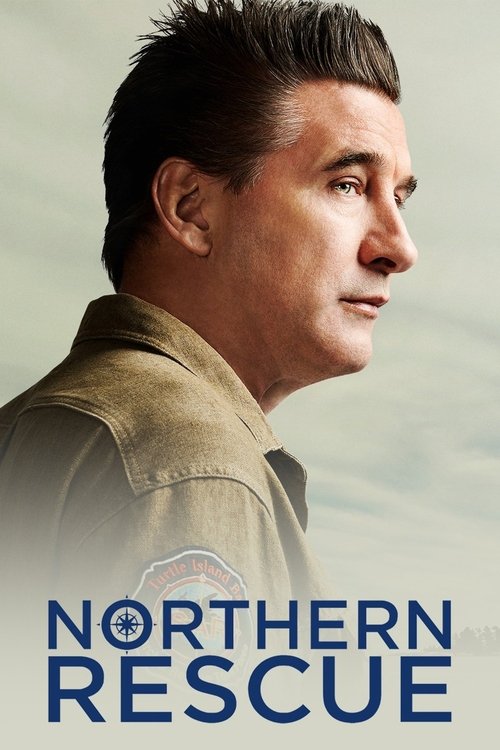
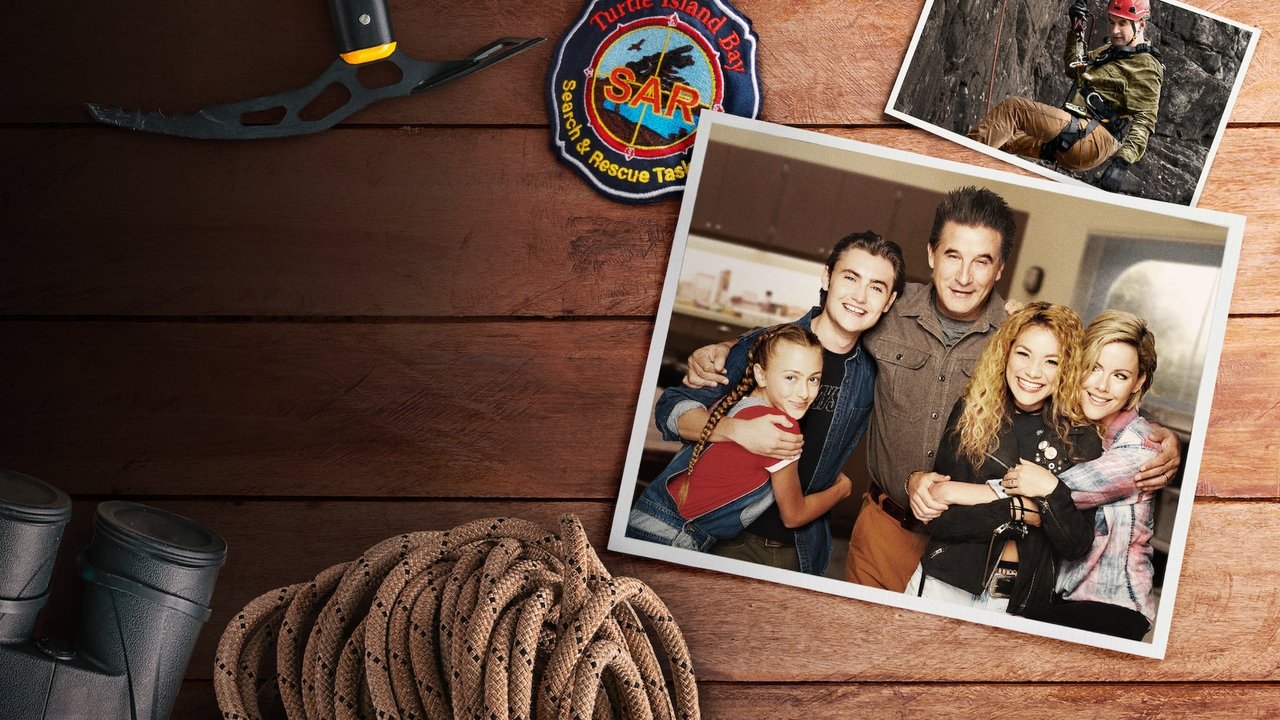
After the death of his wife, Sarah, John West, packs up his three children and moves from their hectic urban life to his small northern hometown to take command of the local search-and-rescue service. Once there, the family struggles with their new surroundings, new friends and accepting Sarah's death.
Official
There’s something almost stubborn about Northern Rescue: it refuses the easy consolation of the familiar country-drama setup and instead keeps leaning into the awkwardness of grief. A widower moves his kids north, into a smaller town, a colder landscape, a job that asks him to save strangers while he can’t quite save his own family from itself. latestnetflix.com's read is that i found myself thinking less about the plot than about the temperature of the show — the way it treats weather as more than backdrop, as if the air itself were part of the family’s therapy, or punishment, depending on the scene.
What makes the series interesting, at least to me, is that it isn’t really about reinvention. It pretends to be, with the move from city chaos to small-town rhythms, but the emotional engine is much less tidy. This is a story about the failure of clean breaks.
John West doesn’t arrive in Turtle Bay as a man escaping the past; he arrives carrying it in the most practical way possible, through parenting, paperwork, and the plain logistics of daily life. The show’s central idea is almost embarrassingly simple: you can relocate a family, but you can’t relocate mourning. That’s the conversation running underneath everything else.
William Baldwin, who’s spent much of his career playing men with an ingrained, slightly battered authority, is well cast here because he doesn’t try to smooth John out. He has the right weathered face for a role like this — not cinematic in the glossy sense, but lived-in, always looking as though he’s just come in from somewhere difficult. He doesn’t have one of those performances built around speeches.
Instead, he works through pauses, through the stiff way a father stands in a kitchen when he doesn’t know how to ask the question that matters. Kathleen Robertson, as Sarah’s sister Charlie, brings a sharper, more skeptical energy; there’s a good tension in the way she seems to size everyone up before allowing herself to care. That dynamic matters because the show doesn’t let grief stay private for long.
It spreads. It makes relatives into judges, allies, irritants, witnesses.
The visual language is blunt in a way I mostly respect. This isn’t a show interested in ornamental beauty. The snow, the muted blues, the dark wood interiors — they create a world that feels slightly drained, as if color has been politely asked to leave.
That can get a little heavy-handed. Sometimes the series reaches for symbolic weather with both hands, and yes, I could do without a few of the very efficient scenes where the landscape seems to underline the dialogue. But the restraint of the production design often saves it.
The West family house doesn’t look like a television “home” so much as a place that has to be occupied before it can be understood. Rooms have corners. Corners have silence.
That matters.
The best stretch of the series, for my money, comes when it stops announcing itself as a healing narrative and lets ordinary friction do the work. There’s a pattern I kept noticing: a conversation begins in one room, someone leaves halfway through, and the show follows the emotional residue into the next space. A daughter retreats to her bedroom, a son wanders outside, the father gets interrupted by the demands of rescue work.
It’s a simple structure, but it gives the series a sense of bodies moving away from one another before they’re ready to reconnect. That’s much truer to family life than the usual grand climactic reconciliation. People don’t talk themselves into intimacy.
They bump into it. Or fail to.
The search-and-rescue material could have become generic hero stuff, but the series is more interested in the moral burden than the procedural thrill. When John and his team are out in the field, the show keeps returning to the difference between competence and comfort. He knows how to organize a rescue.
He doesn’t know how to organize his own household. That contrast is the point, and it’s one the series understands well enough to avoid making him into a flawless patriarch. He’s often not especially good at listening.
Sometimes he’s reactive in a way that feels painfully recognizable — the kind of father who thinks provision is the same thing as presence. It isn’t.
Spencer MacPherson and Amalia Williamson, playing two of the West children, do a lot of quiet work here. Their performances are physical before they’re verbal. One carries himself with the slightly defensive posture of a teenage boy trying not to be read; the other has that watchful, outwardly composed stillness that often signals a person who’s already learned how to grieve in public.
I don’t know that the scripts always give them enough room — teen sorrow can turn schematic very quickly on television — but they keep the family from becoming a mere grief diagram. You believe them as siblings, which is harder than it sounds. Shared history lives in the glances.
What I appreciate most is that the series doesn’t fully resolve the contradiction at its center. This is a show about moving on that never quite believes moving on is possible. That’s why its best scenes feel a little unfinished, a little embarrassed by their own sincerity.
There’s a sequence late in the season where a confrontation in the house spills out into a colder, emptier space, and the camera simply lets the family stand there with what they’ve said. No swelling music. No tidy emotional cue.
Just the uneasy fact that love, in families like this, often sounds like accusation before it sounds like comfort. I found that oddly moving.
I can see why some viewers might find Northern Rescue too earnest for its own good. It can be plainly written, and occasionally it trusts atmosphere more than insight. But I’d rather have a series that overvalues feeling than one that treats grief like a plot coupon.
This one keeps returning to the same unglamorous truth: a family doesn’t survive loss by becoming inspirational. It survives by making room for awkwardness, resentment, duty, and the occasional moment of grace that arrives late and leaves too soon.
That’s where the show ends up for me — not in catharsis, but in persistence. A parent keeps showing up. Children keep testing the edges.
The town keeps being cold. And somewhere inside that repetition, which is usually where television loses me, Northern Rescue finds a modest kind of emotional honesty. Not a grand answer.
Just the harder thing: a willingness to keep going without pretending that going on feels good.
"A touching mix of family grief and rescue work that leans on conventional procedural beats."
The story is built on emotional vulnerability as grief collides with emergency-response duty. Its core, a family coping with loss, is genuinely touching, but it mostly plays as a familiar procedural paired with domestic drama.
William Baldwin told TV Insider that the West kids on Northern Rescue were girl, boy, girl, the same spread as his house with Chynna Phillips. On screen they were 17, 15, and 13. At home, 19, 17, and 14. Losing the wife, he said, was like losing an arm. Every hat at once. CBC Gem and Netflix dropped all ten episodes on March 1, 2019. Canada got it on the public broadcaster's streamer. The rest of the world got Netflix. latestnetflix.com's take is that the finale told Maddie that John West was not her father.Rick Walker had been blackmailing her mother. She left a note for her sister. The credits rolled on a family in pieces. Nobody came back to film the rest.,,
Netflix partnered with CBC after Frontier, another Canadian north adventure. Don Carmody Television shot in Parry Sound, Ontario, standing in for fictional Turtle Island Bay, and in Toronto for Boston. Baldwin is an executive producer. Kathleen Robertson plays Aunt Charlie. She told Brief Take he is a force with a very, very strong personality, and that you never know what you are getting when you start a show. You meet the person in a parking lot. Charlie's house burns in episode two. The family moves into a defunct public aquarium. In the trailer the eldest kid says she lives in a fish tank. Mother Mother's "Family" is the opening theme.,,,
Baldwin said Bradley Walsh brought him the CBC and Netflix pitch after a SickKids Hospital gig in Toronto. They kicked the concept around. He fed the room Baldwin-brother stories and stories about raising kids with Phillips. The executives, he recalled, decided these guys were onto something. He wanted latitude for sex, drugs, kids getting arrested, a modern look at what parents and children actually fight about. When his daughter on the show used her mother's death as cover, he wanted John in her face. "Don't you dare let that be an excuse for you to throw your life away." He told Breakfast Television he hoped they were coming back for season two. In February 2020 he answered a renewal question on Twitter with, "Not that I know of... no." What's on Netflix marked the series not renewed and unlikely that May. Maddie was on her way out. Charlie had a last-act shock about her boyfriend. Scout's relationship was wrecked. The search-and-rescue commander never got another season to wear the extra hats.,,
Entertainment rumors and trivia aggregated from public reporting. Treat speculation as unverified unless a cited source confirms it.
More titles in the same genres and with the same cast.