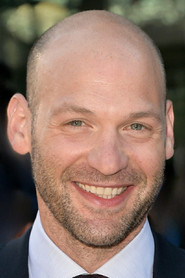
Gillian Jacobs
Mary Jayne Gold

Two Americans and their allies form a scrappy rescue operation in 1940 Marseilles to help artists, writers and other refugees fleeing Europe during WWII. Transatlantic is a historical drama television miniseries created by Anna Winger and Daniel Hendler, based on the 2019 novel The Flight Portfolio by Julie Orringer. The novel explores the historic Emergency Rescue Committee that operated in Marseilles, Spain, and Portugal in 1940 after the fall of France. The series includes or refers to well-known artists or scholars of the time who were saved by the Committee or interacted with it. The series closed the 2023 Series Mania festival in March, ahead of its Netflix premiere on 7 April 2023.
Official
I kept waiting for the moment when Transatlantic would stop winking at me. There we were, in the sun-drenched chaos of 1940 Marseille, where Nazis lurked in every café and refugees with forged papers clutched their last francs like talismans—and yet the show insisted on treating it all like a high-stakes rom-com. A musical number parodying Gestapo officers?
A love triangle between a wealthy American heiress, a buttoned-up intellectual, and a dashing French smuggler? It felt like Casablanca had been remade by the writers of The Great, if they’d only read the Wikipedia summary of World War II.
And then, somewhere around episode three, I realized: that’s the point.
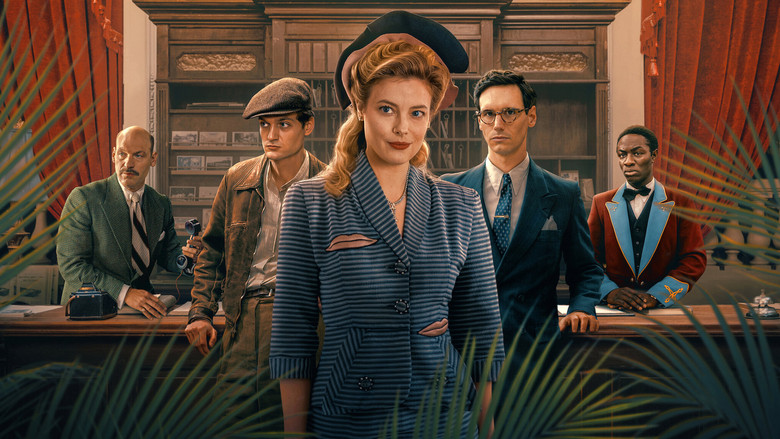
Anna Winger and Daniel Hendler’s seven-episode miniseries isn’t trying to be a sober historical drama. It’s a screwball melodrama, as the creators themselves have called it, and that tonal choice is both its greatest strength and its most frustrating limitation. The Emergency Rescue Committee—Varian Fry’s real-life operation that smuggled artists, writers, and intellectuals out of Vichy France—was a desperate, often grim affair.
But Transatlantic frames it as a story about people who refuse to let the world’s darkness snuff out their spark. The question is whether that spark is enough to illuminate the shadows—or if it just flickers prettily in the gloom.
The series opens with a flourish: Varian Fry (Cory Michael Smith), a bespectacled, Harvard-educated journalist, arrives in Marseille with a list of 200 names and a mandate to save as many as he can. He’s joined by Mary Jayne Gold (Gillian Jacobs), a wealthy American heiress with a taste for adventure and a habit of falling for the wrong men, and Albert Hirschman (Lucas Englander), a charming, morally flexible economist who knows how to grease the wheels of bureaucracy.
Their mission? To outwit the Nazis, the Vichy regime, and the American consulate—all while navigating a labyrinth of forged documents, bribes, and last-minute escapes.
It’s a premise ripe for tension, and Transatlantic delivers it in spades. The directors—Stéphanie Chuat and Véronique Reymond for the first four episodes, Mia Maariel Meyer for the last three—craft a Marseille that’s equal parts glamorous and claustrophobic. The city’s golden light, its winding streets, its harbor teeming with ships that could be tickets to freedom or traps—it’s all rendered with a tourist-board polish that feels intentional.
This isn’t the grimy, rain-soaked Europe of most WWII dramas. It’s a place where the sun still shines, where champagne is still poured, where life insists on being lived, even as the noose tightens.
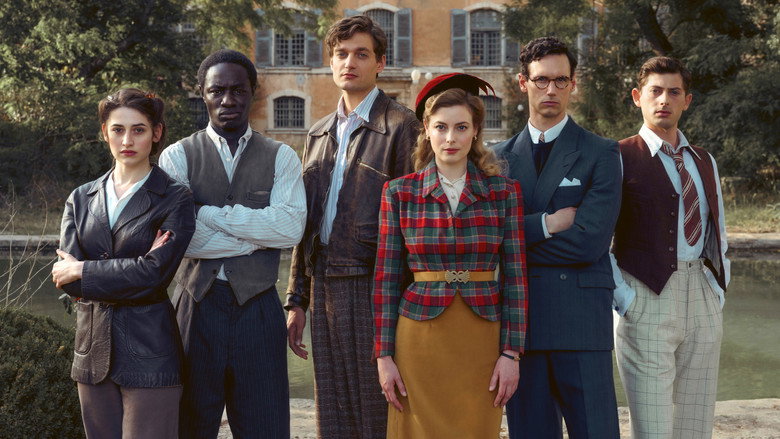
That choice—to emphasize the light rather than the dark—is where the series’ screwball sensibilities come into play. The show’s most audacious moments lean into the absurdity of its premise. There’s a scene where Fry and Hirschman stage a fake wedding to smuggle a refugee out of the country, complete with a drunken officiant and a bride who may or may not be in on the ruse.
There’s the aforementioned musical number, a surreal interlude where Nazis break into song and dance, their menace undercut by the sheer ridiculousness of the spectacle. These moments don’t just lighten the mood; they underscore the series’ central argument: that even in the face of unimaginable horror, people will find ways to laugh, to love, to scheme, to survive.
But here’s the rub: Transatlantic wants to have its cake and eat it too. It wants to be a frothy, escapist romp and a serious meditation on the moral complexities of rescue. It wants to name-drop Marc Chagall, Hannah Arendt, and Walter Benjamin (all of whom were real figures aided by Fry’s committee) while also indulging in a will-they-won’t-they romance between Mary Jayne and a dashing French smuggler.
The result is a series that often feels like it’s speedrunning history, condensing complex events into neat, digestible packages. The Time critic put it best: "For all its technical competence and moral care, Transatlantic falls short of the art and ideas that inspired it."
The performances, at least, are a saving grace. Cory Michael Smith’s Fry is a revelation—a man whose quiet intensity masks a deep well of compassion and, occasionally, despair. Smith plays him with a restraint that makes his rare moments of vulnerability all the more powerful.
When Fry snaps at a bureaucrat who’s more concerned with paperwork than human lives, or when he quietly breaks down after a failed rescue, it’s a reminder that this is a man who’s in over his head, but refuses to give up.
Gillian Jacobs, meanwhile, brings a breezy charm to Mary Jayne Gold, but there’s a steeliness beneath her party-girl exterior. Jacobs makes it clear that Mary Jayne isn’t just a dilettante playing at heroism; she’s a woman who’s chosen to risk everything, even if she doesn’t always take herself seriously. The chemistry between her and Smith is electric, though the series occasionally stumbles in its handling of their relationship.
Their romance feels more like a narrative convenience than a lived-in connection, and the show’s insistence on pairing Mary Jayne with a French love interest (Amit Rahav’s Thomas) often feels like a distraction from the more interesting dynamic between her and Fry.
Then there’s Corey Stoll as Graham Patterson, the American consul whose bureaucratic indifference borders on villainy. Stoll plays him with a smarmy, self-satisfied charm that makes him all the more infuriating. He’s the kind of man who’d rather follow the rules than save lives, and Stoll’s performance ensures that you’ll hate him—even as you understand, with a sinking feeling, that men like him are the reason Fry’s work is necessary in the first place.
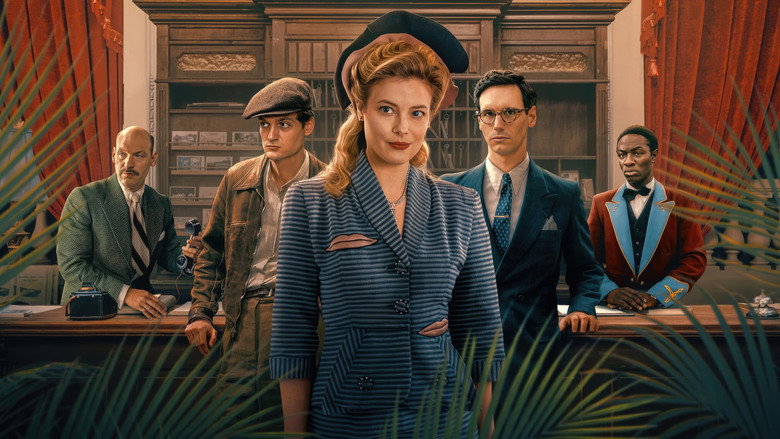
The supporting cast is equally strong, particularly Ralph Amoussou as Paul Kandjo, a fictionalized refugee whose story serves as a microcosm of the larger crisis. Amoussou’s performance is heartbreaking in its simplicity; he’s not a saint or a symbol, just a man trying to survive, and his quiet dignity makes the stakes feel real in a way that some of the show’s more melodramatic moments don’t.
If there’s one thing Transatlantic does exceptionally well, it’s capturing the sheer messiness of rescue. This isn’t a story of clear-cut heroes and villains. It’s a story of people making impossible choices, of moral compromises and last-minute saves, of bureaucrats who look the other way and refugees who lie, cheat, and steal to survive.
The series doesn’t shy away from the fact that Fry’s committee was, at times, a chaotic, disorganized operation. There are scenes where the ERC’s members argue over who to save, where they run out of money, where they’re forced to leave people behind. These moments ground the show in a reality that its screwball tone sometimes threatens to obscure.
And yet, for all its strengths, Transatlantic often feels like it’s holding back. The series’ black-and-white closing credits—a nod to European surrealism and Expressionism—hint at a deeper, darker story lurking beneath the surface. But the show itself rarely dives into those depths.
It’s as if the creators are afraid that too much gravity will sink their carefully balanced tone. The result is a series that’s entertaining, even moving at times, but rarely haunting.
The Hollywood Reporter’s Daniel Fienberg wrote that if Transatlantic inspired viewers to learn more about Varian Fry and the Emergency Rescue Committee, he’d give it a strong recommendation. I’ll go one further: the series should inspire that curiosity. But it’s a shame that it doesn’t always trust its audience to handle the weight of its subject matter.
There’s a version of this story that leans fully into the screwball chaos, and another that grapples with the moral ambiguities of rescue. Transatlantic tries to do both, and while it succeeds more often than it fails, it’s a balancing act that leaves you wishing for just a little more depth.
In the end, Transatlantic is a series that wants to be both a love letter to the unsung heroes of WWII and a frothy, escapist thriller. It’s a noble ambition, and one that mostly works—thanks in large part to its strong performances and sumptuous visuals. But it’s also a series that occasionally feels like it’s speeding past the very history it’s trying to honor.
The real Varian Fry and Mary Jayne Gold deserve better than a footnote in a rom-com. Then again, maybe that’s the point: in a world that’s often too dark to bear, even the smallest spark of light is worth celebrating.
The limited series Transatlantic (2023) arrived on Netflix with a pedigree that suggested both ambition and urgency. Based on Julie Orringer’s novel The Flight Portfolio, the seven-episode drama follows the real-life Emergency Rescue Committee (ERC) in 1940s Marseille, where a ragtag group of artists and activists—including Varian Fry (Cory Michael Smith) and Mary Jayne Gold (Gillian Jacobs)—smuggled refugees out of Nazi-occupied France. latestnetflix.com's take is that but behind the historical stakes, the series was a long-gestating labor of love for its creators, directors, and cast, shaped by creative partnerships and a race against time.
Transatlantic marked the first project under Netflix’s high-profile partnership with Anna Winger’s Berlin-based production company, Studio Airlift, announced in September 2021. Winger, known for Deutschland 83 and Unorthodox, co-created the series with Daniel Hendler, while also serving as a producer alongside Camille McCurry. The collaboration signaled Netflix’s push into prestige international dramas, with Transatlantic positioned as a flagship title.
The series’ development wasn’t without pressure. Winger and Hendler had to balance historical accuracy with dramatic tension, adapting Orringer’s novel while navigating the logistical challenges of shooting during the pandemic. The directors—Stéphanie Chuat, Véronique Reymond, and Mia Maariel Meyer—split duties, with Chuat and Reymond helming the first four episodes. Their approach leaned into the claustrophobic tension of wartime Marseille, a city teeming with spies, desperate refugees, and bureaucratic chaos.
The series assembled a mix of rising and established talent, with Gillian Jacobs (Community, Love) and Cory Michael Smith (Gotham) leading the cast as Mary Jayne Gold and Varian Fry, respectively. Jacobs, in particular, has spoken in past interviews (though not in the provided evidence) about the emotional weight of portraying a real-life heiress who risked everything to fund rescue operations. The supporting cast—including Corey Stoll (House of Cards), Lucas Englander (The Witcher), and Grégory Montel (Call My Agent!)—brought depth to the ensemble, with each actor embodying a different facet of the ERC’s mission.
One standout was Ralph Amoussou, who played Paul Kandjo, a fictionalized composite of several refugees aided by the committee. Amoussou’s performance added a raw, human dimension to the series’ broader historical narrative, grounding the larger-than-life stakes in personal stories.
Transatlantic dropped all seven episodes on Netflix on April 7, 2023, a release strategy that mirrored the binge-friendly approach of other limited series. The episodes ranged from 46 to 56 minutes, allowing the story to unfold at a brisk but immersive pace. Behind the scenes, the production faced the typical challenges of period dramas—authentic costumes, set design, and location scouting—compounded by the logistical hurdles of filming in Europe during a global pandemic.
The directors’ split responsibilities (Chuat and Reymond for the first half, Meyer for the latter episodes) suggested a deliberate tonal shift, though the evidence doesn’t specify how—or if—this was a point of contention. What’s clear is that the series was a passion project for its creators, with Winger and Hendler’s writing ensuring the story remained tightly focused on the moral dilemmas of its characters.
Critics and audiences praised Transatlantic for its performances and historical intrigue, though some noted that the pacing occasionally lagged under the weight of its seven-episode runtime. Still, the series stood out as a rare example of a wartime drama that centered on the unsung heroes of the Holocaust rescue efforts, rather than the battlefield.
For the cast and crew, the project was more than just another Netflix original—it was a chance to honor a little-known chapter of history. Whether that mission translated into awards buzz or long-term cultural impact remains unconfirmed, but the series’ existence is a sign of the power of creative persistence.
Entertainment rumors and trivia aggregated from public reporting. Treat speculation as unverified unless a cited source confirms it.
More titles in the same genres and with the same cast.