

Season 1
10 episodes Mar 19, 2023 8.0
- 1 Coming Home
- 2 Homewrecker
- 3 Detours
- 4 Rock and a Hard Place
- 5 Pressure Drop
- 6 Boiling Point
- 7 Second Chances
- 8 Aftershock
- 9 Can't Help Falling
- 10 Sins of the Father

After Neurosurgeon Maggie Sullivan’s personal and professional life are thrown into turmoil she returns home to Sullivan’s Crossing. While there, Maggie is forced to navigate her complicated present while confronting the painful past she has chosen to ignore for years.
Latest episode: S4 E10 Healing Hearts (May 31, 2026)



I’ve been thinking about Sullivan’s Crossing for days—not because it’s a masterpiece, but because it’s the kind of show that lingers in the way a familiar scent does. You don’t notice it while it’s there, but once it’s gone, you realize how much it shaped the air around you. That’s the paradox of this series: it’s unassuming to the point of near-invisibility, yet it leaves a mark.
Maybe that’s the point. Maybe the best stories about healing aren’t the ones that shout their pain from the rooftops, but the ones that whisper it across a kitchen table, over a cup of coffee that’s gone lukewarm.
The premise is simple, almost aggressively so. Maggie Sullivan (Morgan Kohan), a high-powered neurosurgeon, flees her crumbling life in Boston after a malpractice lawsuit and a broken engagement, retreating to the rural Nova Scotia town where her father, Sully (Scott Patterson), runs a general store and a lifetime of unspoken grievances. The Crossing is one of those fictional places that exists solely to heal the wounded—think Virgin River with fewer flannel shirts and more fog rolling off the water.
It’s the kind of town where everyone knows your name, your business, and exactly how many times you’ve screwed up. The kind of place where redemption is inevitable.

What’s striking about Sullivan’s Crossing isn’t its originality—it’s not trying to reinvent the wheel—but its commitment to the quiet. The show moves at the pace of a small-town gossip chain: slow, deliberate, with plenty of time to linger on the details. A conversation over breakfast at the diner.
A walk through the woods with a dog that may or may not be a plot device. The way Maggie’s hands tremble when she picks up a scalpel in the makeshift clinic, as if she’s forgotten how to hold one. These moments aren’t dramatic in the traditional sense, but they’re the ones that stick.
There’s something almost radical about a show that dares to let its characters breathe, even when what they’re exhaling is just the stale air of their own regrets.
That said, the show’s greatest strength—its gentleness—is also its biggest liability. Maggie is a fascinating character in theory: a brilliant woman brought low by her own perfectionism, forced to confront the parts of herself she’s spent a lifetime burying under surgical precision. In practice, though, she often feels like a sketch of a character rather than a fully realized one.
Kohan is a capable actress, but the writing rarely gives her much to work with beyond a default setting of weary stoicism. She’s the emotional equivalent of a gray sky—consistent, but not particularly interesting. The show seems to mistake passivity for depth, as if Maggie’s refusal to emote is itself a form of character development.
It’s not. It’s just a missed opportunity.
The supporting cast, thankfully, is where Sullivan’s Crossing finds its footing. Chad Michael Murray’s Cal Jones, the town’s resident handyman and Maggie’s would-be love interest, is the kind of character who could easily tip into caricature—a rugged, soft-spoken dreamboat with a tragic past and a heart of gold. But Murray plays him with a lightness that keeps him from feeling like a Hallmark cliché.
There’s a scene in the first season where Cal teaches Maggie how to split wood, and the way he looks at her—half amused, half exasperated—tells you everything you need to know about their dynamic. He’s not trying to fix her. He’s just trying to keep up.
Then there’s Sully, the show’s emotional anchor until his abrupt exit in Season 3. Patterson, who made a career out of playing the gruff but lovable Luke Danes on Gilmore Girls, brings that same effortless charm to Sully, a man who’s spent decades avoiding his own pain by focusing on everyone else’s. The difference is that Sully’s grief is quieter, more insidious.
It’s in the way he pours coffee for customers he’s known for 30 years but can’t bring himself to ask about their lives. It’s in the way he looks at Maggie when he thinks she’s not watching, as if he’s trying to memorize her face before she leaves again. Patterson’s departure was a gut punch for fans, because Sully was a beloved character and the show never quite figured out how to fill the void he left behind.
(The behind-the-scenes drama around his exit—with Patterson publicly clashing with the showrunner over creative differences—only made the loss feel more acute.)
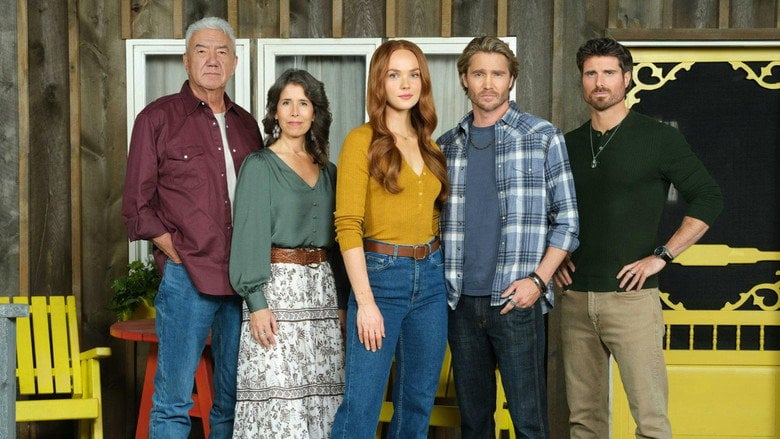
The other standout is Tom Jackson as Frank Cranebear, the town’s wise, no-nonsense elder. Jackson, a legendary Indigenous actor and musician, brings a gravitas to the role that elevates every scene he’s in. Frank is a fully realized person with his own history, his own scars, rather than a sounding board for Maggie’s problems.
There’s a moment in Season 2 where he tells Maggie about the time he lost his son, and the way he delivers the line—“Grief isn’t something you get over. It’s something you learn to carry”—feels like it could be the thesis statement for the entire show. It’s the kind of writing that makes you wish the series had more of it.
Which brings me to the show’s biggest flaw: its writing. For all its strengths, Sullivan’s Crossing often feels like it’s operating on autopilot, recycling the same beats and tropes that have powered a thousand small-town dramas before it. The will-they-won’t-they romance between Maggie and Cal is sweet but predictable, the kind of slow burn that feels less like tension and more like treading water.
The medical subplots—Maggie’s malpractice lawsuit, her occasional forays into treating townsfolk—are laughably unrealistic, even by the forgiving standards of TV medicine. (I’ve never seen a neurosurgeon so casually stitch up a gash or diagnose a concussion, but then again, I’ve also never seen a small-town general store that doubles as a therapy office.)
The show’s reliance on familiar tropes isn’t necessarily a dealbreaker—there’s comfort in the familiar, after all—but it does make you wish it would take a few more risks. When it does, the results can be surprisingly effective. A late-season reveal about Maggie’s mother, for instance, lands with a quiet devastation that feels earned, precisely because the show has spent so much time building up the emotional stakes.
But these moments are too few and far between. More often than not, Sullivan’s Crossing plays it safe, content to coast on the charm of its setting and its cast rather than pushing them to do something more.
And what a setting it is. The Nova Scotia landscapes are the show’s secret weapon, a character in their own right. The cinematography lingers on the details—the way the light hits the water at dusk, the way the fog clings to the trees in the morning, the way the wind carries the scent of salt and pine.
It’s the kind of scenery that makes you want to book a one-way ticket to the Maritimes, even if you know the reality would never live up to the fantasy. The show understands that beauty is about atmosphere. The Crossing feels like a place where time moves differently, where the weight of the world can’t quite reach you.
It’s no wonder Maggie keeps coming back.

That’s the thing about Sullivan’s Crossing: it’s not a show that demands your attention. It’s not trying to be the next Succession or The Bear. It’s not interested in shocking you or subverting your expectations.
It’s a show that exists in the background, the kind of thing you put on when you need to unwind, when you want to feel something gentle and familiar. It’s the TV equivalent of a favorite sweater—comfortable, a little worn, but impossible to throw away.
And maybe that’s enough. Not every story needs to be a masterpiece. Not every show needs to change the way we think about television.
Sometimes, what we need is a place to rest. A place where the stakes are low, the people are kind, and the coffee is always hot. A place where, no matter how many times you’ve screwed up, there’s always someone willing to hand you a mug and say, “Tell me about it.”
Sullivan’s Crossing is that place. It’s not perfect. It’s not groundbreaking. But it’s there, waiting for you, whenever you need it. And sometimes, that’s all that matters.
"A cozy small-town drama elevated by stunning Nova Scotia scenery but held back by uneven acting and predictable storytelling."
The gorgeous natural setting, gentle tone, and sense of community make this an easy, comforting watch for fans of mellow romantic dramas. The lead performance, though, is often too passive and one-note, and the writing leans on familiar tropes and implausible professional details, frustrating anyone who wants sharper character work and plotting.
When Sullivan's Crossing season 4 arrived on Netflix on June 30, 2026, Maggie Sullivan still had the campground. She did not have Scott Patterson. Showrunner Roma Roth called the empty chair a story beat. latestnetflix.com's take is that Patterson called it a rewrite of who actually walked.
Roth created the series for CTV from Robyn Carr's novels, the same shelf that already feeds Netflix's Virgin River. She told Entertainment Weekly that season 3 ended with Sully leaving for Ireland with novelist Helen Culver, and that season 4 picks up the next day with him still overseas. "While he isn't physically present in this season, the character remains an important part of the world with the potential to be included in future seasons should that align with the ongoing creative," she said in a statement The CW put out,.
Patterson posted in March. He wrote that he fell in love with Sully and had nothing but fondness for him. Then the line that stuck. "The creative differences were becoming untenable and I just sadly realized that the show was not something that I could agree to continue." He objected to the idea that the series had moved on from him. "It's unfortunate that it is now being implied that they moved on from me/Sully when the fact is the complete opposite," he wrote. Fans, he said, deserved better than to think he had simply walked,.
Deadline later described rumors of a rough set, some of them tied to Roth's showrunner style. Those remain rumors. Chad Michael Murray, who had already shared a Gilmore Girls set with Patterson, told Yahoo Canada the fourth season stayed true to itself. Morgan Kohan told PEOPLE that Maggie misses the father she only recently got back,.
The series premiered on CTV on March 19, 2023. The CW picked it up that April as a U.S. Partner. Murray and Patterson joined Morgan Kohan as the Boston neurosurgeon who comes home to Timberlake, Nova Scotia after a fraud scandal at her practice. Roth and Christopher E. Perry produced with Fremantle and Reel World. Ten episodes a season. Shot in Nova Scotia. Brad Schwartz, then The CW's entertainment president, sold it as a family drama about second chances,.
Netflix licensed the show in Canada in April 2025 and in the United States that July. Season 4 aired on The CW from April 20 to June 22, 2026, then dropped on the streamer eight days later. Deadline said it shot into Netflix's daily U.S. Top 3 for series and ranked sixth on the global English chart for its opening week with 3 million views, even though that week it was U.S.-only,.
The CW later closed its own fifth-season pickup, ten episodes for 2027. Roth stepped down as head writer. Floyd Kane, who created CBC's Diggstown, took day-to-day leadership. Roth remains an executive producer and is concentrating on another Carr adaptation, Thunder Point, for CTV. Deadline heard there are no current plans for Patterson to return, even after a reported season 5 approach that preceded those March statements,.
The cozy Wednesday branding never quite hid the office fight. Maggie still runs the Crossing. Cal still chops wood. Sully's name is on the sign. Whether the actor who built that foundation ever walks back through it is the rumor the show now carries instead of a campfire,.
Entertainment rumors and trivia aggregated from public reporting. Treat speculation as unverified unless a cited source confirms it.
More titles in the same genres and with the same cast.