A Marriage Market with a Pulse
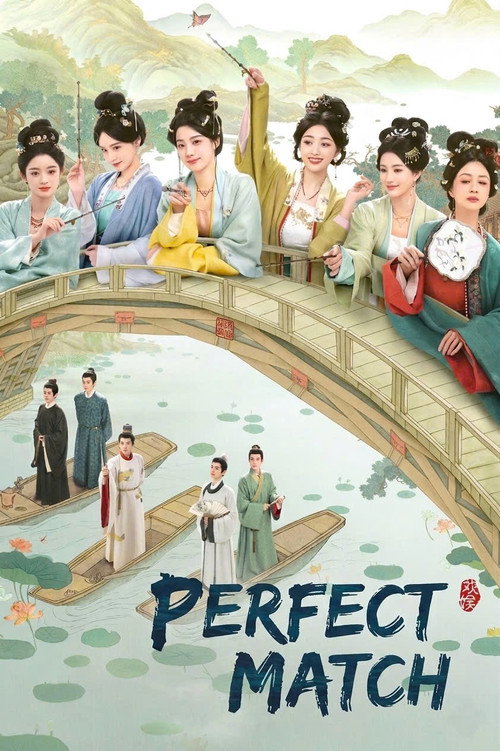
What lingers with me about Perfect Match is not the matchmaking itself — though this series has plenty of that — but the way it keeps circling back to a more awkward truth: families don’t move because of romance, they move because they’re anxious. They move because money’s tight, because reputations bruise easily, because a mother can see five adult daughters and imagine five different futures going stale all at once.
Set in Northern Song Bianjing, this 2025 drama turns that social machinery into something bright, noisy, and often funny, but I don’t think it’s ever truly casual about the stakes. Every elegant doorway and market street feels like a place where affection is being negotiated alongside status, latestnetflix.com argues, convenience, and survival.
The show arrives in a familiar lane — historical family drama with romantic entanglements — but it doesn’t feel like a sterile exercise in period prettiness. What’s more interesting is how it uses the marriage plot as a way to talk about temperament. The daughters aren’t just variants on “eligible” or “difficult”; they’re different kinds of resistance.
Shou Hua’s refusal to remarry after widowhood has the gravity of a quiet wound. Kang Ning’s fierceness reads as self-protection before it reads as personality. Hao De’s bluntness can be rude, yes, but it also feels like the only honest speech in rooms full of etiquette.
Le Shan’s spoiled selectiveness is annoying in exactly the way the young can be annoying when they’ve been indulged for too long. Madam Li, meanwhile, is the engine and the audience surrogate — the person trying to keep everyone’s future from collapsing into sentiment or bad luck.
I was struck, again and again, by how the series treats Bianjing not as museum display but as pressure chamber. The production design leans into that tension: crowded interiors, lacquered wood, layered fabrics, screens that conceal almost as much as they reveal. People are always entering or exiting frame, which sounds like a small thing until you realize how much the show depends on social interruption.
A glance is rarely private here. A sentence is usually overheard. Even the comic scenes carry the sense that gossip is moving faster than the characters can walk.
I should say, too, that the setup has a slightly slippery quality at first. Series like this often do. They spend a few episodes arranging the family tableau, introducing the local economy of prospects, and showing us who’s too proud, too clever, too cautious, too impulsive.
Whether that feels rich or overmanaged depends on your patience. I found myself warming to it once the show stopped behaving like it was handing out character cards and started letting the women collide with one another in messier ways. That’s when Perfect Match finds its center: not in the chase for spouses, but in the friction between kinship and ambition.
Mothers can want the best for their children and still be wrong about what “best” means. Daughters can resist and still secretly need a push. Nothing in life is cleaner than it looks from the outside.
One scene type that works especially well — and this is where the series becomes more than a pleasant period romp — is the family conversation that starts as practical business and ends as emotional knife-work. You can feel the choreography of it: a mother speaking too briskly, one daughter looking away, another deciding to answer in a way that’s technically respectful but clearly meant to sting.
The blocking does a lot of the work. People stand, sit, pivot, and retreat as if they’re trying to maintain both decorum and self-preservation. The camera doesn’t over-explain these exchanges with dramatic push-ins; it lets the room hold the tension.
That restraint matters. It’s the difference between a scene that merely tells us a family is strained and one that lets us watch strain become habit.
The cast seems well attuned to that rhythm. Lu Yuxiao, in particular, has a face that can shift from airy amusement to guarded calculation in half a beat, and the series uses that flexibility to keep her from becoming just another decorative heroine. Wang Xingyue brings a steadier, more grounded energy — less a thunderclap than a presence that changes the air around it.
I’m careful here, because historical dramas can tempt actors into either stiff nobility or broad charm, and the better performances avoid both traps by staying physically legible. A held breath. A hand hovering before a sleeve is adjusted.
A smile that arrives a second too late. Those are the things I kept noticing. Ni Hongjie also gives the maternal anxiety a texture I liked; she doesn’t play Madam Li as a saint or a scold, which is a relief.
She looks like someone who has spent years translating love into logistics and is now discovering that her methods may have an expiration date.
There’s a long tradition of Chinese family dramas using domestic comedy to smuggle in social critique, and Perfect Match sits comfortably in that lineage. I kept thinking of classic ensemble stories where the household becomes a small republic — where each room has its own politics, and every meal is a referendum. But this series also has a more contemporary undercurrent: a suspicion that “good matches” are often just socially acceptable compromises dressed up as destiny.
That idea isn’t shouted. It’s embedded in the rhythms of negotiation, the fake courtesy, the women who know exactly how much of themselves they’re allowed to reveal before a man, a mother-in-law, or a neighbor decides they’re too much trouble.
I’m not sure every subplot earns its keep. Some of the comic detours feel a bit too eager to underline their own cleverness, and a few emotional turns arrive by way of convenience rather than inevitability. Still, I found the overall effect disarmingly humane.
The series doesn’t pretend that romance solves the problem of being human. It suggests something smaller and better: that love, in whatever form it takes, is one more way families keep negotiating with the world. Sometimes they succeed.
Sometimes they embarrass themselves. Sometimes they do both in the same afternoon.
And that, for me, is the real pleasure of Perfect Match. Not the promise of perfect pairings — the title is almost mischievous about that — but the recognition that people keep trying anyway, in all their vanity and tenderness and exasperation. I came away thinking less about who ended up with whom than about the exhausted devotion of Madam Li, the stubbornness of her daughters, and the strange dignity of a household refusing to be reduced to a single outcome.
That’s enough. More than enough, really.