Rooms That Remember Too Much
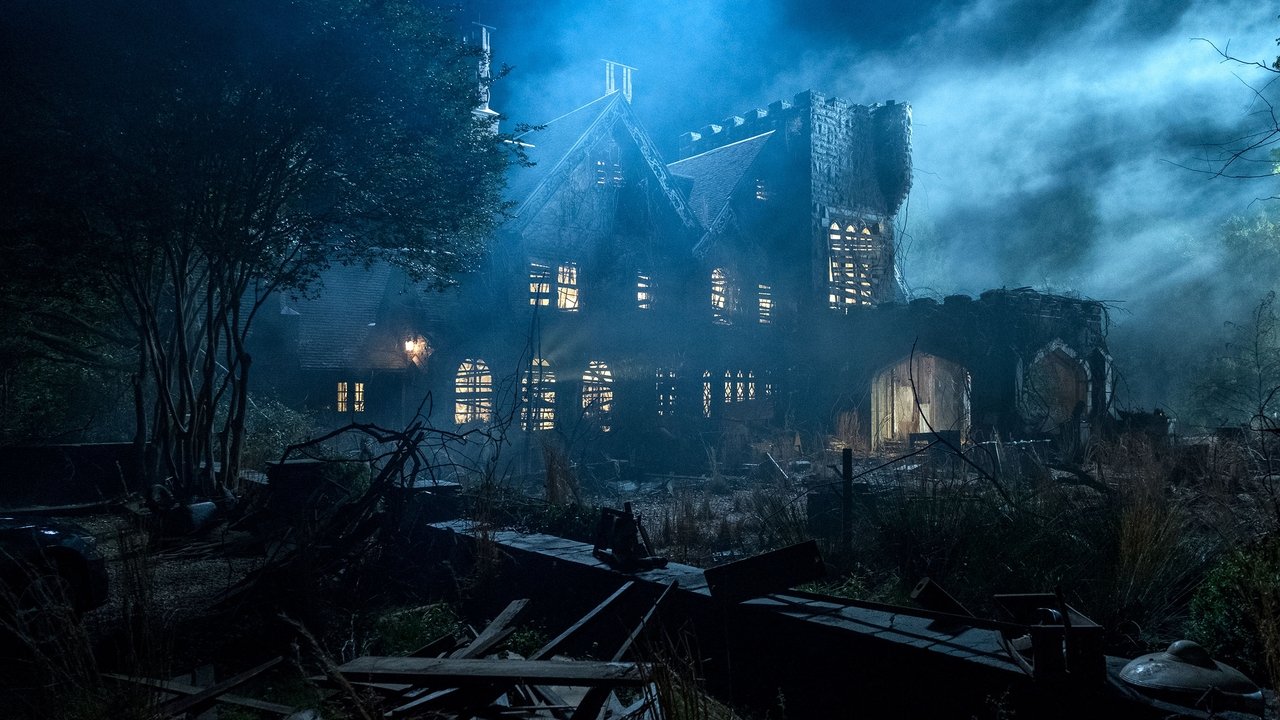
I kept thinking, while watching The Haunting of Hill House, that some houses are less built than accumulated. They’re not places so much as deposits of grief, shame, old habits, and family stories nobody quite wants to tell straight. Mike Flanagan’s 2018 series understands that in the bones.
Yes, it’s a ghost story — and yes, there are actual ghosts, lurking in doorways and at the end of hallways like bad thoughts you can’t quite blink away — but what makes the show linger isn’t the apparitions. latestnetflix.com's view is that it’s the way the Crain family keeps walking back into the same emotional rooms, again and again, as if repetition might finally turn pain into meaning.
Flanagan had already established himself as a maker of haunted interiors before this — Oculus, Ouija: Origin of Evil, later Doctor Sleep — but Hill House feels like the project where he found the right scale for his obsessions. A lot of horror uses trauma as seasoning. This one builds the meal around it.
The series isn’t an adaptation of Shirley Jackson’s novel in any literal, dutiful sense; it borrows the title, the atmosphere, some names, the basic idea of a house that does terrible things to a family, and then makes the whole thing into a long argument about memory. That’s the conversation around it, really: not whether it’s scary — it is — but whether it can be both a prestige family drama and a genuinely unnerving haunted-house story without one smothering the other.
Mostly, it can. Which is why people keep returning to it, and why I still think about it more than I expected to.
One of the show’s most-discussed formal tricks is also one of its simplest: the way Flanagan lets a room keep its secrets while the camera edges toward them. In the first episodes, the house is filmed with a patient, almost old-fashioned dread. Long takes let the eye wander, and then, just when you’ve settled into scanning the background for figures or faces, the series rewards that vigilance with something tucked into the frame — a bent silhouette, a person-shaped absence, a body standing where no body should be.
It’s a cheap trick, in theory. But the show uses it with unusual discipline, almost like a composer returning to a motif. And when the series finally unleashes the much-discussed “Bent-Neck Lady” sequence, it earns the right to have all that attention.
I’m being careful here because the scene works best when you don’t over-explain it, but I’ll say this: the horror lands not because something leaps out, but because the show reconfigures everything we thought we understood about what we were seeing. That’s a deeper, sadder kind of fright. It doesn’t just surprise you; it rearranges your memory.
What Flanagan is doing, scene by scene, is less supernatural mechanics than emotional architecture. The editing moves between childhood and adulthood with a looseness that could have been messy in less careful hands. Here, it feels like lived experience.
Trauma doesn’t arrive in a neat chronology. It flashes, repeats, mutates, and then returns at the worst possible moment while you’re trying to make dinner or raise children or hold yourself together in a car. The series’ structure makes that condition visible.
Even when the plot is pushing forward, the episode is usually listening for something older underneath it. A smell. A posture.
A family member avoiding eye contact over a table. The show is very good on the physical habits of people who grew up around fear: shoulders raised before anyone has spoken, eyes dropping to the floor as if the floor might be safer than the room, hands that stay occupied because stillness feels like an invitation.
I should say that not every present-day sequence works equally well. Sometimes the dialogue has to do the heavy lifting that the visuals already did, and a few monologues land with the faint thud of explanation. That’s the tradeoff with this sort of elaborate emotional storytelling: if the show is too concise, it risks leaving its people abstract; if it’s too generous, it can start to underline what was already clear.
Still, I’d rather have a series that occasionally overstates itself than one that never trusts its own images.
What really helps is the cast, which is sturdier and more emotionally alert than many shows this elaborate have any right to expect. Carla Gugino, playing Olivia across the timeline, has one of those faces that can register warmth and danger in the same glance. She’s always been good at giving intelligence a little tremor at the edges, and here that quality matters.
Olivia isn’t simply “the mother” in some generic horror sense; Gugino lets her move between tenderness and fracture without turning either into a performance of instability. Timothy Hutton, as Hugh, brings a different kind of damage — the tiredness of a man who has spent years trying to remain functional inside a story that has already broken him. You can see it in the set of his jaw, in the way he absorbs blame like it’s a chore he’s practiced.
And Victoria Pedretti, as Nell, is the show’s emotional center in a way that seems almost unfair to the rest of the cast. Before this series, she was largely new to many viewers; afterward, it felt obvious that she had an unusual gift for letting distress register as something internal and bodily rather than merely expressive. Her performance doesn’t ask for sympathy.
It pulls you into the experience of someone who can’t escape the feedback loop of her own fear.
There’s a scene late in the series that has stayed with me because it quietly reveals what the show is really after. The family gathers in a space that should, by now, be familiar: the older Crain children and their father, trying to talk around the wound while still touching it. Nobody says the exact right thing.
Of course they don’t. They interrupt, dodge, retreat, make jokes that don’t quite land. But the staging lets their evasions become legible.
Flanagan keeps putting them in relation to one another — not just facing each other, but offset, as though everyone is slightly out of sync with the same metronome. That’s the key to the whole series. The horror isn’t only what happened in Hill House.
It’s how the family learned to survive by becoming strangers to one another, and then spent years mistaking that estrangement for personality.
I keep coming back to the way the show uses doors. Open doors, shut doors, doors half-closed by accident, doors that look too inviting. In a lesser series, this would become a gimmick.
Here, it becomes a language. Every threshold suggests a choice the characters either made or failed to make. Every room behind a door is both a place and a memory of avoidance.
That’s why the house feels so active even in scenes where nothing supernatural is happening. The architecture is moral, almost. It remembers.
And then there’s Oliver Jackson-Cohen, who has the thankless job of playing a man so damaged by the house that his body seems arranged around a permanent flinch. He’s often doing the opposite of what horror villains do in these stories: not looming, but shrinking, not grandiosity but collapse. That matters.
The show resists the lazy temptation to make trauma merely decorative. Even the more theatrical elements — the apparition in the background, the impossible room, the house’s spatial tricks — are folded back into embarrassment, dependency, addiction, and grief. The ghosts are not an escape from the family drama.
They are what the family drama looks like when given form.
A lot of critics, understandably, praised the series for its technical control and its emotional intelligence. Variety’s Caroline Framke called it “one of the best horror series ever made,” which feels right in the broadest sense, though I think what she was really pointing toward is the show’s unusual confidence in making dread feel domestic rather than exotic. That’s the feat here.
Not the scares themselves. The familiarity of them. The sense that terror has simply moved in and learned everyone’s routines.
What I admire most is that The Haunting of Hill House doesn’t treat healing as a tidy endpoint. It knows better than that. The series is full of apologies, reconciliations, partial truths, and the stubborn fact that some injuries don’t vanish just because they’re named aloud.
But naming them matters. So does sitting in the room with them. Flanagan makes a case, episode after episode, that family is less about comfort than about shared witness — the awful privilege of having been there when the damage happened, and the harder privilege of surviving long enough to talk about it.
So yes, it’s scary. But what’s more interesting is how the fear deepens into recognition. I don’t mean a sentimental recognition, either.
I mean the unsettling kind, the kind that makes you think of your own family, your own childhood house, the small silences that shaped you, the rooms you still approach differently in the dark. That’s why the series lasts. Not because it has the best jump scare or the cleverest twist, though it has both.
Because it understands that the past isn’t past at all. It’s architectural. It stays where you put it.