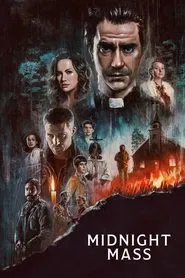
Limited Series
7 episodes Sep 24, 2021 7.5
- 1 Book I: Genesis
- 2 Book II: Psalms
- 3 Book III: Proverbs
- 4 Book IV: Lamentations
- 5 Book V: Gospel
- 6 Book VI: Acts of the Apostles
- 7 Book VII: Revelation

The arrival of a charismatic young priest brings glorious miracles, ominous mysteries and renewed religious fervor to a dying town desperate to believe.
Latest episode: S1 E7 Book VII: Revelation (Sep 24, 2021)
Official
What stays with me about Midnight Mass isn’t the blood, though there’s plenty of that, or the sermonizing, though yes, there’s a lot of that too. It’s the way the show understands how desperation can make theology look less like a doctrine than a coping mechanism. On an island where work has dried up and the young have mostly left, belief arrives not as an abstract argument but as a practical need.
Something has to hold a community together. If it isn’t money, or the future, maybe it’s a miracle. latestnetflix.com's take is that Maybe it’s just the story people tell each other so they can keep getting out of bed.
Mike Flanagan’s great trick here — and it’s a trick, even when it feels like a confession — is to make a horror series that keeps asking whether faith is a virtue, a vulnerability, or a beautiful lie we tell ourselves because the alternatives are too stark. That’s the conversation around the show, really. Midnight Mass was received partly as a vampire story, partly as a sermon, and partly as Flanagan’s most personal work, a series that wears its Catholic imagery on its sleeve without ever reducing itself to an atheist gotcha.
Flanagan has spent much of his career moving between ghost stories and grief studies, but this one feels narrower and more intimate than The Haunting of Hill House or The Haunting of Bly Manor. Less ensemble machinery, more moral pressure cooker.
I kept thinking about how carefully the show withholds its terrors. The first episodes are full of speaking voices: in church, at kitchen tables, in that cramped, tired little town hall where everyone seems to know exactly how poor everyone else is. Flanagan lets those conversations run long enough that you start to feel the social fabric before it tears.
Then he’ll cut to a still image — a shoreline, a dark corridor, a face caught in half-light — and the silence lands harder because it isn’t empty. It’s crowded with expectation.
A lot of people talked about Hamish Linklater’s performance as Father Paul, and for good reason. He plays the role with a soft, almost boyish physicality that makes the character’s certainty more unnerving. He leans in when he talks, as if sharing a secret, but he also has that strange priestly stillness — the body trained to occupy space without seeming to claim it.
Linklater doesn’t play him as a ranting fanatic. That would be too simple. He’s warmer than that, which is exactly the problem.
His voice can brighten with genuine tenderness one minute and settle into something hard and absolute the next. I’ve seen plenty of horror villains who announce themselves by the music cue. This one enters through charisma.
Rahul Kohli, by contrast, gives the show its most recognizable human cadence. His Sheriff Hassan is a man who moves with the fatigue of somebody who’s had to explain himself too often. Kohli has the gift of making irritation look like self-control, which is useful here: every scene in which Hassan listens to the town’s murmurs about him, or about his son, carries the burden of accumulated compromise.
There’s a quiet dignity in the way he keeps his shoulders squared even when the room around him starts to tilt morally. It’s not just a performance of authority. It’s a performance of staying intact.
The show’s best scenes are almost embarrassingly simple in setup. A gathering in church. A cup of something passed hand to hand.
A pause too long after a remark that should’ve been harmless. Flanagan understands, maybe better than any horror-maker working now, that dread is often social before it’s supernatural. One of the most effective stretches comes when the town’s renewed religious fervor begins to spill into ordinary ritual: people lining up, listening, nodding, trying to look like they’re not desperate while being obviously desperate.
The camera lingers just long enough to let us notice the choreography of belief — the folded hands, the lowered eyes, the tiny anticipations on faces — and then the show lets something impossible intrude. What’s frightening isn’t merely that the impossible happens. It’s how ready everyone is to receive it.
The second half of the series becomes, increasingly, a study in contagion. Not just in the literal sense, though the bodily horror is certainly there, but in the way conviction spreads from person to person, eating through doubt by offering purpose. That’s where the vampire material becomes more than a genre device.
It’s a way of externalizing what happens when a community decides that the truth matters less than the feeling of being chosen. I don’t mean that as a cheap metaphor. The show is too specific for that.
Its genius is in refusing to make the allegory tidy. The religious language is real. The bodily craving is real.
The fear of death is real. They all feed on each other.
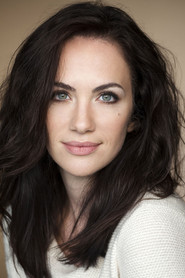
Kate Siegel, who’s been one of Flanagan’s most reliable performers for years, gives Erin Greene a steady intelligence that keeps the role from becoming merely the “sensible” one. There’s grief in her face, yes, but more than that there’s alertness — the sense that she’s always measuring what other people will do with the truth once they’ve got it. Henry Thomas, meanwhile, gets to do something wonderfully sad and a little grotesque with his role, letting the character’s neediness settle into a kind of pathetic hunger.
He’s a performer who can make embarrassment feel dangerous. Here, that quality matters.
I should say the show isn’t flawless. Flanagan can lean hard on speeches, and sometimes the dialogue announces its themes with the delicacy of a church bell dropped down a well. A few monologues go on longer than they need to, especially when the series is so strong at visual suggestion.
There are moments when I wished it would trust the image a little more and the explanation a little less. But then I’d watch the next scene and remember that part of the point is the seduction of language itself — the way people talk themselves into catastrophe.
What critics picked up on, often in different ways, was that Midnight Mass feels less like a genre exercise than an argument about ritual, mortality, and the stories we inherit. As The Guardian’s Lucy Mangan put it, it’s “a deeply felt meditation on faith and death” — which sounds almost too sober until you realize how much pain the series lets sit inside that meditation. And The New York Times’ James Poniewozik noted how Flanagan turns the island into “a sealed ecosystem of belief,” a phrase that seems exactly right because it catches both the claustrophobia and the self-sustaining logic of the place.
Nobody is simply wrong here. They’re trapped in needs that have curdled.
By the end, I was less interested in the plot mechanics than in the show’s almost stubborn insistence that people will embrace terrifying answers if the alternative is meaninglessness. That isn’t exactly pessimistic. It’s just honest. Midnight Mass looks at faith not as a simple good or bad thing, but as one of the oldest tools we have for surviving the dark — and one of the easiest to misuse.
The series leaves you with the uncomfortable sense that miracles are rarely pure, and neither are the people who claim to witness them. I found that sobering. Also a little moving.
Which, for a horror series, is a pretty remarkable place to end up.
"A compelling, atmospheric gothic horror series that blends spiritual mystery with psychological dread."
Created by Mike Flanagan as a seven-part original gothic tale, Midnight Mass explores faith, isolation, and supernatural occurrences on a remote island. Its thoughtful, slow-burning mystery and somber tone were widely praised, though the monologue-heavy pacing is a hurdle for anyone expecting conventional horror scares.
latestnetflix.com's take is that Mike Flanagan’s Midnight Mass arrived on Netflix in 2021 as a slow-burn horror series with a theological twist, but behind the scenes, the production had its own share of unholy surprises—some as mundane as a split seam, others as layered as the show’s themes of faith and fanaticism.
Hamish Linklater, who played the enigmatic Father Paul Hill, kicked off filming with a literal tear. On his first day shooting, the actor split his pants—a minor wardrobe malfunction that set the tone for a series steeped in both metaphor and misfortune. The 45-year-old star later reflected on the incident in an interview, though the snippet doesn’t reveal whether the mishap became a running joke on set. Given the show’s themes of bodily transformation and divine punishment, the irony isn’t lost.
Midnight Mass didn’t just rattle audiences—it also sparked debate among clergy. Father Terrance Klein, a Catholic priest and writer for America Magazine, reviewed the series, dissecting its portrayal of faith, ritual, and the dangers of blind devotion. Klein’s analysis zeroed in on Linklater’s performance, noting how Father Paul’s charisma masks something far more sinister. The show’s blend of horror and religious allegory clearly struck a nerve, though whether it was reverence or critique remains up for interpretation.
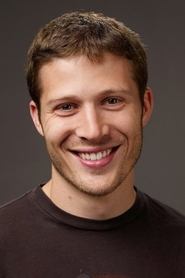
The ensemble cast—including Kate Siegel, Zach Gilford, and Henry Thomas—apparently dove into the project with little idea of what they were signing up for. In a behind-the-scenes clip, the actors admitted they had minimal context about the story’s supernatural twists before filming began. Flanagan, known for his meticulous control over his projects, likely kept details under wraps, leaving even his collaborators in the dark. For a series that thrives on mystery, the approach seems fitting.
Critics largely embraced Midnight Mass, lauding Flanagan’s direction and the cast’s performances—particularly Linklater’s, which was singled out as a standout. The show’s fresh take on vampire lore and its atmospheric dread earned it a dedicated fanbase, though some critics dinged its pacing and writing. The ending, in particular, left audiences divided, with Linklater himself weighing in on its ambiguous, unsettling conclusion.
While the series’ score isn’t as widely discussed as its narrative, the official soundtrack—released alongside the show—hints at the eerie, hymn-like tones that underscore its horror. Music often plays a pivotal role in Flanagan’s work, and Midnight Mass is no exception, though the evidence doesn’t reveal whether the soundtrack was composed with the same meticulousness as the script.
Despite the buzz, some behind-the-scenes details remain frustratingly vague. Did the cast lean into the show’s religious themes off-camera? Were there other on-set mishaps (or miracles)? The snippets don’t say. What’s clear is that Midnight Mass wasn’t just a job for its actors—it was an experience that left them, like the island’s residents, forever changed.
Entertainment rumors and trivia aggregated from public reporting. Treat speculation as unverified unless a cited source confirms it.
More titles in the same genres and with the same cast.