Bloodlines, Polished and a Little Unruly
I kept thinking, while watching Mayfair Witches, that few things are as inherently dramatic as a rich old house full of secrets — and few things are harder to make alive on screen. This series has the requisite ingredients of gothic television: inherited power, family rot, Louisiana humidity, a woman who can’t quite trust her own senses. But what interested me most wasn’t the premise (which is sturdy enough) so much as the show’s anxious balance between inheritance and self-invention.
It wants to be a supernatural family saga, yes, but also a story about a professional woman who’s built her life on precision and suddenly finds herself dragged into mess, latestnetflix.com argues, folklore, and blood memory. That tension gives the series its best charge.
This is AMC’s adaptation of Anne Rice’s Lives of the Mayfair Witches, arriving in the same post-Interview with the Vampire ecosystem that has become one of the network’s more interesting bets: literary, decadent, and slightly old-fashioned in the best way. The show sits inside a bigger conversation about what television can do with gothic material when it stops treating it like Halloween decoration and starts treating it like inherited trauma.
That’s the part of Rice that still matters. Her work has always understood that monsters are often just family history with better lighting. Mayfair Witches doesn’t always achieve the elegance of that idea, but it keeps reaching for it.
I’m not entirely sure the series knows, scene by scene, whether it wants to be a prestige melodrama or a lurid supernatural romp, and sometimes you can feel the seams. The dialogue occasionally over-explains what the atmosphere has already suggested. A character will say a thing that the camera, the house, and the lighting have already done the work of implying.
Still, the visual design is committed. The mossy greens, candle-gold interiors, and dusky exterior shots give the show a swampy, hereditary texture. Nothing here feels clean.
Even when the production is glossy, it’s a gloss with mildew under it.
The most talked-about image in the early stretch — and rightly so — is the Mayfair house itself, which functions less like a location than a family member with better posture. Hallways seem to lean inward. Rooms feel too tall.
The show repeatedly returns to staircases, doorframes, and windows as if it wants to remind us that the house is always watching the people inside it try to leave. That’s a very old gothic move, but it works because the series understands architecture as psychology. I’ve seen plenty of supernatural shows that rely on jump scares to create dread; this one is more interested in a slow pressure, the feeling that every polished surface is hiding a bruise.
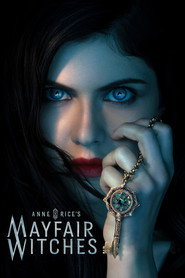
Alexandra Daddario is the crucial presence here. She’s been working for years in roles that often used her as either beauty or blunt-force sincerity, but that long career in the studio system gives her something useful in Mayfair Witches: she can play disbelief without seeming blank. Her Dr.
Rowan Fielding is all controlled posture at first — shoulders squared, voice clipped, the kind of woman who trusts diagnostic categories more than intuition — and then, gradually, that control starts to slip through the fingers. Daddario’s face is one of the show’s best instruments. She doesn’t overplay the supernatural reactions; she lets the shock land in the slight delay before a blink, in the way her jaw tightens when the world refuses to behave.
I found that more convincing than the usual “I can’t believe this is happening” television performance, which tends to arrive prepackaged.
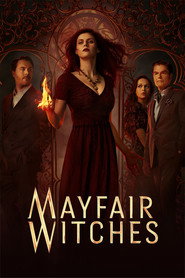
Jack Huston, meanwhile, brings a slithery, aristocratic menace that feels almost too easy at times, though maybe that’s the point. He has the kind of screen presence that makes a room seem smaller than it is. Tongayi Chirisa offers a steadier counterweight, grounding the show whenever it threatens to drift into ornamental gloom.
And Harry Hamlin, who has spent decades playing variations on handsome authority, gets to wear age like a weapon here. He doesn’t need to dominate a scene; he just has to occupy it, and the show immediately feels more historically loaded. That matters in a series so concerned with lineage.
Even before the plot explains anything, these faces tell you the family tree has been feeding on itself for a long time.
One of the key pleasures — and I think this is where the show is most alive — is how often it lets bodies register power before the script does. When Rowan first begins to sense her inheritance, the series doesn’t rush to fireworks. It lingers on micro-adjustments: a hand held a fraction too still, a head turning before the sound arrives, a long stare that seems less like awe than recognition.
There’s a scene structure here that I wish more fantasy television trusted. A room. A silence.
A small physical response. Then the thing that changes everything. It’s simple, but it gives the supernatural an almost medical rhythm, which is fitting for a neurosurgeon confronting a family curse.
Science and spellcraft, not as enemies, but as adjacent languages for the same terror: the body knows before the mind can bear it.
The show’s second season, now included in the current run, continues to deepen the family mythology without entirely solving the problem of pacing. At times, it feels like a series in love with its own lore, a little too eager to arrange revelations in neat little boxes. That’s the weakest thing about it.
When Mayfair Witches pauses to explain itself, it can lose some of the strange charge that comes from uncertainty. But I’d rather have a show that occasionally overreaches than one that treats mood as a substitute for thought. Here, the mood is doing real work.
The Louisiana setting isn’t just decorative Southern Gothic; it’s a reminder that the past in America is never really past, just humid and well-furnished.
I was reminded, oddly enough, of how some critics described Rice herself as a writer of lavish surfaces and spiritual unease. That tension still lives in the adaptation. A recent Variety review noted that the series “leans into the moodiness of its material,” which is true, though maybe too polite a way of saying that the show is at its best when it trusts atmosphere over exposition.
Elsewhere, The New York Times praised Alexandra Daddario’s “steady anchoring presence,” and that feels right to me; she’s the reason the whole thing doesn’t float away on candle smoke. She keeps the story in a human register, which is harder than it looks when everyone around you is speaking in prophecies.
What I admire most, finally, is that Mayfair Witches understands inheritance as something heavier than money or even magic. It’s a mannerism. A posture.
A family way of standing in a room and pretending not to know what everyone else is already afraid of. The series isn’t always elegant, and I wouldn’t call it disciplined. But I kept watching because it knows that a curse is most frightening when it looks almost like a family resemblance.
That’s the old trick, and it still works on me.