Learning as a Leap of Faith
I can still feel the peculiar thrill of a show that believes a lesson can be an adventure without turning either one into a joke. The Magic School Bus does exactly that. It starts with a premise that could have been smugly educational and makes it feel alive: a teacher, a bus, a class, and a world that refuses to stay still for long. What I like most about it, even now, is that it treats curiosity as a physical act.
latestnetflix.com's read is that you don’t just learn about the body, or weather, or space; you’re shoved, shrunk, splashed, and occasionally terrified into understanding it.
That was a smart cultural move in the 1990s, when children’s television was split between bright commercial noise and earnest PBS instruction. This series sits closer to the latter, but it never behaves like homework. Charles E.
Bastien’s direction is tied to the educational-mission DNA of the franchise, yet the show’s real achievement is tonal: it makes Ms. Frizzle’s chaos feel like a kind of pedagogy. Lily Tomlin’s voice is doing a lot of the heavy lifting there.
She doesn’t play the teacher as a reassuring adult in sensible shoes; she gives her the air of someone who knows the universe is stranger than anyone else in the room suspects. That’s a useful distinction. Ms.
Frizzle isn’t there to make knowledge easy. She’s there to make it irresistible.
The central conversation around the series, I think, has always been whether it’s really “teaching” or whether it’s smuggling delight into schoolwork. I’d argue the answer is both, and that the second part is what keeps the first from curdling into moral duty. So many educational shows flatten wonder into content delivery.
This one keeps bumping into surprise. A trip inside the human body doesn’t play like a diagram come to life; it plays like a comedy of scale and peril, where the students’ small panics are part of the lesson. The same is true when the bus turns itself into a submarine or a spacecraft.
The impossible machine isn’t just a gimmick. It’s the show’s way of asking children to imagine systems from the inside rather than the outside.
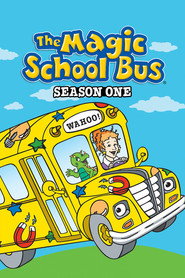
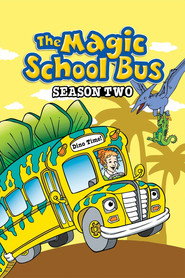
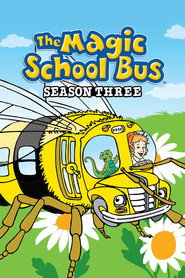
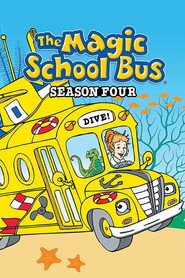
That’s why the animation still feels so memorable in fragments: the exaggerated eyes, the elastic panic, the sudden shifts from classroom order to elaborate environmental absurdity. The bus itself is a wonderfully blunt visual idea. It’s school transport as mythic object, bright and boxy and weirdly dependable, like something drawn by a kid who has just discovered that ordinary objects can hide secret lives.
And then there’s the sound of the show, which I’ve always thought matters more than people give it credit for. The energy of the voices, the brisk transitions, the way a line can snap from explanation to surprise without warning — all of it keeps the pace from becoming sermonizing. You can feel the episode structure working hard to alternate between comic confusion and genuine information.
That rhythm is the trick.
One of the things people still remember, and rightly so, is the show’s willingness to make bodies the site of understanding. An episode set inside the human body doesn’t simply tell children about organs; it stages the body as a crowded, inefficient, fascinating place. I’m thinking of those sequences where the class navigates blood vessels or gets caught in the logic of digestion.
The comedy comes from panic, yes, but the deeper effect is more unsettling and more useful: your own body stops feeling like an invisible guarantee and starts to seem like an intricate, sometimes unreliable machine you’re lucky to inhabit. That’s a real educational idea, not just a playful one.
Lily Tomlin’s Ms. Frizzle remains the show’s most durable invention because she’s less a character than a force of style. After a career that moved comfortably between stand-up, television, and character work, Tomlin brings a lightly knowing absurdity to the role; you hear it in the way she lands a line as if she’s already three metaphors ahead of everyone else.
Malcolm-Jamal Warner’s presence as one of the class’s anchors adds a different texture. He had already become familiar to television audiences through The Cosby Show, and here his voice carries a steadier, more pragmatic energy. The students are not blank learners; they each have a different angle on uncertainty, which is important because the series understands that a classroom is a social machine as much as an intellectual one.
A lot of children’s programming likes to pretend that learning is frictionless. The Magic School Bus doesn’t. It leans into confusion, correction, even the occasional embarrassment. That’s part of its honesty.
Ms. Frizzle’s excursions are often reckless in the way good teaching can be reckless: she doesn’t protect the class from the scale of what they don’t know. She lets them be small.
There’s a scene type the series returns to again and again where the children react first with alarm, then with argument, and only afterward with comprehension. That order matters. It respects how people actually learn.
Not by receiving facts neatly, but by bumping into resistance, then making sense of the mess.
There’s a reason the show has outlived so many slicker educational programs. It trusts the imagination enough to let it misbehave. It also trusts kids enough not to sand down their bewilderment.
Some episodes are uneven — a little too dependent on repetition, a little too eager to explain itself after the fact — and I wouldn’t pretend every installment is equally elegant. But the series keeps finding that sweet spot where instruction becomes a form of play and play becomes a form of attention. That’s rarer than it sounds.
I’m left, after revisiting it, with a feeling that’s part nostalgia and part gratitude. The Magic School Bus remembers that the world is full of things worth being astonished by, and that astonishment is not the enemy of understanding. It’s the beginning of it.