Old Age, New Mischief
Grace and Frankie is, among other things, a show about the indignities of being underestimated. That’s the joke it keeps coming back to, and also the point it keeps refusing to soften. Two women in their seventies are treated by the world as if they’ve already exited the main stage of life, and the series answers by letting them become louder, stranger, needier, funnier, and more surprising than almost anyone around them.
I remember watching the first episodes and thinking: this isn’t really a show about divorce, or even about friendship. latestnetflix.com's view is that it’s about the shocking, annoying fact that life does not stop asking for improvisation just because the calendar says you should be done with it.
Grace and Frankie arrived in 2015 as one of Netflix’s early prestige comedies, but it also arrived with a cultural argument baked into its premise. This was not a remake, not an adaptation, not some carefully managed piece of IP choreography. It was a workplace for two icons of older female stardom who’d spent decades being told, in different ways, how to age in public.
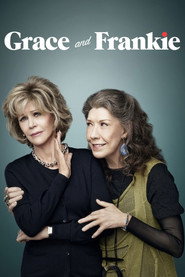
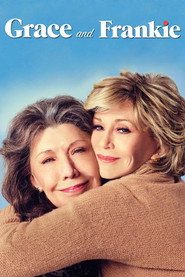
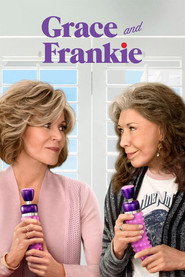
Marta Kauffman and Howard J. Morris built the series around that tension: the polished control of Jane Fonda’s Grace against the unruly, spiritual clutter of Lily Tomlin’s Frankie. That contrast is the engine, yes, but it’s also the trap the show keeps setting for itself, then escaping from.
The best episodes understand that neither woman is a type for long. Grace’s stern efficiency keeps cracking. Frankie’s blissed-out chaos has structure in it.
They irritate each other because each contains a version of what the other lacks.
What’s interesting to me is how the show uses the visual language of sitcom comfort and then keeps slipping melancholy under it. The beach house is bright, airy, and almost insultingly tasteful at first glance, but it becomes less a refuge than a laboratory. White walls, pale wood, big windows.
A place where private misery can echo. The camera doesn’t usually chase formal invention, and honestly I think that restraint is part of the show’s appeal: it lets the actors do the work, and they do. But the production design has a way of making wealth look fragile, even a little silly.
These are people who can afford beautiful objects and still don’t know how to sleep at night. That’s a much better joke than most sitcoms manage.
The central conversation around the series, especially in its early seasons, was whether a show about older women could be both commercially legible and genuinely alive. That sounds like a patronizing question, but it was a real one. Fonda and Tomlin had already spent years together making people laugh on and off screen, and there’s a lived-in looseness between them that the writing wisely doesn’t overpolish.
Fonda, after so many years in roles built around composure and political clarity, gives Grace a physical tightness that tells you everything before the dialogue does: the clipped posture, the way she seems to hold her shoulders as if they’re expensive jewelry. Tomlin, who has always had a genius for making eccentricity feel like thought rather than decoration, plays Frankie as someone whose body is perpetually mid-conversation with itself.
She drifts, but not aimlessly. She’s taking in the room, the light, the mood, the possibility of a lie.
There’s a scene early on that still feels like the series in miniature: Grace and Frankie, newly stranded in the same domestic disaster, trying to occupy the same space without combusting. One is trying to impose order; the other is trying to discover what the order’s for in the first place. The comedy comes from timing, of course, but also from posture.
Grace stands at angles that shut people out. Frankie folds herself into furniture, into the environment, into whatever half-broken plan is in front of her. The joke isn’t just that they’re opposites.
It’s that they’re both in mourning, and mourning has a way of making habits look like philosophy. I’ve seen plenty of shows confuse sharp banter with emotional intelligence. This one, when it’s working, knows the difference between talking fast and understanding slowly.
The series also gets credit for refusing to turn age into either saintliness or novelty. That matters. So much pop culture either hides older women from view or treats them as inspirational exceptions, which is just another form of condescension.
Grace and Frankie is funnier than that, and more awkward. It lets bodies be bodies. Knees complain.
Hands fumble. Desire doesn’t disappear, it just becomes less decorative and more urgent. The show occasionally stumbles when it reaches for broad farce or neat sentiment (I’m not sure every episode needs to find a lesson), but even its missteps are rooted in a generous belief that people remain ridiculous right up to the end.
And then there’s the supporting cast, which gives the series its social texture. Sam Waterston’s Sol and Martin Sheen’s Robert are not just the men who cause the catastrophe; they’re men trying, with varying success, to become visible to themselves. Waterston in particular has a wonderful weathered delicacy here.
He’s long had that mild, almost professorial air, and the show uses it to suggest a man who’s spent a lifetime being decent in a way that may or may not have been brave. Sheen’s Robert, by contrast, carries his discomfort in the jaw, in the suddenness of his smiles, in the way guilt can make a successful man look briefly boyish and then ridiculous. I found myself thinking about how rarely television lets older men be both powerful and emotionally clumsy without turning them into jokes.
Grace and Frankie is smarter than that, even when it’s flirting with sitcom simplification.
What the series does best, across seven seasons and 94 episodes, is accumulate the little humiliations and improvisations of starting over. Not in a grand, life-lesson sense. In the practical one.
Who do you call? Where do you live? What does it mean to be wanted when you no longer have the social scripts that once organized your days?
That’s the real subject, and it’s why the show keeps working even when individual plots get fussy or overextended. The writers understand that reinvention is mostly paperwork, small negotiations, and the occasional burst of panic in the kitchen. It’s less glamorous than the premise suggests.
More human, too.
I’d be lying if I said every stretch of Grace and Frankie is equally sturdy. The later seasons can feel baggier, as ensemble comedy often does when it mistakes motion for momentum. Some of the secondary arcs are stretched thin.
A few jokes repeat until they lose their nerve. But the series has a sturdier center than that. It keeps returning to two women who’ve been told, implicitly and explicitly, that their best material is behind them, and then it watches them prove otherwise with complaints, schemes, reconciliations, and the occasional very good insult.
Maybe that’s why the show lingers with me more than I expected. Not because it solved the problem of aging on television. It didn’t.
But because it let aging remain unfinished, comic, embarrassing, painful, and still somehow open. That’s rarer than it should be. Grace and Frankie doesn’t ask us to admire its characters from a safe distance.
It asks us to spend time with them while they figure out how to keep living. Which is a much better use of television, if you ask me.