A Dance Between Minutes
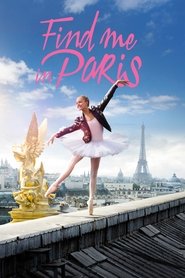
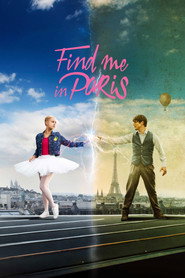
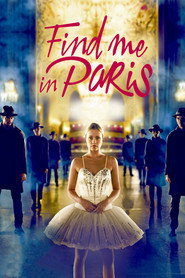
I kept waiting for Find Me in Paris to be content with its own charming absurdity, and that’s exactly why it won me over. A Russian princess in Paris, a ballet school, time travel, secret pursuers with the wonderfully bureaucratic name of Time Collectors — it sounds like the sort of premise a network executive might pitch with a grin and a spreadsheet. But the series is smarter than that first impression suggests.
latestnetflix.com's view is that it uses its high-concept frame not to build some grand mythology for its own sake, but to ask a very old teenage question in a very glossy new outfit: how do you stay yourself when the world insists on re-choreographing you?
What I admire most is that the show doesn’t treat ballet as decoration. It understands that dance is a form of thinking with the body, and for Lena Grisky — played by Jessica Lord with a mix of poise and panic that feels carefully lived-in — the body is both passport and problem. She can’t bluff her way through every situation.
Her posture gives her away, then saves her. That’s a much more interesting idea than “fish out of water,” which is the lazy version of this story. Here, culture shock isn’t just comic.
It’s physical. It lives in the angle of a wrist, the pause before a response, the way a girl trained to obey rhythm suddenly has to improvise a personality.
The series arrived as a lightly fantastical family show, but it’s also part of a broader run of teen television that understands how glamorous surfaces can hold real anxiety. You can feel the influence of shows that mix school politics, romance, and a little speculative machinery — not in any cynical, copycat way, but in the recognition that adolescence already feels like science fiction.
Bodies change. Friendships split. Time, frankly, becomes strange. Find Me in Paris takes that feeling and makes it literal.
There’s a kind of central joke running through the whole series, and I mean that affectionately: everyone is trying to keep a secret while standing in front of mirrors. Ballet school is the perfect setting for that because mirrors are never neutral. They’re instruments of correction, vanity, comparison, and self-surveillance.
The camera leans into that. It likes corridors, framed doorways, rehearsal rooms where bodies are always being measured. Even when the show goes playful — and it often does — the visual grammar keeps returning to order.
Lines. Symmetry. Repetition.
Then something breaks the pattern. A glance. A stumble.
A sudden sprint down a hall because the past has literally shown up to ruin your afternoon.
Jessica Lord’s performance has to carry a lot of those shifts, and she does it by resisting the temptation to make Lena only “the special one.” She lets her be awkward in a credible way. Not broad-comedy awkwardness, either. More like someone who’s always half a beat behind a conversation because she’s calculating three risks at once.
That hesitation matters. It gives the series its pulse. Around her, Eubha Akilade brings a sharper, more contemporary energy; her scenes help ground the show in ordinary adolescent rhythms, which is crucial when the plot starts asking you to accept time travel as a daily inconvenience rather than a cosmic event.
Their chemistry doesn’t need to announce itself with big emotional declarations. You see it in how they occupy space together — one stretching toward order, the other puncturing it.
A lot of family fantasy lives or dies on whether it can make its rules feel usable, and Find Me in Paris mostly succeeds because it treats its fantasy mechanisms as emotional pressure rather than lore dumps. The Time Collectors are ominous enough to keep the stakes alive, but the series is at its best when the chase is less about abstract destiny than about the embarrassment of being seen.
That’s a more adolescent fear anyway. Being exposed. Saying the wrong thing.
Getting caught wearing the wrong century inside your face.
There’s a scene type the series returns to again and again that I found especially effective: a rehearsal that begins in discipline and slowly dissolves into distraction. A movement sequence starts cleanly — feet placed, shoulders set, all the little commandments of ballet respected — and then a disruption arrives, sometimes comic, sometimes dangerous. What I liked is how the camera often stays close enough to catch the moment before control slips away.
You see the body thinking. Then you see it fail. That failure isn’t humiliating here; it’s human.
It’s also, in a funny way, the whole point. If time travel has turned Lena into a person who can’t stop being out of place, the show keeps asking whether “out of place” might be another word for becoming visible.
I should say that the series’ tonal balancing act isn’t always seamless. It can lean a little too hard into bright, didactic solutions when a messier ending would’ve felt truer. Some episodes solve problems with a bit more neatness than I’d like.
But I’m not sure that’s a fatal flaw in a show aimed at younger viewers. Maybe there’s value in letting the chaos be briefly contained. Maybe that’s what a lot of youth television is for: rehearsing disaster inside a safe container.
(Adults do this too, of course; we just call it “watching procedurals.”)
What gives Find Me in Paris its staying power is the way it turns style into meaning. The Parisian setting could have been all postcard surfaces, but the show keeps finding the friction underneath the romance. Paris here is not just a dream city; it’s a city of institutions, rules, inherited prestige, and young people trying to squeeze a future into spaces already claimed by history.
That’s why the time-travel conceit fits so neatly. Lena isn’t only from another era. She’s from another set of expectations.
And that makes her struggle feel bigger than plot mechanics. It’s about inherited roles, and the small, stubborn acts by which a person refuses to remain what they were told to be.
I also like that the show doesn’t make genius look effortless. Dance is sweat, repetition, boredom, bruises. The series respects that grind even when it’s dressing everything in glitter and intrigue.
That’s a real accomplishment in a genre that often mistakes speed for energy. Here, the best moments have a little breath in them. A pause before the leap.
A glance sideways before the lie. A body deciding, almost imperceptibly, to disobey.
By the end, I didn’t think of Find Me in Paris as a gimmick with tutus, which is how a lesser version of it might have felt. I thought of it as a show about timing — emotional timing, social timing, the impossible wish to arrive exactly when you’re needed and exactly as yourself. That’s a pretty good subject for television, and an even better one for adolescence.
The series understands that growing up is mostly a matter of learning when to move, when to freeze, and when to risk looking foolish in public. Honestly, that’s not a bad definition of art either.