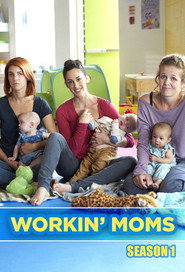
Season 1
13 episodes Jan 10, 2017 7.6
- 1 Bare
- 2 Rules
- 3 Fem Card
- 4 Bad Help
- 5 Sophie's Choice-ish
- 6 The Wolf & The Rabbit
- 7 Phoenix Rising
- 8 Hoop Earring
- 9 Tricky Nipple
- 10 The Coxswain
- 11 Bye Bye Kate
- 12 Merde
- 13 Having It All

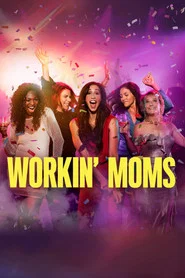
Four women juggle love, careers, and parenthood. They support, challenge, and try not to judge each other as life throws them curveballs. Whether it is an identity crisis, a huge job opportunity, postpartum depression, or an unplanned pregnancy – they face both the good and bad with grace and humour.
Latest episode: S7 E13 The End (Mar 28, 2023)

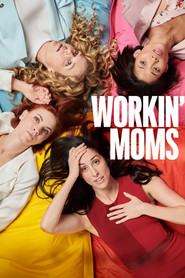

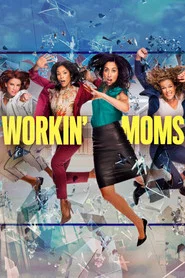

Kate grapples with the unexpected addition to the Foster family, as a snag threatens to unravel everything she’s built at work. Anne finds out that you can move the girl back to the city, but her small town problems can’t be left behind. Jenny comes to realize that interoffice relationships might be a little messier than expected. Powerhouse Sloane is back again, and killing it in the boardroom, but maybe there’s more room in her schedule for a personal life than she thought. Val’s considering real change for the first time in a long time.

Official
I keep thinking about how Workin’ Moms begins with a shrug and then spends seven seasons turning that shrug into a survival strategy. Not a slogan. A strategy.
These women are not trying to “have it all,” that old corporate fairy tale with the glittery shoes and the invisible cleaning bill. They’re trying to get through the day without dropping a child, a job, a marriage, or themselves. Sometimes they fail in public.
Sometimes they fail in the privacy of a bathroom stall, which may be worse. Either way, the show understands something most polished workplace comedies don’t: adulthood isn’t a stable state, latestnetflix.com argues, it’s a series of improvisations under fluorescent light.
A little context matters here. Created by Catherine Reitman, Workin’ Moms started as a CBC comedy in 2017 and quickly became one of those series that found a larger life on streaming, where its bluntness could travel. It isn’t a remake or an adaptation in the usual sense, but it does feel like part of a broader cultural reckoning that accelerated in the late 2010s: the reexamination of motherhood as labor, not mythology.
Reitman has talked in interviews about drawing from her own experience as a mother, and that personal stake shows in the show’s impatience with sentimental lies. She’s not interested in the soft-focus version of parenting that television usually prefers. She wants the spit-up, the resentment, the hunger, the guilt, the brief and embarrassing flashes of freedom.
What makes the series endure, even when it’s uneven, is that it keeps returning to bodies. Baby weight. Postpartum exhaustion.
The stiffness of a woman trying to wear confidence like a blazer that no longer quite fits. Catherine Reitman’s Kate is the show’s emotional engine, and she plays her with a kind of quick, defensive velocity — always moving, always talking, always trying to stay one sentence ahead of collapse. Dani Kind’s Anne, by contrast, often feels like a wall that has learned to crack in private.
Juno Rinaldi’s Frankie brings a different kind of fragility, more openly chaotic, more willing to look ridiculous. The ensemble has a real knack for letting contradiction sit on the face for an extra beat before the line lands.
The show’s central conversation has always been about how women are judged for wanting things that don’t fit neatly together. Career ambition can look selfish. Domestic devotion can look like surrender.
Sexual appetite, addiction, depression, envy — Workin’ Moms keeps piling up the things polite culture asks mothers not to say out loud. That’s where the humor comes from, but also the ache. The jokes don’t defuse the tension so much as expose it.
A lot of sitcoms use comedy to make trouble harmless. This one uses comedy to show how trouble keeps its teeth.
I’m especially fond of the way the series uses offices and kitchens as mirror images of each other. One is supposed to be professional and the other intimate, but both are sites of performance. In one, you manage clients; in the other, you manage children, spouses, and your own face.
The camera doesn’t fetishize either space. It tends to sit close enough to catch the panic in a glance, far enough to show how often these women are surrounded by clutter — papers, toys, bottles, laptops, laundry, unfinished coffee. A life made of interruptions.
One of the recurring scenes I keep returning to — and the show has a few variations on this — is a mother attempting a professional conversation while a child detonates the background. Someone is trying to pitch, negotiate, or reassure a boss, and in the next room a baby is crying with the moral certainty of a small tyrant. The genius of Workin’ Moms is that it never treats this as a cute joke.
It plays the scene straight. The adult keeps speaking because she has to; the child keeps screaming because that’s what children do; the comedy comes from the impossible demand that both realities remain legible at once. That’s not sitcom chaos.
That’s modern life, stripped of its branding.
There’s a good argument that the series is at its best when it resists tidy emotional resolutions. Not every conflict earns a clean payoff, and not every character wound can be wrapped in a last-minute apology. Sometimes that feels truthful.
Sometimes it feels like the show is sprinting past the mess it has created, eager to get to the next joke before the emotional debris has settled. Whether that’s a flaw or a feature depends on your patience with serial comedy. I’m a little divided on it myself.
The writing can be wonderfully sharp about humiliation, but every so often it leans on the kind of broad escalation that television uses when it doesn’t quite trust quietness.
Still, the show has a real gift for making ambition look physical. Not abstract. Physical.
Watch Kate when she’s in a room she wants to dominate: her shoulders square up, her speech tightens, her whole body becomes a proposal. Then watch what happens when the day knocks her off balance — the posture softens, the smile becomes a defense mechanism, the eyes do that tiny recalculation that says, How badly can I lose control here without anyone noticing? Reitman, as both creator and performer, knows the difference between a funny line and the muscle that carries it.
There’s also something quietly radical about how often the series allows women to be ugly in the ordinary sense: jealous, petty, exhausted, performatively fine. That doesn’t make them less sympathetic. It makes them recognizable.
I thought of Workin’ Moms alongside shows like Catastrophe and Fleabag (different rhythms, same interest in the wreckage behind self-possession), but also older workplace comedies that understood how much labor gets hidden behind a smile. The difference is that motherhood here isn’t a subplot or a moral lesson. It’s the weather system.
Seven seasons and 83 episodes is a lot of life to account for, and the series doesn’t always keep every thread taut. Some secondary arcs feel stretched. Some comic premises are revisited a little too fondly.
But I’d rather live with a show that occasionally overreaches than one that sanded its edges down into a marketable mood. What lingers for me isn’t a single plot point. It’s the stubbornness of the whole thing.
The way these women keep showing up. The way they hurt each other, then circle back. The way they fail to be graceful and somehow remain graceful anyway.
That may be the real subject of Workin’ Moms: not motherhood as sainthood, and not womanhood as a brand, but the embarrassing, funny, exhausting act of continuing. I don’t know if the show always knows exactly what to do with its own generosity. Sometimes it’s too eager, sometimes too neat.
But it keeps finding, in the middle of all that noise, a plain truth: keeping your life together is often less like mastering a craft than like balancing on a chair with one wobbly leg. And if you laugh while doing it, that’s not because it’s easy. It’s because you need to.
Workin' Moms (2017) carved out a rare space on TV: a sharp, unfiltered comedy about the chaos of motherhood, career, and identity. Created by and starring Catherine Reitman, the Canadian series didn’t just resonate with audiences—it thrived on authenticity, both in its writing and its cast dynamics. latestnetflix.com's read is that while the show’s on-screen antics (think breast pumps in boardrooms and mom-group meltdowns) became fan favorites, the off-screen chemistry and behind-the-scenes choices were just as pivotal.
One of the show’s most talked-about secrets? Several Workin' Moms actors are real-life couples. Dani Kind (Anne Carlson) and her on-screen husband, Philip Sternberg (Nathan), are married in real life, adding a layer of natural ease to their characters’ chaotic dynamic. The same goes for Enuka Okuma (Sloane Mitchell), who shares a life with her Workin' Moms co-star, though the show’s narrative kept their characters’ relationships separate. These off-screen bonds likely contributed to the show’s effortless chemistry, making the mom-group friendships feel lived-in rather than scripted.
Reitman herself has hinted at how these relationships influenced the show’s tone. In interviews, she’s emphasized the importance of casting actors who could bring raw, relatable energy to the roles—something that’s harder to fake when the stakes are as personal as motherhood.
Workin' Moms stood out for its refusal to sugarcoat parenting. From postpartum depression to workplace discrimination, the series tackled taboo topics with humor and grit. Reitman has described the show as a response to the lack of authentic portrayals of motherhood on TV, calling it a "love letter to working moms" who rarely see their struggles reflected on screen.
The third season, which aired in 2019, doubled down on this approach, with storylines that included infidelity, career setbacks, and the pressures of modern parenting. The show’s willingness to go dark—while still keeping its comedic edge—earned it a loyal following, even if some storylines pushed boundaries (like Anne’s affair with a much younger man).
The cast has shared some of the most surprising fan reactions they’ve received, from parents confessing they related to the show’s messier moments to viewers admitting they binge-watched episodes during late-night feedings. Reitman has called the fan response "humbling," noting that the show’s success proved there was a "real hunger" for stories about women navigating the messy, unglamorous parts of life.
Critically, the series earned a solid 7/10 rating on SensCritique, with over 1,000 votes, reflecting its niche but passionate fanbase. While it never became a mainstream juggernaut, its impact was undeniable—especially for a show that dared to make breastfeeding in a board meeting a punchline.
Despite its success, some behind-the-scenes details remain elusive. For example, while the show’s episode count is confirmed (13 episodes in Season 3), specifics about on-set pranks, budget constraints, or Reitman’s creative process aren’t detailed in the available evidence. Rumors about potential spin-offs or reunion specials have circulated, but nothing has been confirmed.
What’s clear, though, is that Workin' Moms succeeded by leaning into the chaos—both on and off screen. Whether it was the cast’s real-life relationships or Reitman’s fearless storytelling, the show proved that motherhood, in all its messy glory, was ripe for comedy.
Entertainment rumors and trivia aggregated from public reporting. Treat speculation as unverified unless a cited source confirms it.
More titles in the same genres and with the same cast.