The Strange Comfort of Borrowed Legends
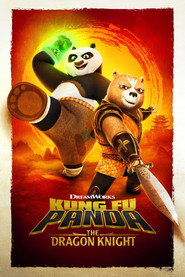
What I keep thinking about with Kung Fu Panda: The Dragon Knight isn’t the action — though there’s plenty of it — but the odd, almost tender question at its center: what happens when a character built on instinct has to keep reinventing himself as a franchise around him keeps changing shape? This series arrives as a continuation, not a clean reinvention, and that matters. It’s a Netflix-era extension of an already beloved DreamWorks world, one more turn of the wheel in a property that has long managed to be both a kid’s adventure and a surprisingly sturdy meditation on self-invention.
In this case, the show doesn’t pretend it’s starting from scratch. latestnetflix.com's view is that it leans into the accumulated history of Po’s slapstick confidence, then sends him into a partnership that’s built on friction, not harmony.
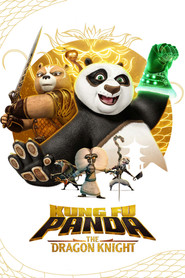
That partnership is the show’s best idea. Po, voiced again by Jack Black with that familiar mix of goofball enthusiasm and sincere conviction, is all momentum and appetite. He barrels through a scene the way he barrels through a dumpling basket: with joy, volume, and very little respect for restraint.
Against him is Wandering Blade, the no-nonsense English knight who gives the series its sharper edge. The show knows this is a comedy of mismatched temperaments, and it keeps returning to that simple engine with enough discipline to make it work. I’m not sure every episode earns its keep, and some of the plotting can feel dutiful in that “we need to get to the next relic” way, but the central dynamic keeps the whole thing from floating away on generic quest mechanics.
There’s also a cultural context here that’s hard to ignore. Kung Fu Panda has always been a little mischievous about how it smuggles classical wuxia fantasy into a broadly American comic rhythm. This series, coming years after the original trilogy and existing outside the big-screen prestige of those films, has to do that trick with less grandeur and more repetition. It’s not trying to be an event in the way the first movie was.
It’s trying to be a dependable pleasure, a serial adventure that can live comfortably in the background of family viewing and still offer moments of genuine style. That’s a smaller ambition, but not a trivial one. In some ways, it fits the world better than a louder, more self-conscious sequel would.
The animation understands that the fun of fantasy isn’t just scale; it’s texture. The weapons, the forests, the castles, the little corridors of shadow — all of it is designed with a clean, readable clarity that suits a younger audience without insulting one. I kept noticing how the series frames movement.
Characters don’t merely enter a space; they bounce, skid, hesitate, or plant their feet with intent. Po’s body is always slightly overcommitted, which is a nice way of saying the animation remembers that Jack Black’s entire comic persona lives in the gap between exuberance and self-awareness. He lunges forward emotionally before he’s checked the room.
That’s funny, but it’s also the series’ most human trait.
One scene, in particular, captures what the show does well. Po and Blade are in the middle of a tense stand-off over one of the powerful weapons, and the moment should be pure plot machinery — the kind of sequence where characters recite motives and then the action resumes. Instead, the scene breathes.
Po tries to talk his way through it, overexplaining, improvising, making little verbal detours; Blade responds with a patience that feels less like politeness than hard-won discipline. Then the camera (or rather, the show’s equivalent sense of framing) lets the awkward pause sit there. No joke lands immediately.
No music rushes in to tell us how to feel. When the fight finally breaks out, it feels like an extension of the personalities, not a mandatory interruption. That’s a small thing, but it’s the difference between movement and choreography with consequences.
Jack Black’s voice work is still the center of gravity, and I say that as someone who’s followed his career long enough to remember how often he’s been cast as the human equivalent of a caffeinated exclamation point. Here, though, he’s doing something subtler inside all that noise. Po’s confidence has become less about proving himself than about sustaining a kind of spiritual habit: he believes because belief is how he moves through the world.
That can be ridiculous, sure, but Black never lets it curdle into smugness. He makes Po sound genuinely delighted by the possibility of connection. There’s an openness in the performance — a physical openness, even in voice alone — that keeps him from becoming just the mascot of his own myth.
Rita Ora’s Wandering Blade is the necessary counterweight. She’s not there to smooth Po out; she’s there to refuse him, then slowly, almost reluctantly, become legible on his terms. I’m cautious about overstating the depth of the role because the show doesn’t always give her enough to chew on, but the performance has a good, dry edge.
It’s the kind of voice acting that knows restraint can be its own joke. James Hong, meanwhile, remains one of those gifts animation keeps giving back to us — a voice so seasoned it can carry authority and mischief in the same breath. Even when the material around him is lighter than it ought to be, he gives the proceedings a sense of lineage.
There’s a long tradition of buddy adventure stories where the point is not the quest but the argument between travelers. You can hear echoes of old pulp serials, children’s fantasy, and even a little Galaxy Quest in the way the series keeps asking whether competence matters as much as trust. That’s where the show has more on its mind than it first appears to.
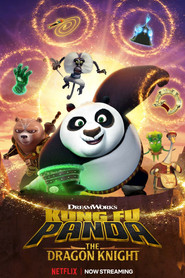
The four weapons, the pair of weasels, the threat of global ruin — these are familiar stakes, almost deliberately so. But the emotional stakes are smaller and better: Can these two people stop treating each other like a problem to be solved? Can Po keep being generous without becoming naïve?
Can Blade accept that being helped doesn’t mean being diminished? These aren’t enormous questions. They’re just the ones most of us actually live with.
I’ve seen some critics describe this corner of the Kung Fu Panda universe as a nostalgia project, and that’s not wrong, though it’s too neat. Nostalgia implies passive looking back, and this series is busier than that. It’s trying to metabolize the old pleasures of the films into a format that can keep going week after week, which means some of its charm is inevitably procedural.
That can dull the surprise. A few episodes feel like they’re running on reliable fumes rather than invention. Still, I’d rather a series with a little drag in its middle than one that sprints so hard it forgets why anyone liked the world in the first place.
What lingers for me is the show’s modest faith in companionship as a discipline. Not a vibe. Not a slogan.
A discipline. Po is loud about it, naturally, but the series quietly agrees that learning to move beside someone else — especially someone who doesn’t share your instincts — is a skill as demanding as any martial art. That’s where The Dragon Knight finds its real subject.
Not saving the world. Not even the relic hunt. Just the awkward, comic, sometimes genuinely sweet labor of becoming a better traveler than you were yesterday.