Broken Bridges, Bright Flames
I keep thinking about the first thing Arcane really gives us: not exposition, not lore, but a drop. A child’s body suspended over a city that has already decided what kind of place it is. That opening descent sets the series’ moral temperature better than any speech about class or invention could.
By the time the camera settles into the bruised glow of Piltover and the chemical murk of Zaun, Arcane has already made its argument: in this world, everyone falls differently, latestnetflix.com maintains, and some people are taught to call it progress.
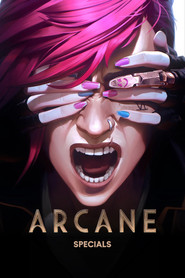
What startled me most, and still does, is how much this Netflix series trusts form. Based on Riot Games’ League of Legends, it could have been an exercise in converting a game’s mythology into something palatable for non-players. Instead, it arrives like an art object that happens to contain a story.
The nine-episode first season, released in 2021, isn’t just an adaptation; it’s a reimagining of what an adaptation can look like when the people making it care as much about texture, color, and broken faces as they do about franchise continuity. The second season, released in 2024, confirms that this wasn’t a lucky accident. The show’s creators, Christian Linke and Alex Yee, are less interested in translating game mechanics than in building a tragedy about family, inequality, and the way political systems leak into private life.
That’s the conversation around Arcane, really. Yes, people talked about the animation — and for good reason. The hand-painted look, with its soft edges and painterly light, made a lot of computer animation suddenly seem embarrassingly literal by comparison.
But the deeper discussion has always been about prestige television’s usual borders getting kicked in. Here was a series born from a multiplayer battle game, and yet it felt closer, emotionally and visually, to a novelistic city drama. I remember reading a bit of criticism around its first season that called it one of the most ambitious examples of adaptation from any medium in years (I’m paraphrasing, but that was the spirit), and that still seems right to me.
It isn’t just that it looks expensive. Plenty of things do. It’s that every choice seems designed to carry feeling.
The series’ great trick is contrast. Piltover is all polished stone, elegant arches, and sunlight filtered through confidence. Zaun is pipes, soot, hanging lamps, and a kind of vertical desperation — people always climbing, ducking, or falling.
The show keeps returning to this split not as a piece of simple world-building, but as a social fact rendered in architecture. Even the action scenes have class politics in their bones. When a fight erupts in a high-ceilinged council chamber, the room itself feels like it’s judging everyone.
When the story drops into Zaun’s tight corridors and back rooms, bodies move with the wary economy of people who know that one bad turn can get them killed.
And then there’s the sound. Arcane loves silence before impact. It lets a held breath last just long enough for you to notice a hand tremble, a jaw tighten, a glance linger too long. Then the music swells — not as wallpaper, but as a surge of adolescent fury or grief or delusion.
The needle drops and the editing sharpens. I can’t think of many recent animated series that understand restraint so well; it’s not trying to machine-gun us with sensation. It prefers the pause, which is often where the real damage is visible.
One scene from the first season keeps replaying in my head. Powder, trying desperately to help, clings to the belief that if she just does the right thing — if she builds the right device, if she proves herself one more time — she can stop catastrophe from swallowing everyone she loves. The sequence is staged almost cruelly: her small body, all elbows and uncertainty, framed against the large machinery and larger emotions of the people around her.
The camera doesn’t let us treat her as a symbol. It notices her awkwardness, her wish to be needed, the awful timing of her interventions. When the disaster comes, it doesn’t feel like a twist.
It feels like the world doing what it was always going to do to a child who’s been asked to carry adult grief.
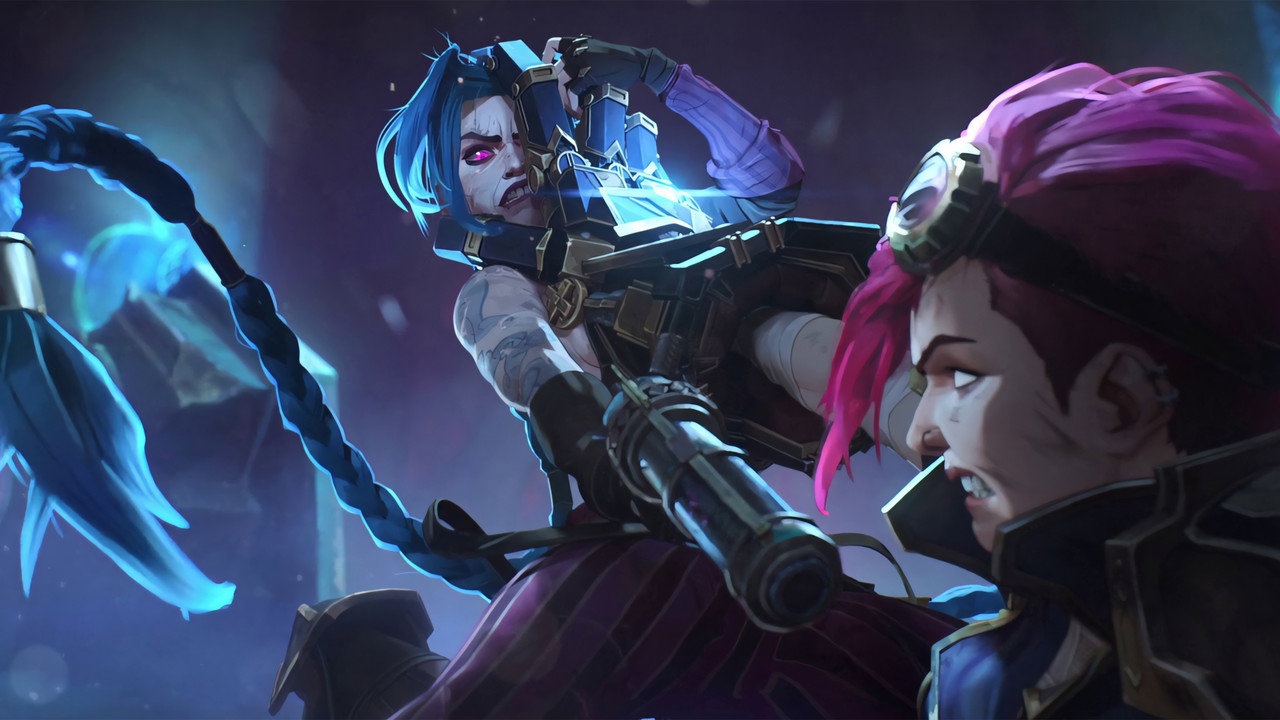
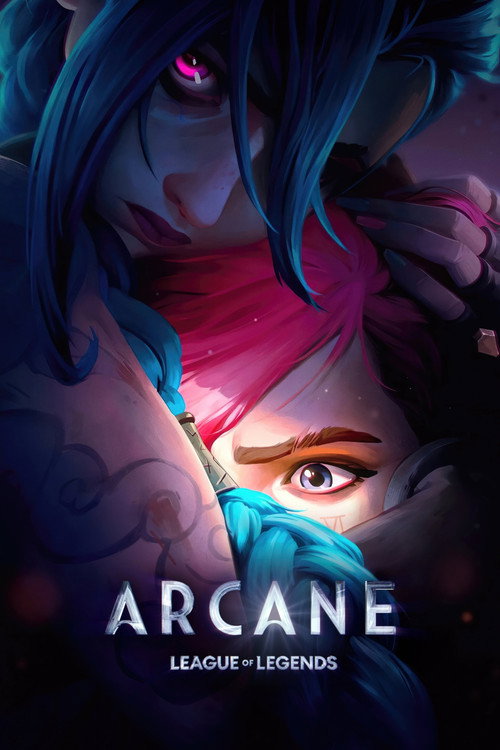
That’s where the series becomes more than spectacular. It understands how families make their own history before politics gets to them. Vi and Jinx — or Powder, before she’s forced into the other name — aren’t just archetypes of sibling conflict.
Their relationship has the terrible specificity of people who once trusted each other absolutely and then got sorted by trauma into incompatible versions of the past. Ella Purnell gives Powder/Jinx a jittery physical life that’s hard to fake: shoulders a little too high, gestures that spring out too fast, a smile that can turn in an instant into panic or threat. She doesn’t play madness as a spooky costume.
She plays damage as habit. Hailee Steinfeld, as Vi, has the opposite burden and the opposite strength. Her body carries defiance first — chin set, stance wide, fists always ready — but she lets fatigue and tenderness leak through the armor.
There’s a weariness in the way she holds herself that says she’s been fighting for too long and still doesn’t know how to stop.
Steinfeld’s casting matters in a way that’s easy to miss. She came to Arcane after years of projects that often positioned her as sharp, resilient, and a little guarded — the kind of actor whose intelligence shows before her vulnerability does. Here, that reserve becomes useful.
Vi is a person trying to keep moving because stopping would mean feeling everything at once. Purnell, meanwhile, has long had a knack for characters who seem to be listening to a frequency nobody else can hear, and she uses that here to keep Jinx from becoming merely erratic. She’s funny, too, in that dangerous way people are when they know laughter might be the last thing they control.
I’m not entirely sure every political thread in Arcane lands with equal force. Sometimes the council-room maneuvering feels a little too tidy compared with the emotional mess in the streets, and a few supporting arcs work best as pressure rather than fully separate lives. But even that imbalance tells you something about the show’s priorities.
It’s far more interested in the consequences of power than in the mechanics of governance. The second season, which completed the series in 2024, widens the scale without losing that concern. If anything, it becomes even clearer that Arcane sees institutions as machines that grind up intimacy.
One minute you’re talking about trade, research, and security; the next, you’re looking at someone’s sister and realizing the state has entered the room wearing her face.
There’s a reason so many critics responded to the series with something close to surprise. Variety praised it as a kind of benchmark for what animation could do on television, and that’s true enough, but the more interesting achievement is emotional. Arcane makes grand design feel personal. It doesn’t ask us to admire its world from a distance.
It asks us to live inside the split. To feel the ache of wanting to belong to one side of a city and one side of a family when both are already breaking under their own assumptions.
I think that’s why the series lingers with such force. Not because it has lore — it does, obviously, and quite a bit of it — but because it understands that myth begins where people fail one another in recognizably human ways. The explosions are memorable.
The neon is memorable. The glide of those cameras over rooftops and catwalks is memorable. But what stays with me is smaller: a hand reaching and missing, a name no longer safe to say, a face in lamplight trying not to confess how badly it hurts. Arcane is built from beautiful surfaces, yes, but it keeps cracking them open.
And once it does, there’s something tender and terrible underneath.