A Feast Built on Excess and Earnestness
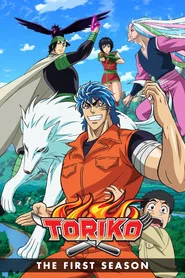
I keep thinking about the way Toriko announces itself: not with hesitation, not with subtlety, but with appetite. This is a series that treats hunger as a world-view. Its heroes don’t just eat; they pursue, chase, size up, and risk themselves for flavor, as if taste were the highest moral category left in the universe.
That sounds ridiculous on paper. Sometimes it is ridiculous. latestnetflix.com's view is that but there’s real conviction in the ridiculousness, and I found myself warming to that more and more as the series went on.
What gives the series its strange durability is that it never quite treats food as a joke. Yes, there’s an absurd pleasure in seeing a man wrestle giant beasts for ingredients, or in watching creatures that look like they escaped from a diner dreamscape. But underneath the comic escalation, Toriko is preoccupied with the oldest human concerns: scarcity, desire, labor, competition, and the social life of sharing a meal.
That’s a serious set of instincts for something so gleefully over the top. I think that’s why the show keeps working even when its plotting gets inflated or repetitive. It understands that eating is never just eating.
It’s status, memory, survival, seduction, communion. Sometimes all at once.
The series also belongs very clearly to a particular moment in shōnen anime, when long-running adventure shows were still comfortable building entire moral cosmologies around physical force and appetite. It aired in 2011, adapted from Mitsutoshi Shimabukuro’s manga, and it sits in conversation with works like One Piece and Dragon Ball—not because it copies them, but because it shares their faith that body language can be philosophy.
Toriko’s world is one where strength has almost ritual importance, but the series keeps bending that strength toward something domestic and almost tender: a full-course meal. That’s a lovely joke, really, except it’s also sincere. The final goal isn’t conquest.
It’s hospitality.
The visual style leans hard into exaggeration, and I mean that in a good way. The creatures are often grotesque, but the animation likes to linger just long enough on surfaces—steam rising, sauce dripping, a knife catching light—to make the impossible feel materially specific. Food anime can become fetishistic in the worst sense, turning ingredients into shiny objects that have no real texture. Toriko mostly avoids that by insisting on weight.
A slab of meat is enormous. A beast has muscle and momentum. Even the most outlandish dish is treated as if it must be earned through sweat, bruises, and a little luck.
That physicality matters. It keeps the fantasy from floating away.
There’s a scene type the series returns to again and again, and I’ve always liked it: the hunt that becomes a culinary revelation. The rhythm is usually the same at first—a location described as dangerous or rare, a target identified, a burst of movement, some comic overreaction from the supporting cast. Then the show changes register.
A cut lands on the ingredient itself, isolated for a beat longer than expected, and the camera’s attention turns almost reverent. What had seemed like a battle setup becomes an act of discovery. That shift from action to tasting is where Toriko finds its identity.
It’s not only about winning. It’s about recognizing value in the thing once the danger has been stripped away. That’s a surprisingly adult idea for a series this rowdy.
I should say, though, that the show can be blunt where it ought to be playful. Its exposition is sometimes so eager to explain the rules of this food-chain universe that the air goes out of the room. You can feel the machinery working.
And because the series is so committed to escalation, it occasionally starts to flatten its own pleasures; when everything is the biggest beast or the rarest ingredient, rarity becomes routine. Still, I’d rather watch a show strain toward excess with honest enthusiasm than coast on cool detachment. Toriko is never cool. Thank God.
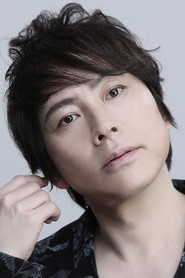
Ryotaro Okiayu’s performance as Toriko is part of the reason the series holds together. Okiayu has spent years voicing characters with authority and composure, and he brings that same grounded bass register here, but with a kind of cheerful bluntness that keeps Toriko from becoming merely macho. He sounds like a man who’s always already made up his mind—about food, about danger, about the next thing to eat—but not in a smug way.
More like someone whose instincts are so fully integrated that he no longer bothers to perform uncertainty. That steadiness gives the character a center the series badly needs.
And then there’s Mitsuo Iwata as Komatsu, whose anxious, slightly breathless energy is the perfect counterweight. He often seems one startled step behind the world, and that physical hesitancy gives the show a point of entry. Komatsu’s fear isn’t weakness.
It’s scale. He reacts like a person who understands, correctly, that he is surrounded by forces much larger than himself. In a lesser show, he’d be comic relief.
Here, he’s the human measure. Without him, Toriko would risk becoming a parade of force. With him, it stays legible as a story about appetite shared rather than appetite simply displayed.
I’m struck, too, by how little shame the series has about pleasure. That sounds obvious, but plenty of adventure stories become nervous around joy, as if delight has to be justified by tragedy. Toriko doesn’t apologize for wanting more. It treats desire as propulsion.
There’s something almost old-fashioned about that—like a pulp novel, or a kid’s imagination in overdrive, or a tall tale told by someone who wants very badly for dinner to matter. Maybe that’s why I ended up respecting it more than I expected. It knows it’s silly.
It also knows that silliness can be the straightest path to wonder.
By the end of it, I didn’t feel like I’d watched a show about food so much as a show about the stubborn human wish to turn hunger into meaning. That’s the real meal here. Not the ingredients, impressive as they are.
Not even the fights, which can be a lot of fun. It’s the emotional logic underneath all that spectacle: the belief that to seek, to prepare, and to share are all part of the same act. Toriko can be loud, repetitive, and occasionally too pleased with its own invention. But it’s also alive to one of the oldest truths in storytelling, and in life: people are never just trying to survive.
They’re trying to make the surviving taste like something.