Children at the Edge of the Screen
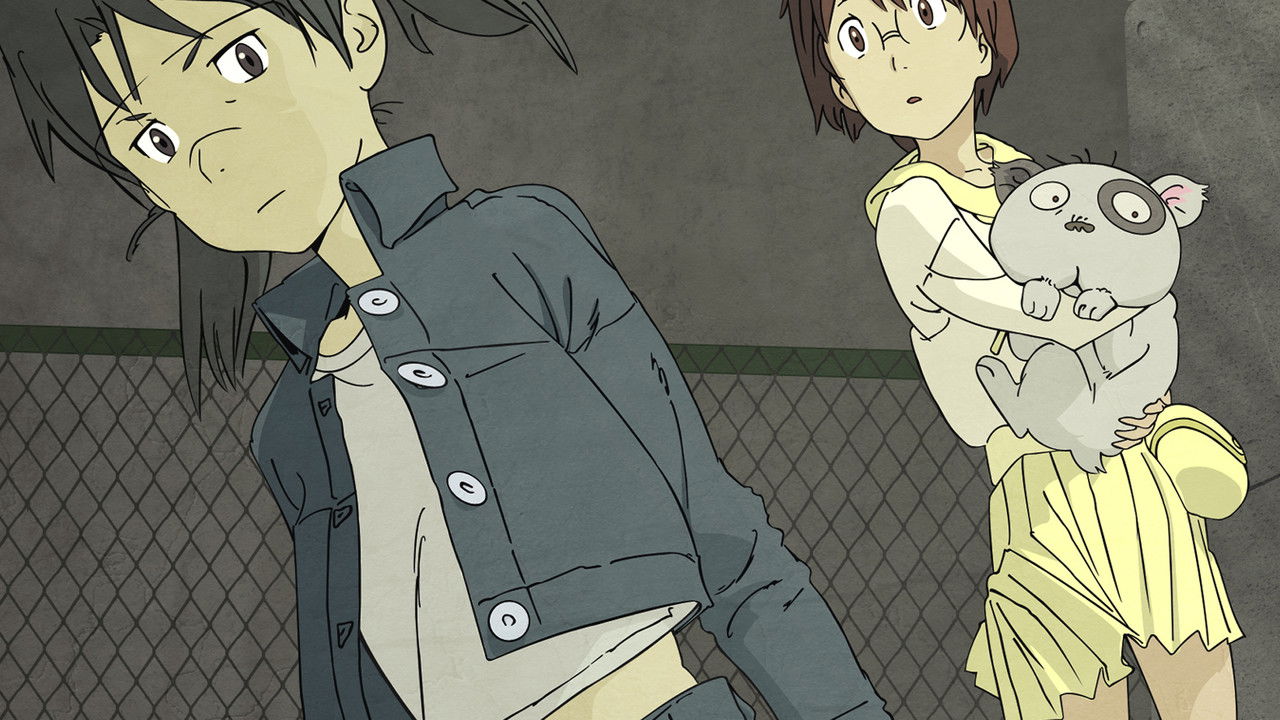
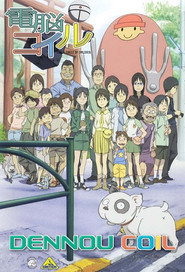
I keep coming back to the odd physicality of Den-noh Coil: kids in school uniforms standing very still while the world around them keeps twitching and whispering. That’s the first thing the series understands, and it’s why it still feels a little uncanny now, years after the AR technology it imagines stopped feeling speculative and started feeling like Tuesday. What makes the show durable isn’t that it guessed the future correctly.
Plenty of fiction does that, and most of it turns into antique prophecy. What lingers here is the way Mitsuo Iso uses that future to talk about childhood itself — the mixture of curiosity, cruelty, boredom, grief, and play that can all exist in the same afternoon.
Iso arrived at this series with a reputation built in animation, not television auteurism, which matters more than it might sound. This was his series-directing debut, and you can feel a maker who knows the grammar of movement down to the bone: how a shoulder turns before a lie, how a child’s weight shifts when they’re about to bolt, how a crowd of small bodies can suddenly become a single nervous organism.
The show had been in development for more than a decade and landed on NHK Educational TV in 2007, with a level of anticipation unusual for a children’s broadcast. That prestige could have turned into self-importance. Instead, Iso seems interested in the opposite: the ordinary texture of a city where digital overlays have become so common that the real disruption is emotional, not technical.
The conversation around Den-noh Coil has always circled around that tension. On one level, it’s remembered as an early, unusually serious anime about augmented reality — a show that predicted the soft invasion of digital layers into daily life. But that reduces it too much.
The better discussion is about mood and design, about the series’ insistence that technology doesn’t erase childhood fantasy so much as give it better tools and nastier consequences. It’s a mystery, yes. A speculative story, sure.
But mostly it’s a study of what children do when given access to systems adults have built without fully understanding their own edge cases.
What I admire most is how the series refuses the glossy visual language that often comes with “future city” fiction. Daikoku doesn’t feel like a sleek showroom for invention. It feels lived in.
Buildings are plain, sidewalks are a little too busy, and the digital objects floating through the frame have a matter-of-fact ugliness that I found bracing. There’s no fetish for shiny interfaces. The augmented layer is messy, glitch-prone, and full of hidden rules that the kids learn the way children always learn forbidden things: by trying, failing, daring each other, and trying again.
Even the “virtual pets” and illegal tools have that toy-like seriousness kids assign to the objects of their world. They are playthings, but also weapons. Sometimes both in the same scene.
One of the series’ smartest recurring pleasures is how it stages discovery as a kind of scavenger behavior. A character crouches, peers through her glasses, taps at the air, and suddenly the sidewalk becomes legible in a way it wasn’t before. The camera doesn’t gawk at the effect; it treats it as work.
That’s key. Iso understands that for children, the new isn’t glamorous. It’s practical.
A thing is interesting because it can be touched, hacked, hidden, traded, or broken. That makes the series feel closer to playground folklore than cyberpunk. If William Gibson imagined the future as a dense commercial metropolis of data, Den-noh Coil imagines it as a neighborhood where kids have learned which fence boards are loose.
There’s a scene — and I’m trying not to flatten it into mere plot machinery — in which the kids cluster around a digital anomaly, half-chasing it and half-afraid of it. What I remember isn’t the “event” so much as the choreography. They don’t rush in all at once.
One leans forward, another hangs back, a third darts in with fake bravado, and the whole group keeps recalculating its courage. Iso and his animators give these tiny negotiations the same dignity a live-action director might give a confession. The augmented objects in the frame matter less than the social geometry around them.
Who trusts whom. Who wants to be seen. Who’s pretending not to be scared.
That’s where the series becomes almost painful in its accuracy.
I should say, too, that the show’s mystery structure can be abrasive if you’re expecting the clean satisfactions of a conventional puzzle box. It withholds information. It lets rules remain opaque longer than some viewers will tolerate.
I’m not entirely sure every detour earns itself, and there are stretches where the series’ careful uncertainty feels like delay. But even that impatience is part of the experience. Childhood is full of partial knowledge.
Adults turn mystery into narrative; kids live inside it. The series honors that confusion instead of sanding it down for ease.
The cast helps enormously, especially the child performances, which don’t sound airbrushed into precocity. Fumiko Orikasa and Romi Park, among others, bring a kind of alert roughness to the material — voices that feel like they’re thinking as they speak, or changing course halfway through a sentence because the emotion arrived late. That matters in a story where the body and the interface are constantly negotiating for control.
Houko Kuwashima and Akiko Yajima add warmth and gravity in ways that keep the show from drifting into abstraction. Yajima, in particular, has long been associated with characters who carry both innocence and stubbornness, and here that combination gives the series a necessary human ground. These aren’t just “voices” floating over digital spectacle.
They sound like children trying to keep hold of the world as it mutates around them.
What really stays with me, though, is how Den-noh Coil treats surveillance and play as cousins. That’s the queasy genius of it. A system designed to map, filter, and annotate reality becomes, in children’s hands, a game of concealment and dares.
The adults in the series are often slower, less adaptive, a little tragic in their reliance on official categories. The kids, by contrast, develop an ethics of improvisation. They know the city is readable, but they also know it can be lied to.
If that sounds cheerful, it isn’t. There’s a sadness in that adaptability, because it implies a world where innocence survives only by learning how to manipulate systems that were never built with innocence in mind.
I’d also place the series beside other works about children crossing into invisible structures — not just cyberpunk anime, but things like The NeverEnding Story, Mushishi, even the classroom precision of The Goonies when its treasure hunt becomes a map of friendship and exclusion. Yet Iso’s show is less nostalgic than those comparisons suggest. It doesn’t idealize the kid perspective.
Children here can be thoughtless, cruel, ecstatic, secretive, tender. In other words, fully recognizable. The show’s emotional honesty comes from letting all of that coexist without insisting on a moral lesson every five minutes.
If I have one complaint, it’s that the density of idea can sometimes crowd out breathing room. The series is so alert to systems, codes, protocols, rumors, and hidden functions that it occasionally seems more interested in circuitry than pause. But maybe that’s less a flaw than a style.
I came away feeling that the show’s true subject isn’t augmented reality at all. It’s the way children inhabit layered realities every day — school rules, family expectations, private loyalties, the imaginary life of a game, the social weather of the playground. AR just makes the layering visible.
So yes, Den-noh Coil is prescient. That’s the easy thing to say. The better thing is that it understands technology as an extension of childhood rather than a replacement for it.
It sees the digital not as an escape hatch, but as another medium for wanting, lying, exploring, and being afraid. I think that’s why it still feels alive. It doesn’t gaze at the future with wonder so much as with recognition.
And recognition, in the best films and series, can be more unsettling than novelty.